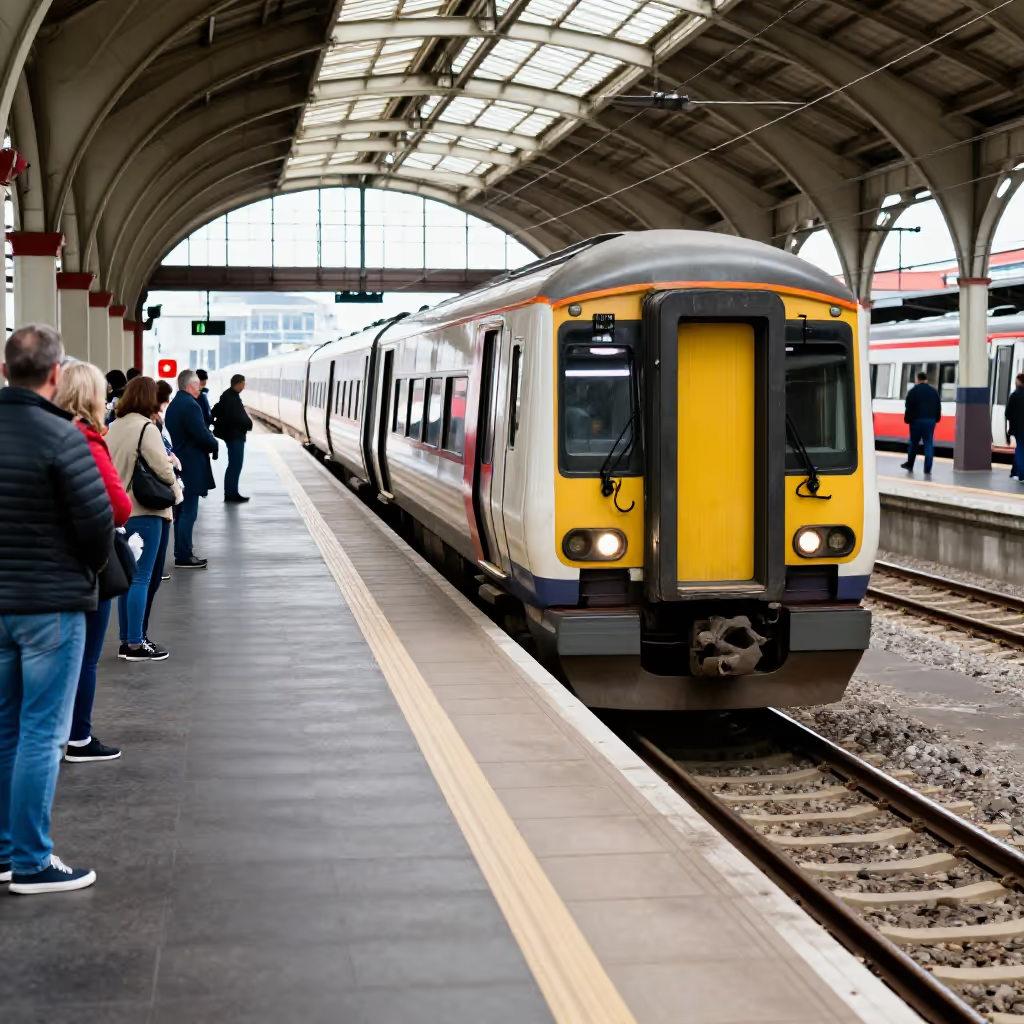
The operating state of an engine or machine in which it is running without doing work or driving a load. In a car, this is the case when no gear is engaged.
example
Lass den Motor an der Ampel nicht im Leerlauf laufen, das schadet der Umwelt.
Don't leave the engine idling at the traffic light; it's bad for the environment.

Usage tips
Word composition
The word is made up of 'leer' (empty) and 'der Lauf' (run/running). So it literally describes an 'empty run,' where something is running but not doing any productive work.
EXAMPLE
Das Auto stand mit laufendem Motor im Leerlauf an der roten Ampel.
The car was standing at the red light with the engine idling.
Fixed expression
'Leerlauf' is almost always used with the preposition 'in' in the dative: 'im Leerlauf' (in idle / in neutral). Typical verbs used with it are 'laufen' (to run), 'sein' (to be), or 'arbeiten' (to work).
EXAMPLE
Die Maschine arbeitet nur im Leerlauf, weil ein Teil fehlt.
The machine is only running idle because a part is missing.
Context clue
You can recognize the technical meaning from the context of engines, cars, and machines. The figurative meaning refers to work, projects, or phases of inactivity in everyday life.
EXAMPLE
Schalte den Gang raus, dann ist das Auto im Leerlauf.
Take it out of gear, then the car is in neutral.
Typical collocations
In the figurative meaning, people often say that someone 'Leerlauf hat' (has downtime) or that 'Leerlauf entsteht' (downtime occurs). It describes unproductive time that has to be bridged.
EXAMPLE
Wir müssen diesen Leerlauf im Produktionsprozess vermeiden.
We have to avoid this downtime in the production process.
Compare with
near_synonym · confusable
Leerlauf vs Pause
break / pause
'die Pause' and 'der Leerlauf' can both refer to a time when work or a process is not really moving forward. However, 'Pause' usually sounds positive or neutral: you deliberately interrupt something in order to rest, eat, or continue later. 'Leerlauf' sounds more negative when nothing meaningful happens during an activity or time is lost. Learners may confuse the words because in both cases, not much is being done at that moment. As a practical rule: you take a 'Pause' intentionally; 'Leerlauf' often arises when something is not progressing productively.
Leerlauf
Nach dem ersten Gespräch gab es im Projekt eine Woche Leerlauf.
After the first meeting, there was a week of downtime in the project.
Pause
Nach zwei Stunden Arbeit machen wir eine kurze Pause.