

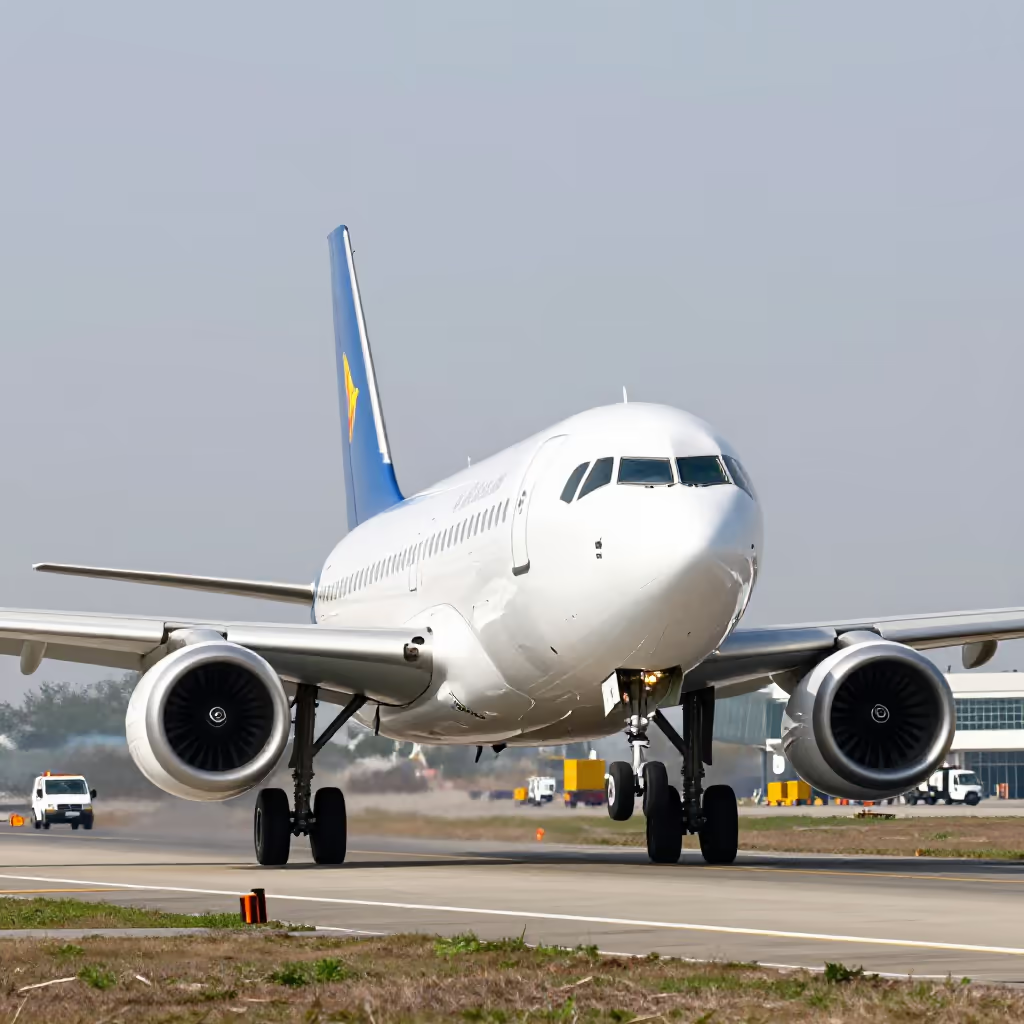
das Flugzeug
airplane
A motorized aircraft with wings that is heavier than air and is used to transport people or cargo.
EXAMPLE
Unser Flugzeug nach Mallorca startet in einer Stunde.
Our airplane to Mallorca takes off in an hour.
airplane
Loading your saved state.
airplane
A motorized aircraft with wings that is heavier than air and is used to transport people or cargo.
Unser Flugzeug nach Mallorca startet in einer Stunde.
Our airplane to Mallorca takes off in an hour.
The word is made up of 'Flug' (flight, from 'fliegen' — to fly) and 'Zeug' (stuff/equipment). 'Zeug' is an old word for 'Gerät' (device) or 'Sache' (thing) and is also found in 'Fahrzeug' (vehicle) or 'Werkzeug' (tool). A 'Flugzeug' (airplane) is therefore literally a 'flying device'.
Mein neues Werkzeug liegt noch im Auto.
My new tool is still in the car.
Different prepositions are used depending on the situation: you travel 'mit dem Flugzeug' (by airplane, means of transport), you sit 'im Flugzeug' (in the airplane, location), and you board by getting 'ins Flugzeug' (onto the airplane, direction).
Wir fliegen mit dem Flugzeug nach Spanien.
We are flying to Spain by airplane.
Common verbs used with 'Flugzeug' (airplane) are 'starten' (to take off), 'landen' (to land), and 'besteigen' (to board/get on).
Das Flugzeug landet pünktlich um 15:30 Uhr.
The airplane lands on time at 3:30 p.m.
machine
Both words can refer to a specific aircraft. „Das Flugzeug“ is the unambiguous, neutral term, while „die Maschine“ is a common informal term in travel and aviation contexts. Use „Flugzeug“ when the clear standard term is important, and „Maschine“ in a familiar context.
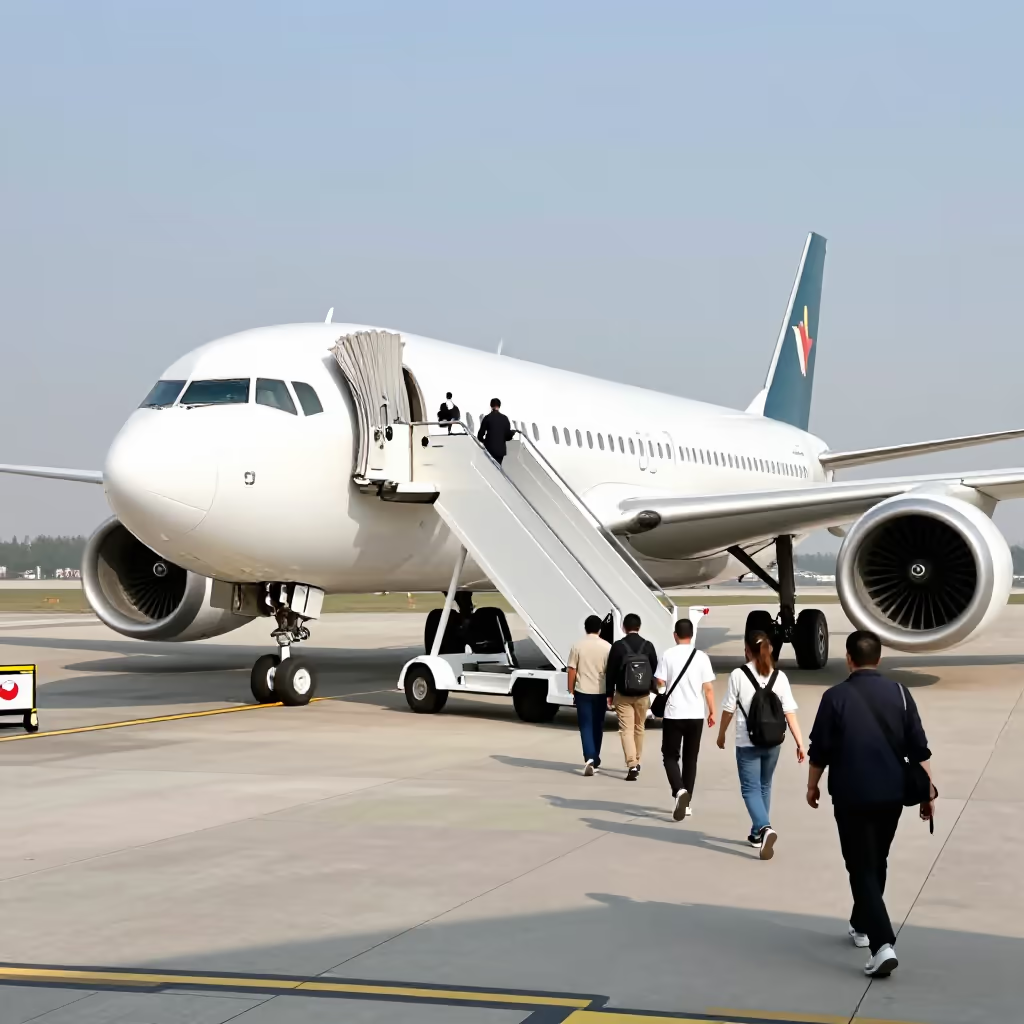
Wegen eines technischen Problems startet das Flugzeug erst zwei Stunden später.
Because of a technical problem, the airplane will not take off until two hours later.
Wegen eines technischen Problems startet die Maschine erst zwei Stunden später.
Because of a technical problem, the plane will not take off until two hours later.