

fluten
to flood
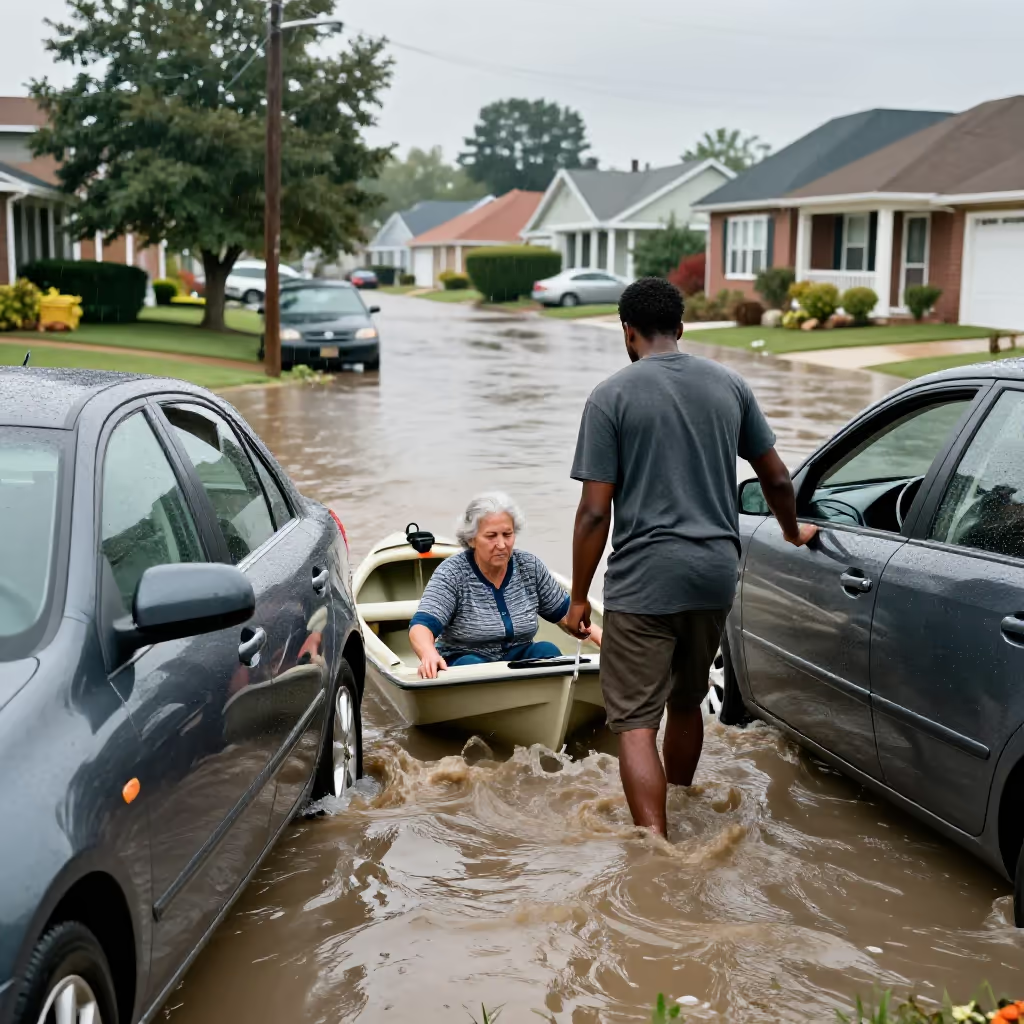
To inundate or cover an area with a large amount of water.
EXAMPLE
Nach dem Deichbruch wurde das gesamte Polderland geflutet.
After the dike broke, the entire polder land was flooded.
to flood
Loading your saved state.
to flood
To inundate or cover an area with a large amount of water.
Nach dem Deichbruch wurde das gesamte Polderland geflutet.
After the dike broke, the entire polder land was flooded.

to flood
To stream to a place or fill it in very large numbers or quantities.
Nach dem Konzert fluteten die Fans die Ausgänge.
After the concert, the fans flooded the exits.

to flush / fill
In technology or medicine, to deliberately fill or rinse a cavity or system with a liquid.
Um das Kühlsystem zu reinigen, muss man es mit einer speziellen Lösung fluten.
To clean the cooling system, you have to flush it with a special solution.
The verb 'fluten' (to flood) is closely related to the noun 'die Flut' (flood, tide). This connection helps you understand the basic meaning of a large, flowing mass, whether it is water, people, or data.
Die Flut kam schneller als erwartet und begann, die Küstenstraße zu fluten.
The flood came faster than expected and began to flood the coastal road.
The perfect tense is usually formed with 'haben' when something is actively being flooded. However, if the movement of many people or things to a place is being emphasized, 'sein' is often used.
Der Sturm hat viele Keller geflutet.
The storm flooded many basements.
You can recognize the figurative meaning by the fact that the subject is not water, but people, information, or objects. The verb then describes something streaming to a place in overwhelmingly large numbers.
Nach der Ankündigung des neuen Produkts fluteten die Bestellungen die Website.
After the announcement of the new product, orders flooded the website.
In the figurative meaning, 'fluten' (to flood) is often combined with subjects like 'Touristen' (tourists), 'Fans' (fans), 'E-Mails' (emails), or 'Nachrichten' (messages), and objects like 'die Stadt' (the city), 'das Stadion' (the stadium), or 'der Posteingang' (the inbox).
Jeden Sommer fluten Touristen die kleine Küstenstadt.
Every summer, tourists flood the small coastal town.
The meaning 'einen Hohlraum füllen' (to fill a cavity) is technical language. It is used in technical or medical contexts, for example when cleaning a system or flushing a wound.
Der Arzt musste die Wunde mit einer antiseptischen Lösung fluten.
The doctor had to flush the wound with an antiseptic solution.
to stream / pour
Strömen and fluten can both describe large numbers of people arriving at a place. Strömen emphasizes their continuous movement in one direction. Fluten places more emphasis on the exceptionally large number and the rapid filling of the destination.

Nach der Öffnung fluten Tausende Besucher die ganze Halle.
After the opening, thousands of visitors flooded the entire hall.
Nach der Öffnung strömen die Besucher zum Eingang der Halle.
After the opening, visitors streamed toward the entrance to the hall.