


strömen
to stream
To move continuously in large amounts in one direction, like a liquid or gas.
EXAMPLE
Das Wasser strömte aus dem gebrochenen Damm.
The water streamed out of the broken dam.
to stream / pour
Loading your saved state.
to stream
To move continuously in large amounts in one direction, like a liquid or gas.
Das Wasser strömte aus dem gebrochenen Damm.
The water streamed out of the broken dam.

to stream
When a large crowd of people moves like a river in a specific direction.
Nach dem Feuerwerk strömten die Besucher zu den Ausgängen.
After the fireworks, the visitors streamed toward the exits.
to pour
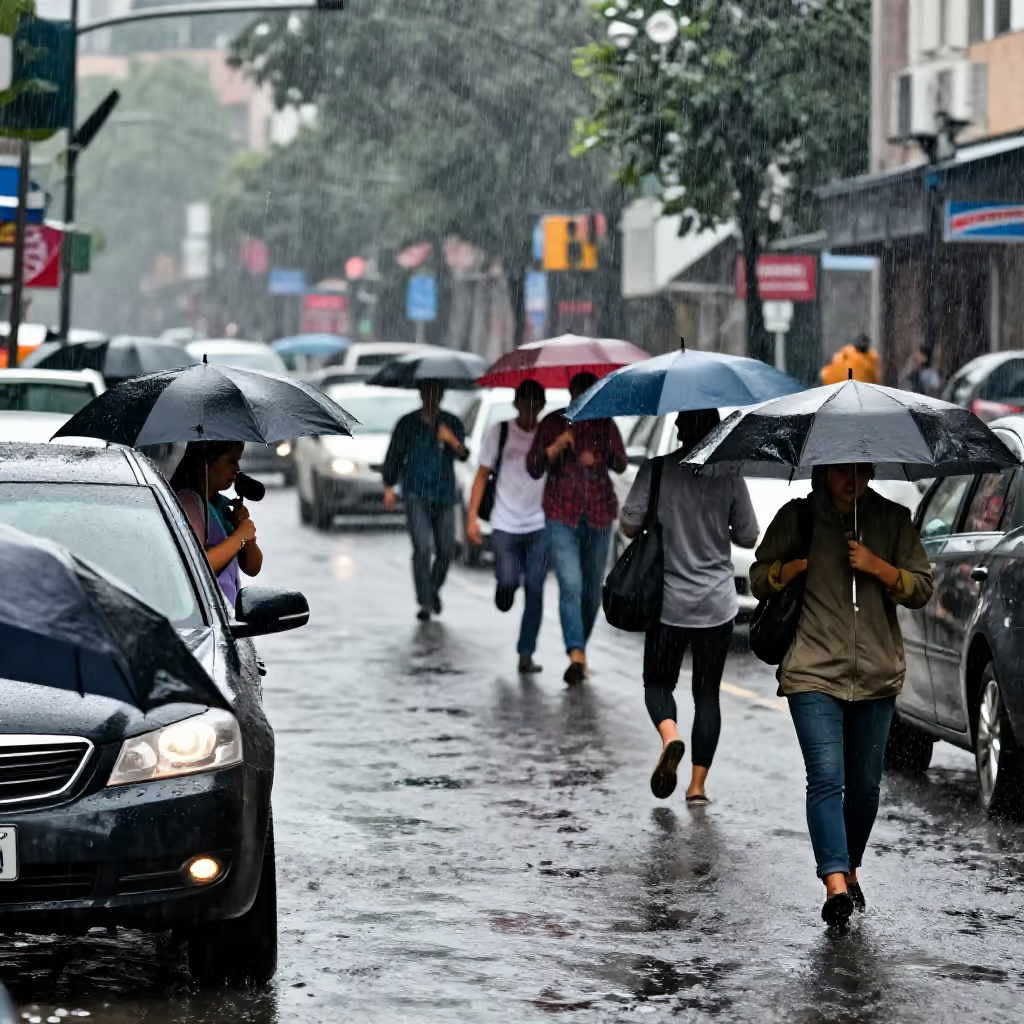
To rain very heavily and without stopping.
Als wir losgehen wollten, fing es an zu strömen.
When we were about to leave, it started pouring.
The verb 'strömen' (to stream/pour) is the root of the noun 'der Strom' (current/stream). All meanings of 'strömen' describe a movement that is reminiscent of a flowing stream, whether water, a crowd of people, or rain.
Ein starker Strom zog das Boot mit sich.
A strong current carried the boat along.
Since 'strömen' describes movement from one place to another, the perfect tense is always formed with the auxiliary verb 'sein'. This applies to all meanings of the verb.
Tausende Fans sind nach dem Konzert aus dem Stadion geströmt.
Thousands of fans streamed out of the stadium after the concert.
The direction of movement is often indicated with prepositions. Common combinations are 'strömen aus (+ dative)' (to stream out of), 'strömen in (+ accusative)' (to stream into), and 'strömen zu (+ dative)' (to stream toward/to).
Die Pendler strömen morgens in die Stadt.
The commuters stream into the city in the morning.
When 'strömen' means heavy rain, it is almost always used impersonally with 'es' as the subject. The expression is then 'es strömt' (it's pouring).
Nimm einen Schirm mit, es strömt draußen!
Take an umbrella with you, it's pouring outside!
to flow
Both words describe water or another liquid moving continuously in one direction. „Fließen“ is neutral, whereas „strömen“ usually emphasizes a large amount or a powerful flow. Use „fließen“ for normal movement and „strömen“ when the force or quantity is important.
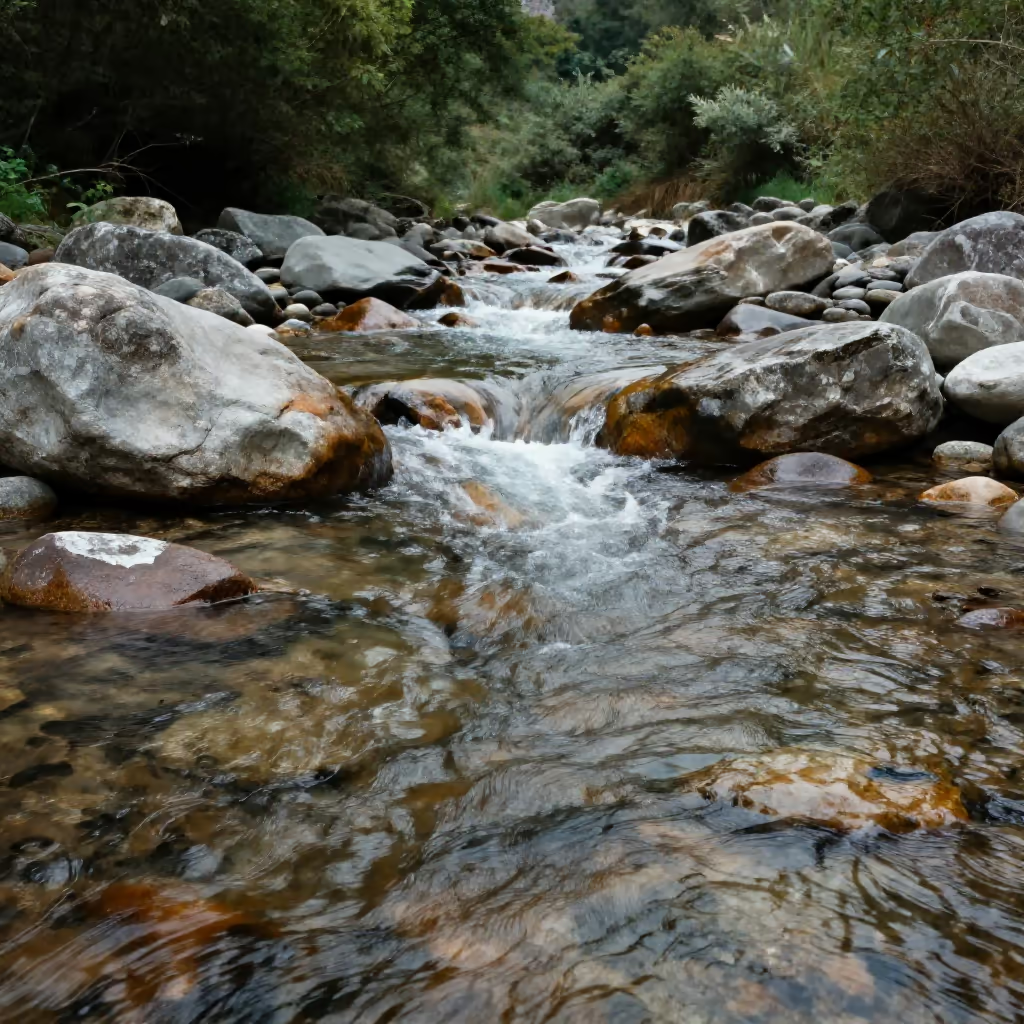
Nach dem Gewitter strömte viel Wasser durch den übervollen Bach.
After the storm, a lot of water streamed through the overflowing creek.
Nach dem Regen floss Wasser langsam durch den kleinen Bach.
After the rain, water slowly flowed through the small creek.