

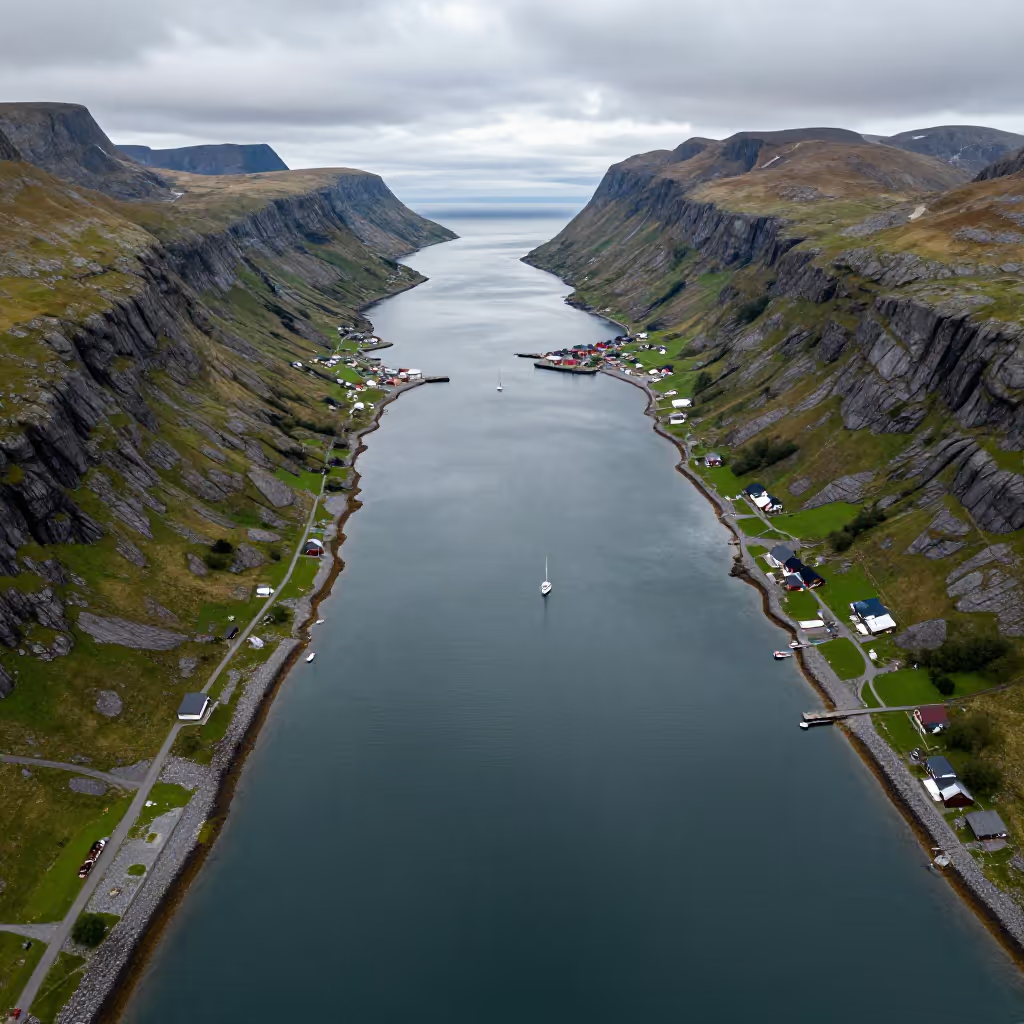
A long, narrow arm of the sea that reaches far inland and was formed by the flooding of a valley shaped by glaciers.
example
Die Kieler Förde ist bekannt für ihre jährliche Segelregatta.
The Kiel Fjord is known for its annual sailing regatta.
Usage tips
False friend
'Die Förde' is not a 'ford' in English. A 'Förde' is a deep arm of the sea, while a 'ford' is a shallow place in a river that can be crossed.
EXAMPLE
Viele Schiffe fahren durch die Kieler Förde.
Many ships travel through the Kiel Fjord.
Geographic context
This term is mainly used for sea bays in Schleswig-Holstein (northern Germany) and Denmark, such as the 'Kieler Förde' (Kiel Fjord) or the 'Flensburger Förde' (Flensburg Fjord).
EXAMPLE
Flensburg liegt direkt an der deutsch-dänischen Förde.
Flensburg lies directly on the German-Danish fjord-like inlet.
Word family
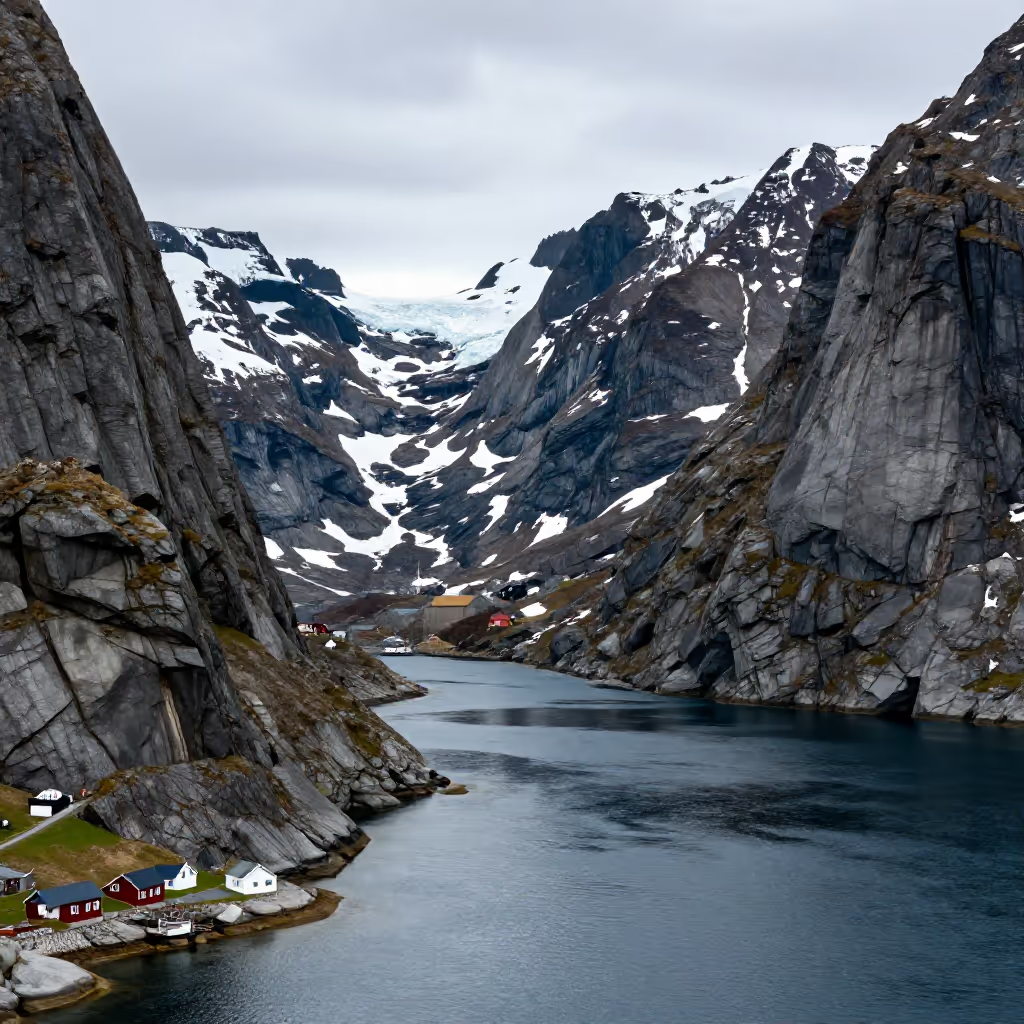
The word 'Förde' is closely related to the Scandinavian word 'Fjord'. Both terms describe a sea bay formed by glaciers.
EXAMPLE
Die Landschaft an der Förde erinnert an Norwegen.
The landscape along the fjord-like inlet is reminiscent of Norway.
Compare with
near_synonym · confusable
Förde vs Bucht
bay
'die Bucht' and 'die Förde' both describe seawater that reaches into the land. 'Bucht' is a general word for a curved coastal area. A 'Förde' is more specific: it is long and narrow and developed from a valley shaped by glaciers. Learners may confuse the words because both look like an opening in the coast. If you are speaking generally about a stretch of coast, 'Bucht' fits. If you mean this special long sea formation, especially in northern Germany, 'Förde' is more precise.
Förde
Vor der Reise informiert er sich über die Kieler Förde.
Before the trip, he reads up on the Kiel Fjord.
Bucht
Am Wochenende sitzen wir in einer ruhigen Bucht und schauen aufs Meer.
At the weekend, we sit in a quiet bay and look out at the sea.