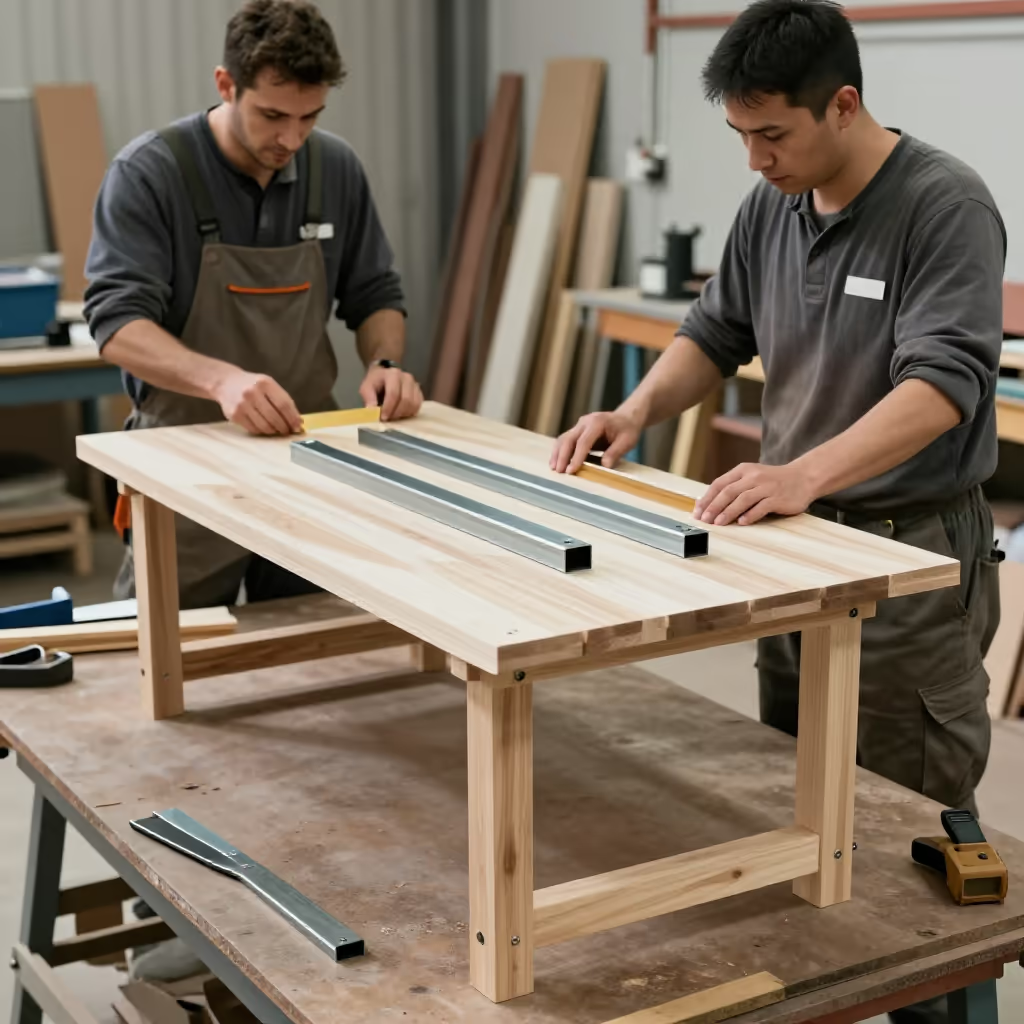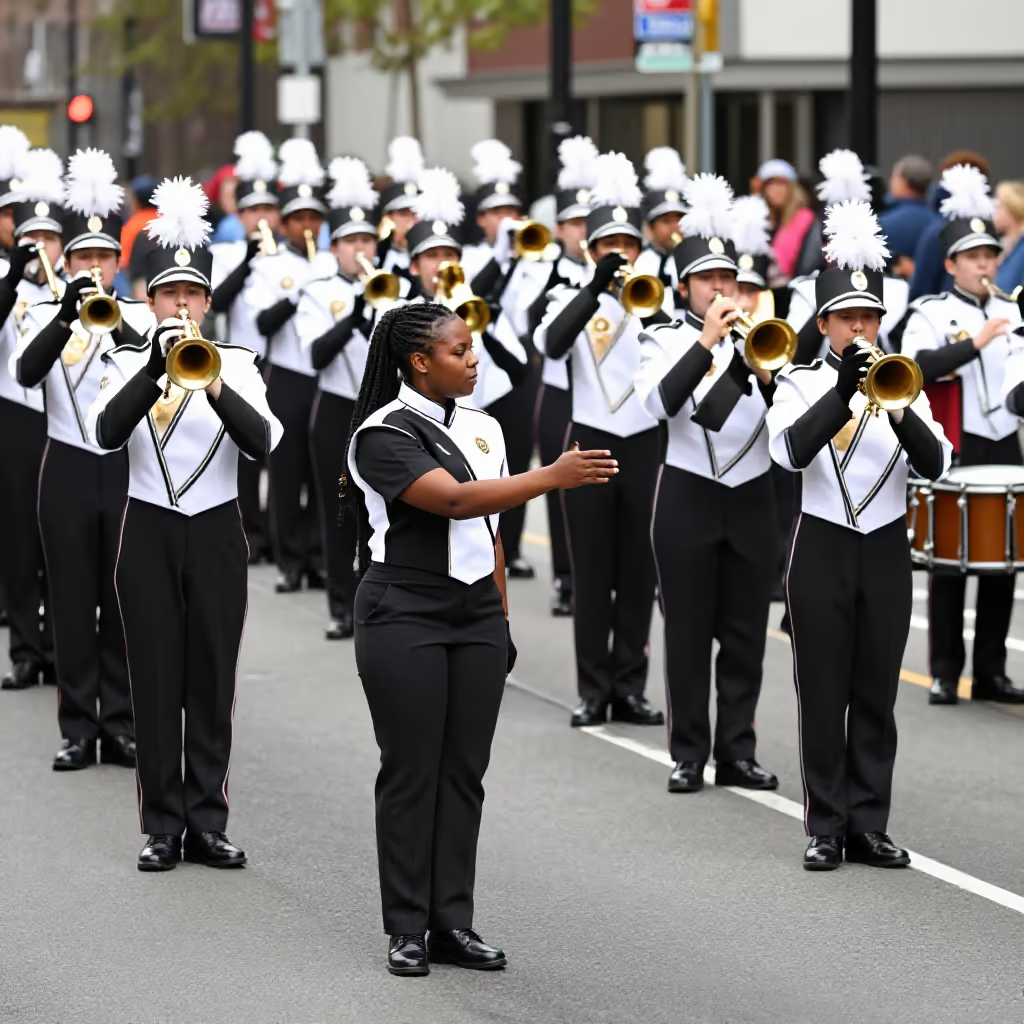
To arrange oneself and come together into a particular formation or group. This is often used for groups of people, animals, or even abstract movements.
example
Die Demonstranten formierten sich auf dem Marktplatz zu einem Protestzug.
The demonstrators formed up on the market square into a protest march.
Usage tips
Word family 'Form'
The verb 'formieren' (to form) belongs to the word family of 'die Form' (form/shape). The ending '-ieren' often shows that a verb comes from another language and means to bring something into a form or to take on a form.
EXAMPLE
Die Tänzer formierten einen Kreis in der Mitte der Bühne.
The dancers formed a circle in the middle of the stage.
Reflexive or transitive
Pay attention to the difference: 'sich formieren' (to form up) is reflexive and means that a group comes together on its own. 'Etwas formieren' (to form something) is transitive and means that a person actively puts a group together from the outside.
EXAMPLE
Der Widerstand gegen die neuen Gesetze formierte sich schnell.
Resistance to the new laws formed quickly.
Elevated style
'Formieren' (to form) is a word used in elevated or formal language. It is used for organized groups such as the military, demonstrators, or political movements, but rarely for everyday meetings.
EXAMPLE
Die Soldaten formierten sich in Reih und Glied.
The soldiers formed up in rank and file.
Typical collocations
When a person forms a group, 'formieren' (to form) is often used with objects such as 'eine Mannschaft' (a team), 'ein Team' (a team), 'eine Regierung' (a government), or 'eine Koalition' (a coalition).
EXAMPLE
Nach der Wahl war es schwierig, eine stabile Regierung zu formieren.
After the election, it was difficult to form a stable government.
Compare with
near_synonym · confusable
formieren vs bilden
to form / educate
'bilden' and 'formieren' can both mean that a unit is created from several parts. However, 'bilden' is much more general and more common in everyday language: people can form a group, clouds can form, or several things can form a whole. 'formieren' emphasizes more strongly that people or groups arrange themselves and come together into a particular formation or shared unit. It often sounds more organized and somewhat more formal. Learners may confuse the words because both can be used for groups. As a practical rule: if a unit is simply being created, 'bilden' often fits. If a group is visibly arranging itself or coming together strategically, 'formieren' is more likely to fit.
formieren
Vor dem Start formierten sich die Läufer in zwei Reihen.
Before the start, the runners formed up in two rows.
bilden
Nach dem Kurs bilden die Teilnehmer kleine Gruppen für die Übung.
After the course, the participants form small groups for the exercise.