

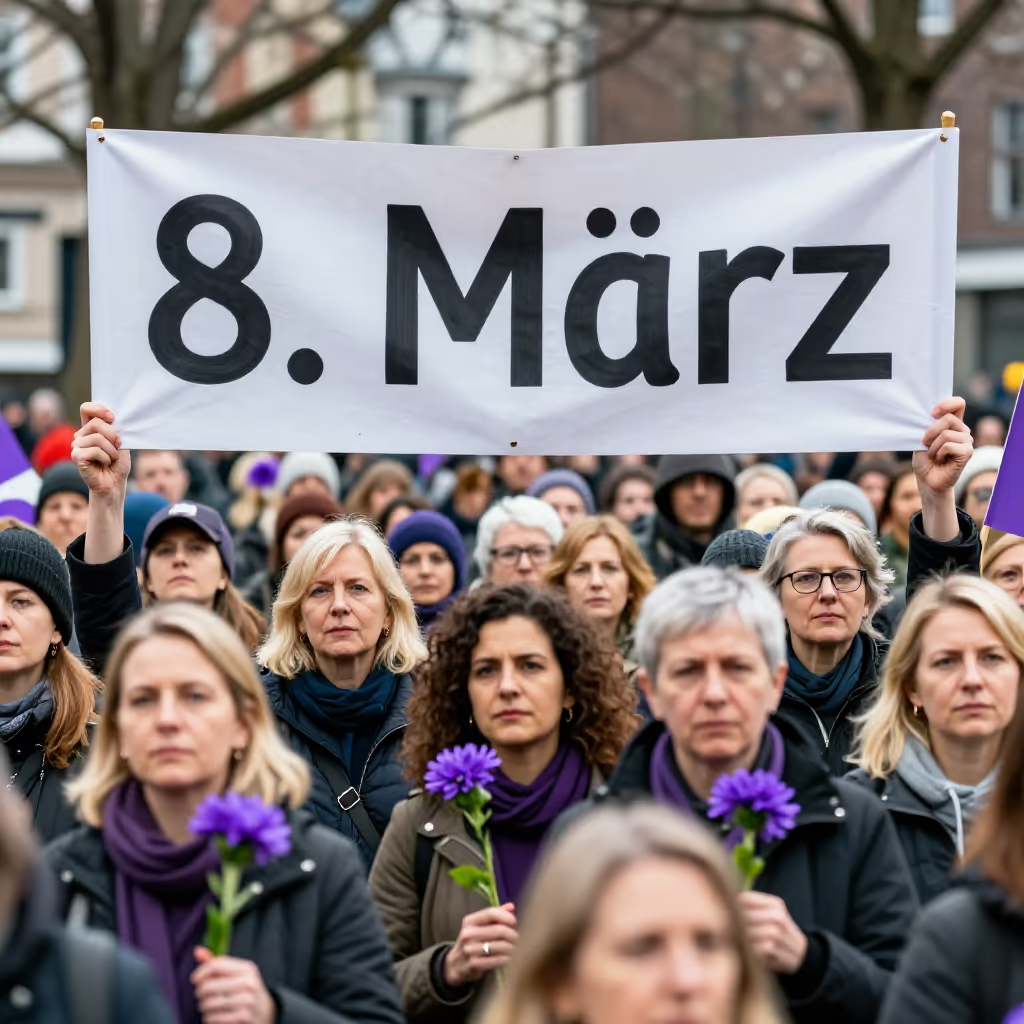
International Women's Day, observed every year on March 8 to promote women's rights and gender equality. In some German federal states, it is a public holiday.
example
In Berlin ist der Frauentag ein offizieller Feiertag.
In Berlin, International Women's Day is an official public holiday.
Usage tips
Compound word
The word is made up of the plural 'die Frauen' (women) and 'der Tag' (day). So it is literally a 'day of women.'
EXAMPLE
Der Frauentag wird weltweit gefeiert.
International Women's Day is celebrated worldwide.
Typical prepositions
You use 'am Frauentag' (on International Women's Day) to talk about events on this day. When congratulating someone, you say 'jemandem zum Frauentag gratulieren' (to congratulate someone on International Women's Day).
EXAMPLE
Am Frauentag finden viele Demonstrationen für Gleichberechtigung statt.
On International Women's Day, many demonstrations for equal rights take place.
Cultural context
International Women's Day is always on March 8. In Germany, it is only a public holiday in the federal states of Berlin and Mecklenburg-Western Pomerania, where most people do not have to work.
EXAMPLE
Am 8. März ist Frauentag.
March 8 is International Women's Day.
Compare with
confusable
Frauentag vs Muttertag
Mother's Day
'der Muttertag' and 'der Frauentag' both have to do with women, but they do not mean the same thing. Mother's Day honors mothers and the role of the mother in the family. 'der Frauentag' is International Women's Day on March 8 and stands for women's rights and equality. Learners may confuse the words because both days are often associated with recognition for women. A practical tip: 'Muttertag' means mothers, while 'Frauentag' means women in general and their social rights.
Frauentag
Am Frauentag sprechen viele Menschen über gleiche Rechte im Beruf.
On International Women's Day, many people talk about equal rights at work.
Muttertag
Erik hat für den Muttertag ein kleines Geschenk gekauft.