

fressen
to eat
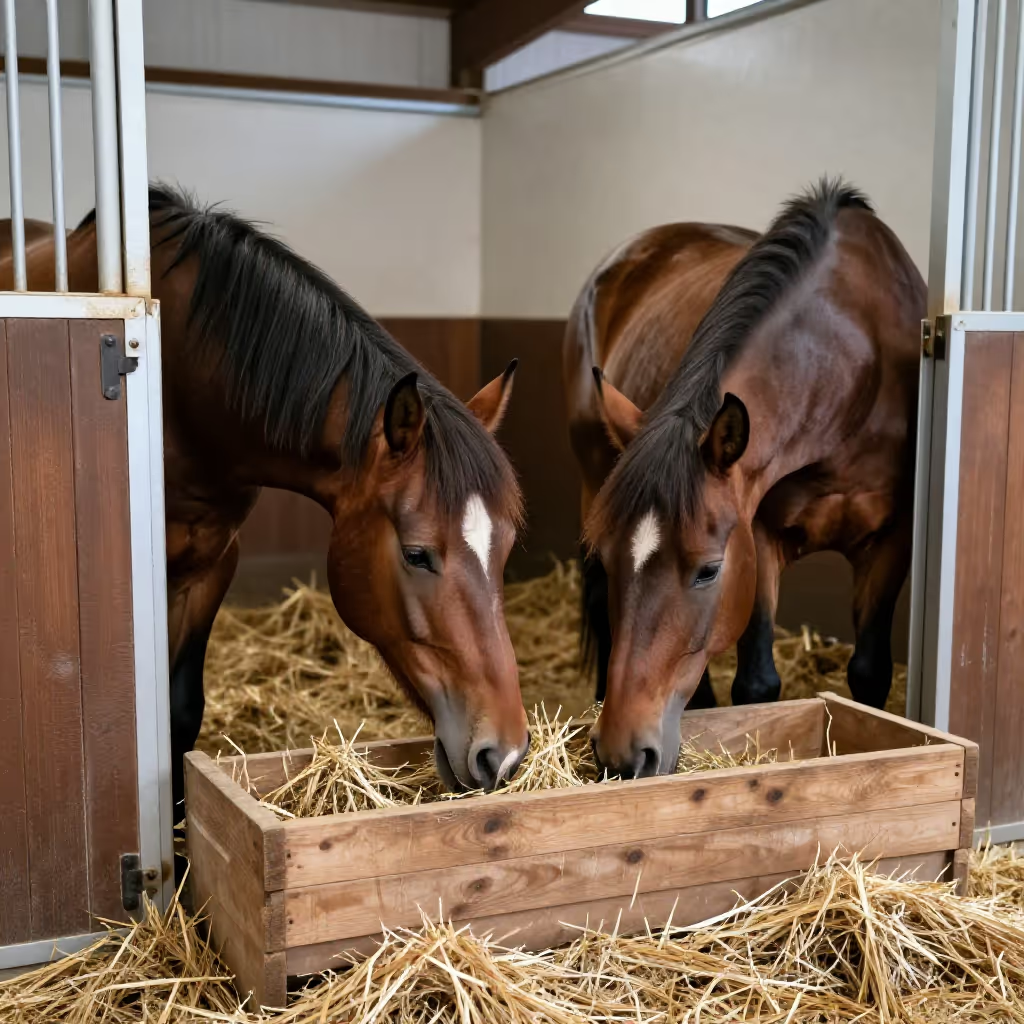
Food intake in animals.
EXAMPLE
Der Löwe frisst das Zebra.
The lion eats the zebra.
to eat / to devour
Loading your saved state.
to eat
Food intake in animals.
Der Löwe frisst das Zebra.
The lion eats the zebra.

to devour
Colloquial and derogatory for food intake in humans when it is done greedily, quickly, or without manners.
Hör auf so zu fressen, nimm dir Zeit beim Essen!
Stop devouring your food like that; take your time eating!

to consume
In a figurative sense: to use up a lot of resources such as money, time, or energy.
Dieses alte Auto frisst unglaublich viel Benzin.
This old car consumes an unbelievable amount of gas.
to eat through
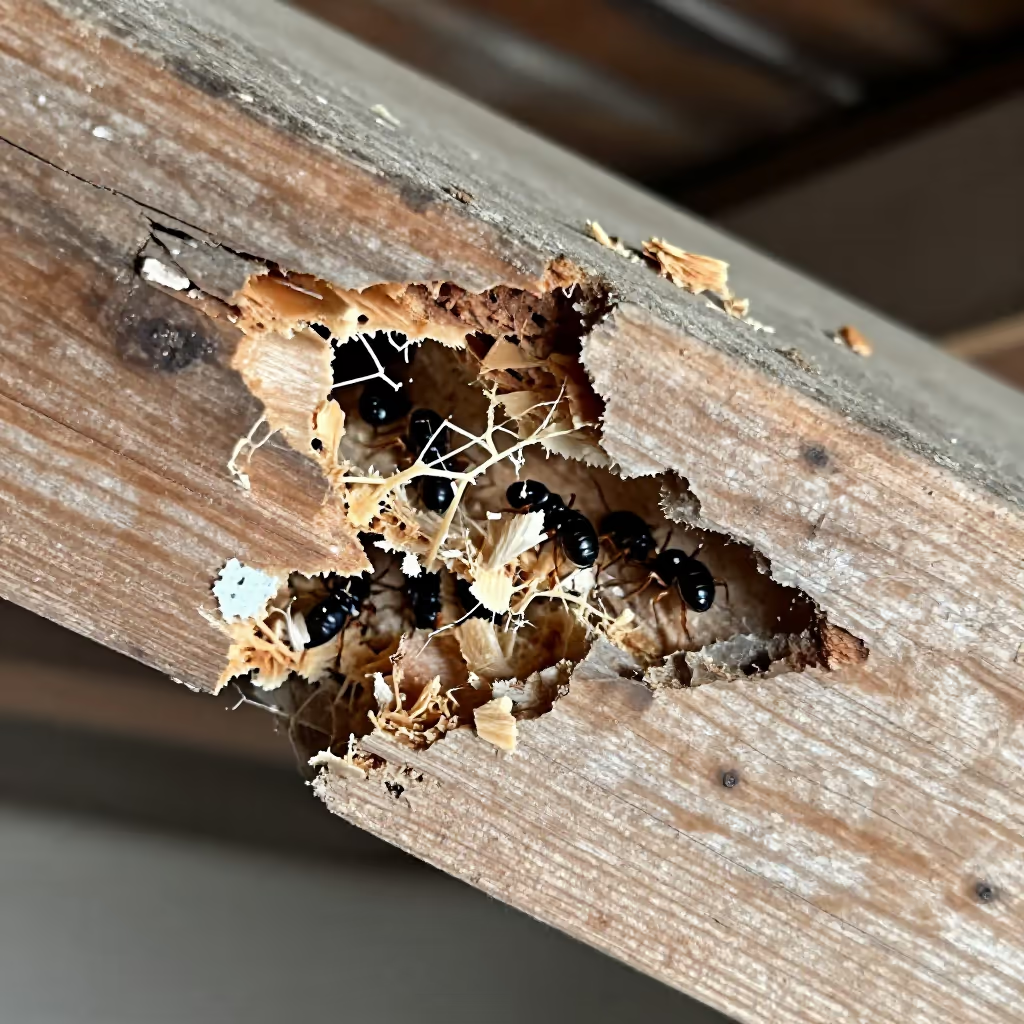
To work through a material or obstacle with difficulty or destructively.
Die Säure frisst sich langsam durch das Metall.
The acid is slowly eating through the metal.

to have a soft spot for someone
To like someone exceptionally much or be very taken with someone, often in an irrational way.
Die Lehrerin hat anscheinend einen Narren an diesem Schüler gefressen.
The teacher apparently has a soft spot for this student.
'Fressen' (to eat / to devour) is a strong verb. Pay attention to the vowel change from 'e' to 'i' in the 2nd and 3rd person singular in the present tense: du frisst, er/sie/es frisst.
Der Hund frisst am liebsten Fleisch.
The dog likes eating meat best.
Using the verb 'fressen' (to eat / to devour) for humans is a common mistake, because it is very impolite and derogatory. It is the neutral word for animals, but for humans it implies greed or bad manners.
Meine Katze frisst nur eine bestimmte Sorte Futter.
My cat only eats a certain kind of food.
In a figurative sense, 'fressen' (to consume) describes when something uses up a lot of resources. Typical objects are 'Geld' (money), 'Zeit' (time), 'Energie' (energy), or 'Benzin' (gas).
Die ständigen Reparaturen am Haus fressen unser ganzes Geld.
The constant repairs to the house are consuming all our money.
In the meaning 'to work through material', 'fressen' (to eat through) is used reflexively with the preposition 'durch' (+ accusative). The construction is 'sich durch etwas fressen' (to eat through something).
Die Feuchtigkeit frisst sich langsam durch die Wand.
The moisture is slowly eating through the wall.
The idiom 'einen Narren an jemandem gefressen haben' (to have a soft spot for someone) is a fixed expression. It means that you like someone very much in an almost irrational way. The person you like is in the dative case.
Oma hat einen Narren an ihrem jüngsten Enkel gefressen.
Grandma has a soft spot for her youngest grandson.
to eat
Essen neutrally refers to a person taking in food. Fressen can mean the same thing when used about people, but it sounds colloquial and derogatory because it emphasizes greedy, fast, or bad-mannered behavior. Essen is appropriate in a normal statement about a meal; when there is clear criticism, fressen may be appropriate.

Der Mann frisst seine Suppe hastig und ohne Manieren.
The man is devouring his soup greedily and without manners.
Der Mann isst ruhig seine Suppe.
The man is calmly eating his soup.