

die Front
front
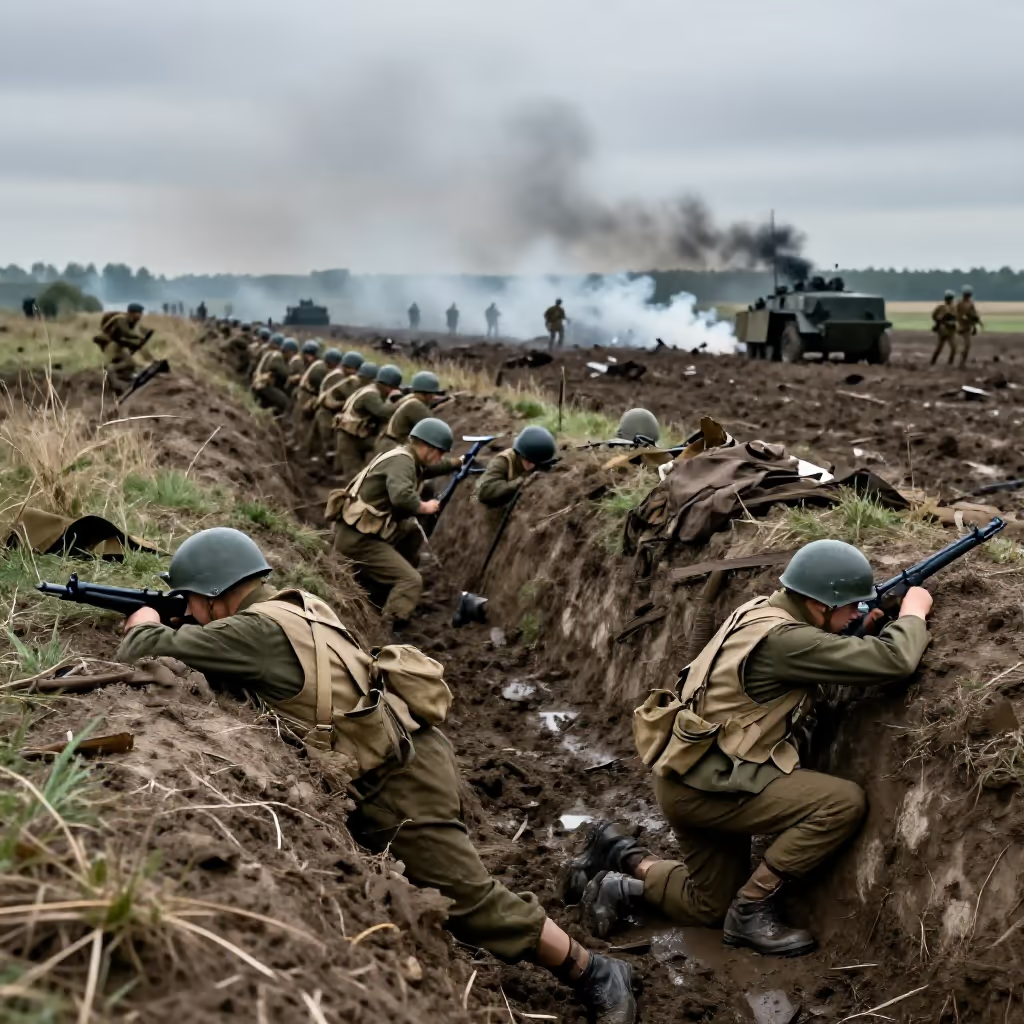
In a military context, the line where the fighting armies meet.
EXAMPLE
Die Soldaten wurden direkt nach der Ausbildung an die Front geschickt.
The soldiers were sent to the front directly after training.
front
Loading your saved state.
front
In a military context, the line where the fighting armies meet.
Die Soldaten wurden direkt nach der Ausbildung an die Front geschickt.
The soldiers were sent to the front directly after training.

front
The front side of an object, especially a building, vehicle, or device.
Die Front des alten Hauses ist mit Efeu bewachsen.
The front of the old house is covered with ivy.
front
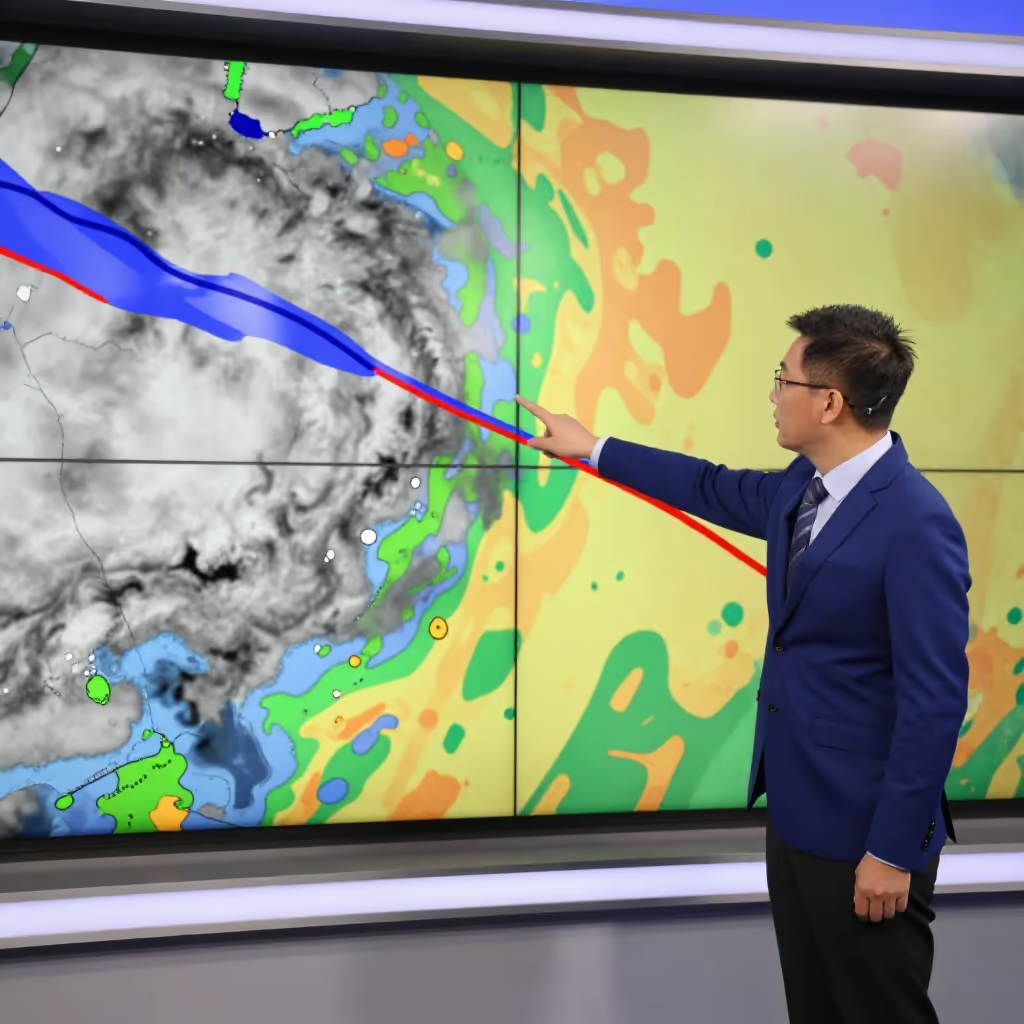
In meteorology, the boundary between two air masses with different temperatures and densities.
Eine Kaltfront nähert sich und bringt Regen und kühlere Luft.
A cold front is approaching and bringing rain and cooler air.
front
A group of people or organizations that have joined together for a common goal or against a common opponent.
Die Anwohner bildeten eine geschlossene Front gegen den Bau der neuen Fabrik.
The residents formed a united front against the construction of the new factory.

fronts
Usually used in the plural to describe the opposing positions or camps in a conflict or debate.
In der politischen Diskussion waren die Fronten zwischen den Parteien völlig verhärtet.
In the political discussion, the fronts between the parties had become completely hardened.
The plural 'die Fronten' (the fronts) almost always refers to opposing positions in a conflict (meaning m05). The singular 'die Front' (the front) can have all the other meanings, but rarely this one.
In der Debatte über das neue Gesetz sind die Fronten stark verhärtet.
In the debate about the new law, the fronts have become very hardened.
In a military context, the preposition is important. 'An die Front' (to the front, accusative) describes movement there, while 'an der Front' (at the front, dative) describes the position.
Der General schickte neue Truppen an die Front.
The general sent new troops to the front.
In meteorology, 'Front' (front) is often part of compound words that describe a specific weather situation. The most common are 'Kaltfront' (cold front) and 'Warmfront' (warm front).
Die Kaltfront bringt am Wochenende kühlere Temperaturen.
The cold front is bringing cooler temperatures at the weekend.
When a group is meant, 'Front' (front) is often used with the verb 'bilden' (to form) or the adjective 'geschlossen' (united/closed).
Die Bürgerinitiative bildete eine Front gegen die Pläne der Stadt.
The citizens' initiative formed a front against the city's plans.
In connection with conflicts, there are fixed expressions such as 'die Fronten sind verhärtet' (the fronts have hardened) or 'zwischen den Fronten stehen' (to be caught between the fronts).
Als Mediator versuchte er, zwischen den verhärteten Fronten zu vermitteln.
As a mediator, he tried to mediate between the hardened fronts.
warehouse / camp
Lager generally refers to a political or ideological camp whose members share the same position. Front emphasizes more strongly that people or organizations have joined together for a common goal or against a common opponent. A loosely defined side in a conflict is therefore more likely to be called a Lager, while a targeted alliance is more likely to be called a Front.

Die unterschiedlichen Gruppen bilden gemeinsam eine Front gegen das neue Gesetz.
The different groups are joining forces to form a united front against the new law.
Im ablehnenden Lager gibt es sehr unterschiedliche politische Gruppen.
The opposing camp includes very different political groups.