

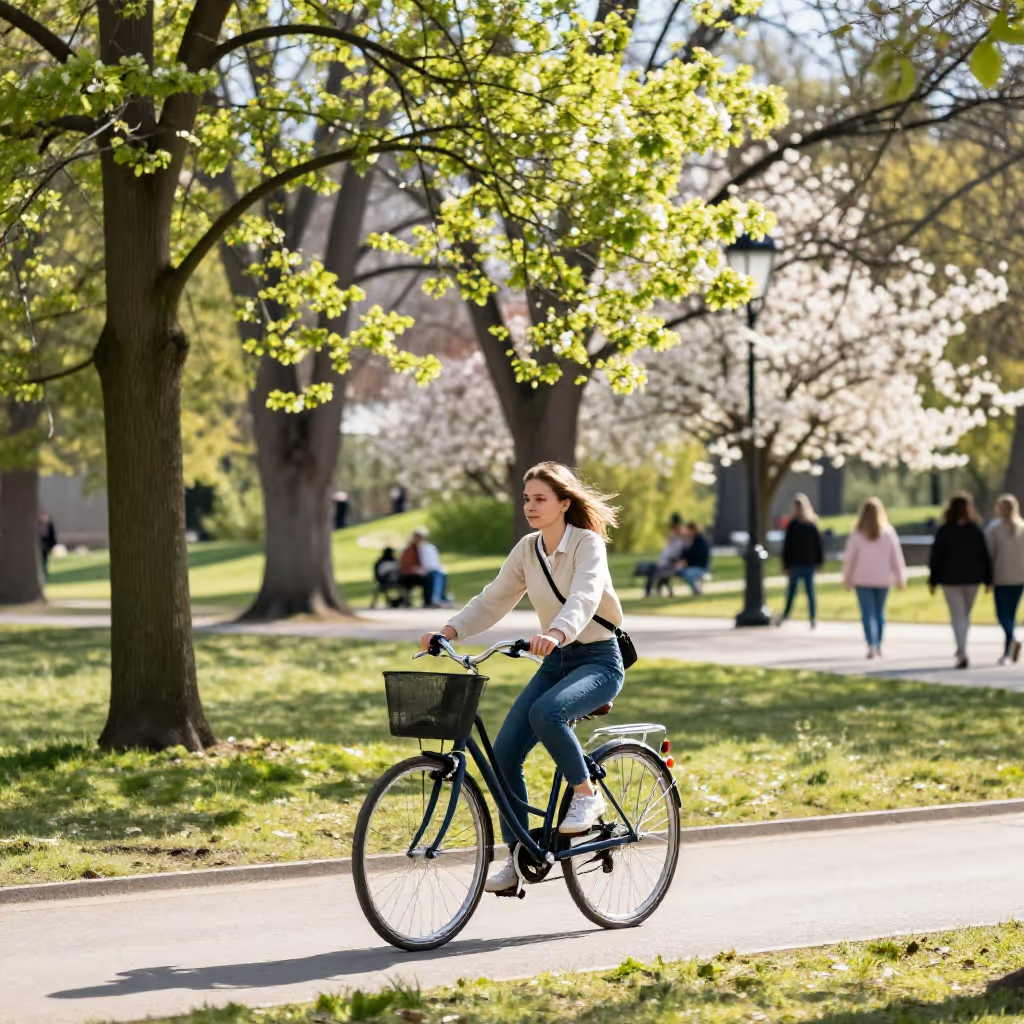
The period at the beginning of summer, which usually includes the month of June and marks the transition from spring to high summer.
example
Im Frühsommer sind die Tage am längsten und die Natur steht in voller Blüte.
In early summer, the days are longest and nature is in full bloom.
Usage tips
Word composition
The word is a clear compound of the adjective 'früh' (early) and the noun 'der Sommer' (summer). So it literally means 'the early part of summer.'
EXAMPLE
Viele Menschen genießen die ersten warmen Tage im Frühsommer.
Many people enjoy the first warm days in early summer.
Use with 'im'
As a time expression, 'Frühsommer' (early summer) is almost always used with the preposition 'im' (in the) to describe a point in time or a period of time.
EXAMPLE
Im Frühsommer blühen die Rosen in unserem Garten.
In early summer, the roses bloom in our garden.
Typical context
'Frühsommer' (early summer) is often associated with typical natural events of this season, such as blooming plants, long days, and the first truly warm temperatures.
EXAMPLE
Die Erdbeerernte beginnt bei uns meist im Frühsommer.
The strawberry harvest usually begins here in early summer.
Compare with
confusable
Frühsommer vs Sommer
summer
'der Sommer' and 'der Frühsommer' are closely connected. 'Sommer' means the whole warm season between spring and autumn. 'Frühsommer' means only the beginning of summer, often June or the time right after spring. Then it is usually already warm, but not as hot as later on. Learners may confuse the words because early summer is part of summer. If you are speaking generally about the season, 'Sommer' fits. If you mean the beginning of this period, 'Frühsommer' is more precise.
Frühsommer
Im Frühsommer blühen im Garten die ersten Rosen.
In early summer, the first roses bloom in the garden.
Sommer
Wegen der langen Tage sind wir im Sommer oft bis spät draußen.
Because of the long days, we are often outside until late in summer.