

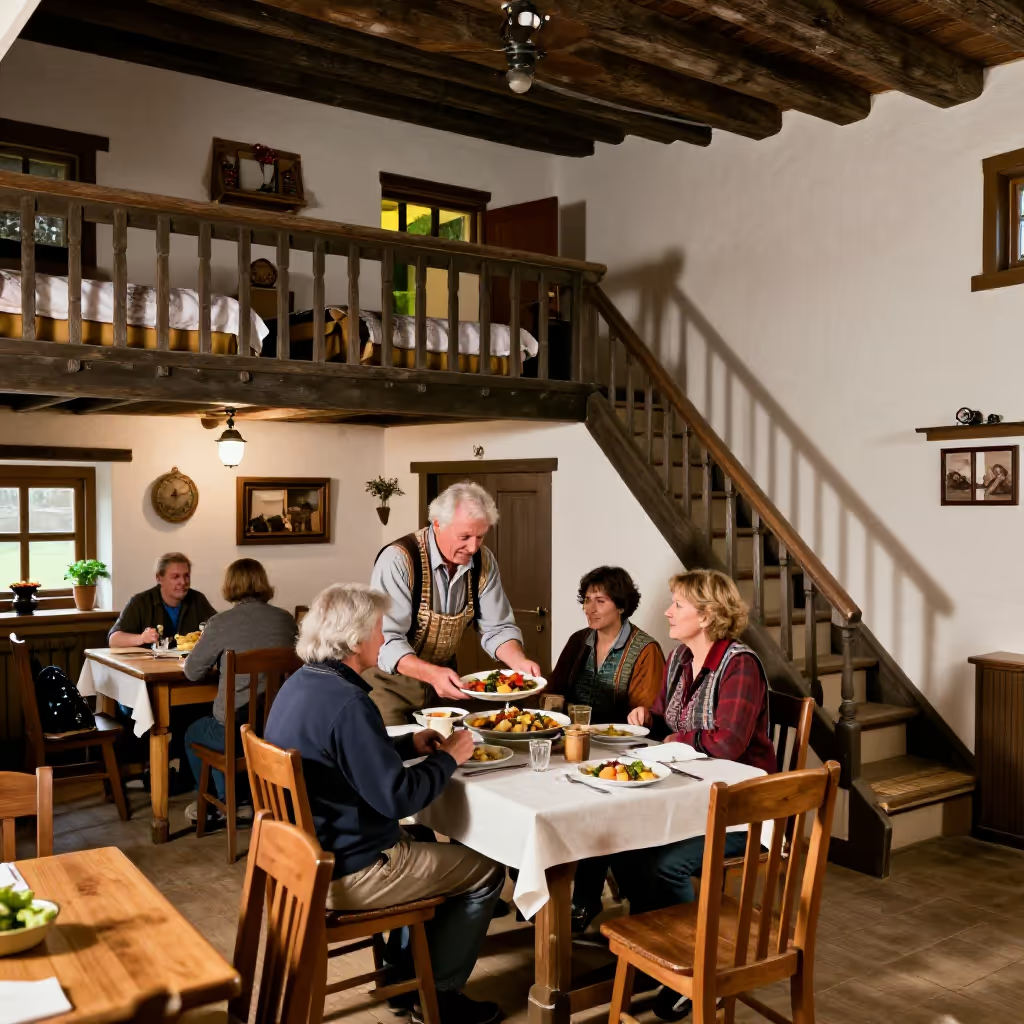
A traditional inn, often located in the countryside, that offers food, drinks, and usually also rooms for overnight stays.
example
Nach der langen Wanderung kehrten wir in einem gemütlichen Gasthof ein.
After the long hike, we stopped at a cozy inn.

Usage tips
Compound word
The word 'Gasthof' (inn) is composed of 'Gast' (guest) and 'Hof' (courtyard/farmstead). So it literally describes a courtyard or estate that receives guests.
EXAMPLE
Früher waren Gasthöfe wichtige Stationen für Reisende.
In the past, inns were important stops for travelers.
Correct preposition
To describe movement, you use 'in den Gasthof' (into the inn, accusative). To describe staying somewhere, you say 'im Gasthof' (in the inn, dative).
EXAMPLE
Wir gehen heute Abend in den Gasthof zum Essen.
We're going to the inn for dinner this evening.
Typical collocations
Common verbs used with 'Gasthof' (inn) are 'in einem Gasthof einkehren' (to stop at an inn, take a break there) and 'in einem Gasthof übernachten' (to stay overnight at an inn).
EXAMPLE
Nach der langen Fahrt sind wir in einem kleinen Gasthof eingekehrt.
After the long drive, we stopped at a small inn.
Compare with
near_synonym · confusable
Gasthof vs Hotel
hotel
'das Hotel' and 'der Gasthof' can both offer rooms for travelers. A hotel is usually more focused on overnight accommodation and service, and it can be large or modern. A 'Gasthof' is a traditional inn, often in the countryside, where you can usually eat and also stay overnight. The words can be confused because both can be a place to stay. If you mainly mean a room with typical hotel service, 'Hotel' is appropriate. If food, a rural location, and a traditional atmosphere are also part of the meaning, 'Gasthof' sounds more precise.
Gasthof
Auf der Wanderung macht er in einem alten Gasthof Mittagspause.
During the hike, he takes a lunch break at an old inn.
Hotel
Nico wartet vor dem Hotel auf seine Klasse.
Nico is waiting for his class in front of the hotel.