

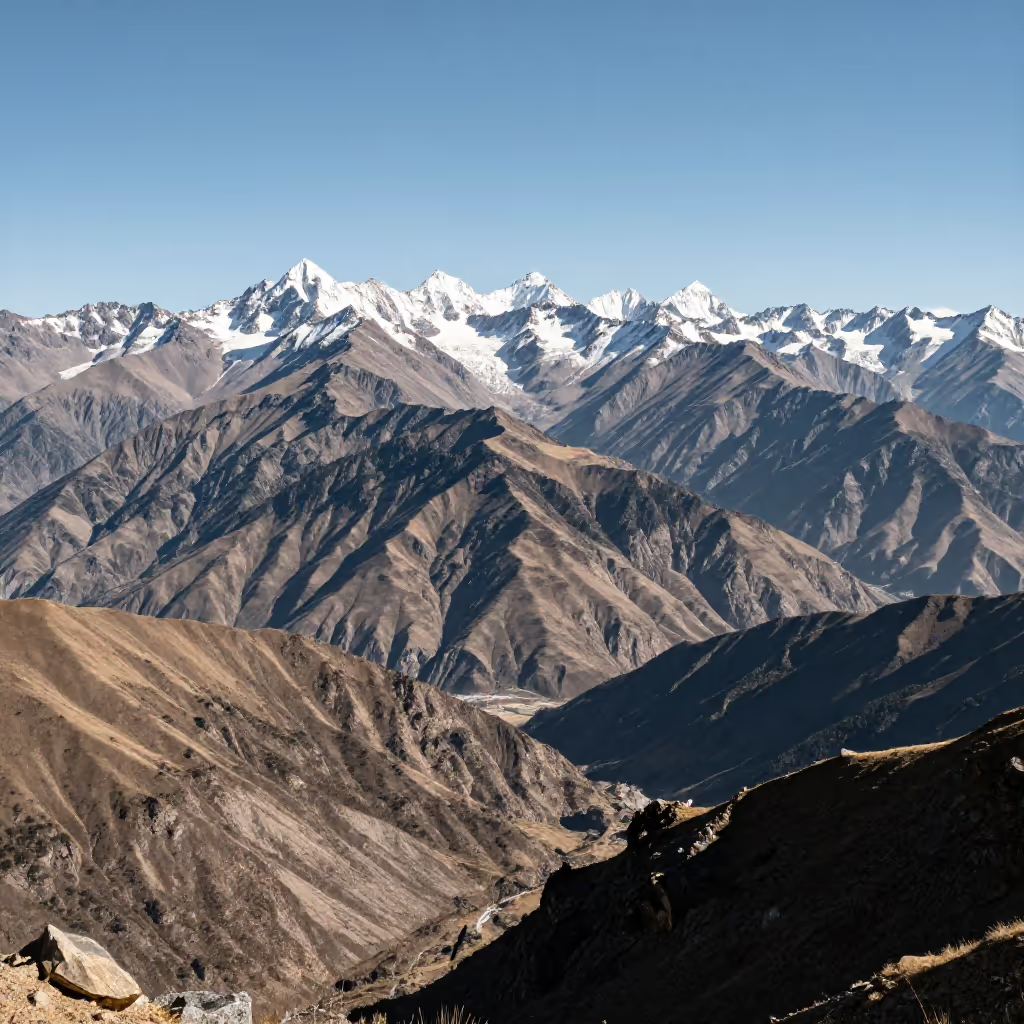
das Gebirge
mountain range
A large, connected landscape made up of many mountains; a mountain chain or mountain massif.
EXAMPLE
Die Alpen sind das höchste Gebirge in Mitteleuropa.
The Alps are the highest mountain range in Central Europe.
mountain range
Loading your saved state.
mountain range
A large, connected landscape made up of many mountains; a mountain chain or mountain massif.
Die Alpen sind das höchste Gebirge in Mitteleuropa.
The Alps are the highest mountain range in Central Europe.
'Gebirge' (mountain range) is a collective noun derived from 'Berg' (mountain). The prefix 'Ge-' is often used in German to indicate a collection or group of things.
Das Gebirge besteht aus hunderten einzelnen Bergen.
The mountain range consists of hundreds of individual mountains.
Although a 'Gebirge' (mountain range) consists of many mountains, the word is usually used in the singular. The plural 'die Gebirge' (the mountain ranges) is rare and is only used when talking about several different mountain chains.
Wir verbringen unseren Urlaub dieses Jahr im Gebirge.
We are spending our vacation in the mountains this year.
Pay attention to the prepositions and the case: When you are in the mountains, you are 'im Gebirge' (in the mountains; dative). When you travel there, you go 'ins Gebirge' (to/into the mountains; accusative).
Im Gebirge ist die Luft besonders frisch.
In the mountains, the air is especially fresh.
uplands
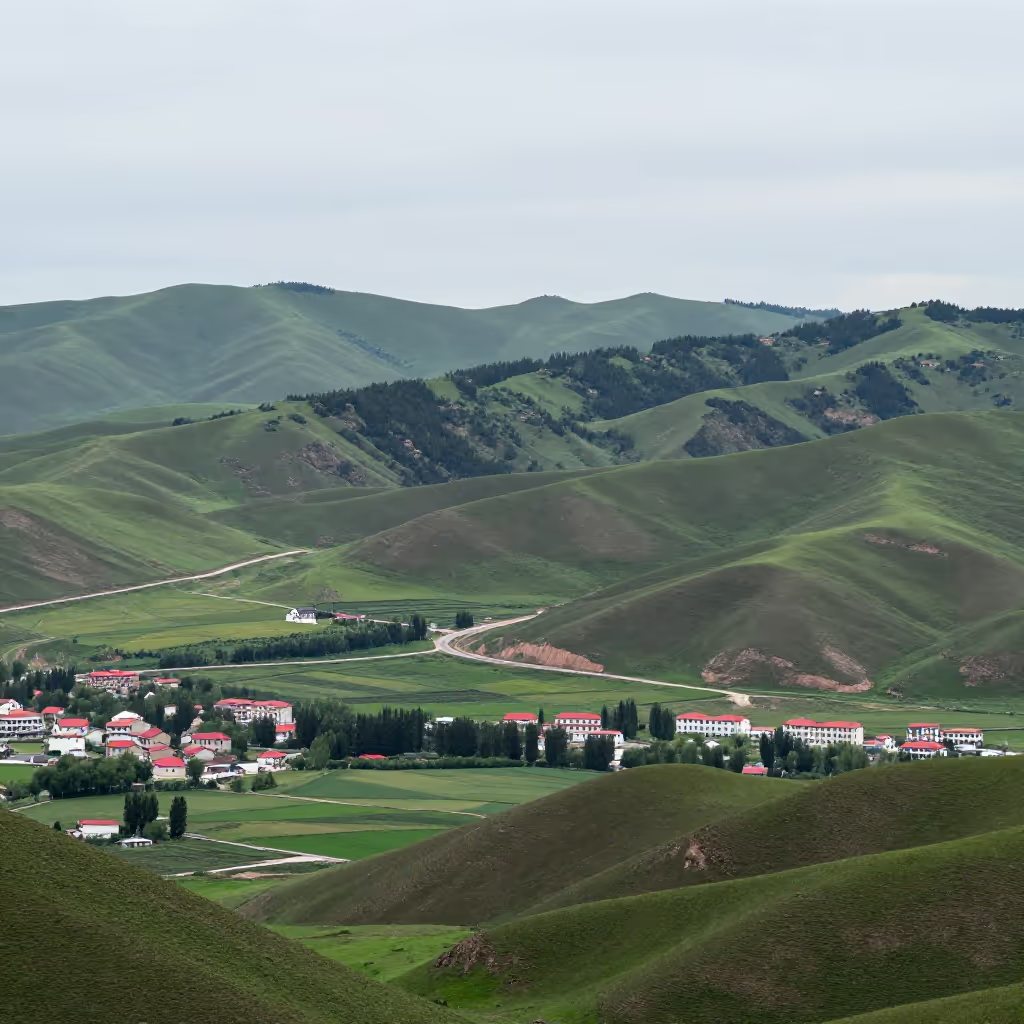
Gebirge and Bergland both refer to landscapes with many mountains. Gebirge more strongly suggests a connected mountain range or massif, while Bergland is more general and also includes hilly, lower-elevation landscapes. Use Gebirge for a clearly connected mountain region and Bergland for a broad, mountainous landscape.
Die Wanderer durchquerten das Gebirge über einen schmalen Pass.
The hikers crossed the mountain range through a narrow pass.
Die Bauern leben im Bergland mit seinen vielen Hügeln und niedrigeren Bergen.
The farmers live in the uplands, with their many hills and lower mountains.