


das Gebiss
teeth
The complete set of teeth of a human or animal in the jaw.
EXAMPLE
Ein gesundes Gebiss erfordert regelmäßige Pflege und Zahnarztbesuche.
Healthy teeth require regular care and visits to the dentist.
teeth / dentures / bit
das Gebiss, die Gebisse
Loading your saved state.
teeth
The complete set of teeth of a human or animal in the jaw.
Ein gesundes Gebiss erfordert regelmäßige Pflege und Zahnarztbesuche.
Healthy teeth require regular care and visits to the dentist.
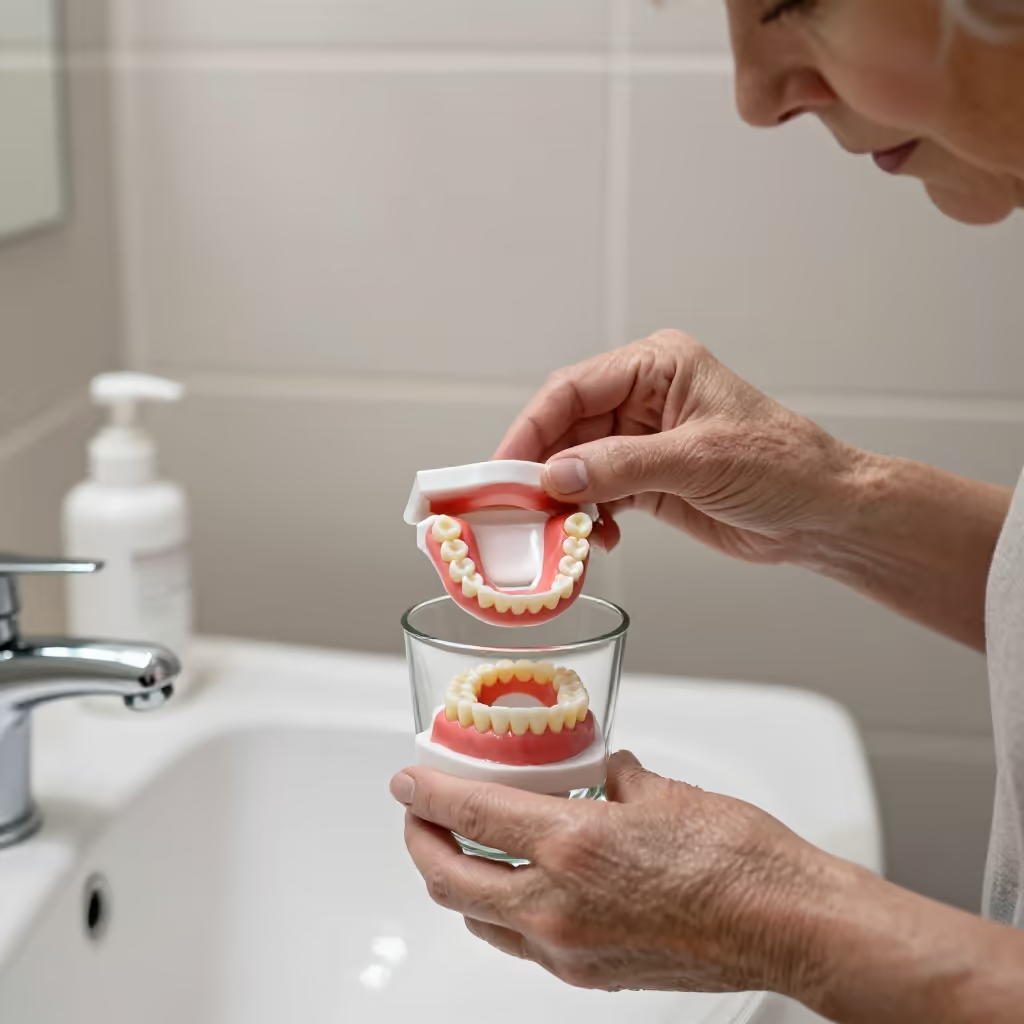
dentures
An artificial dental prosthesis that replaces missing teeth. Colloquially also called 'die dritten Zähne' (third teeth).
Meine Großmutter legt ihr Gebiss nachts immer in ein Glas Wasser.
My grandmother always puts her dentures in a glass of water at night.
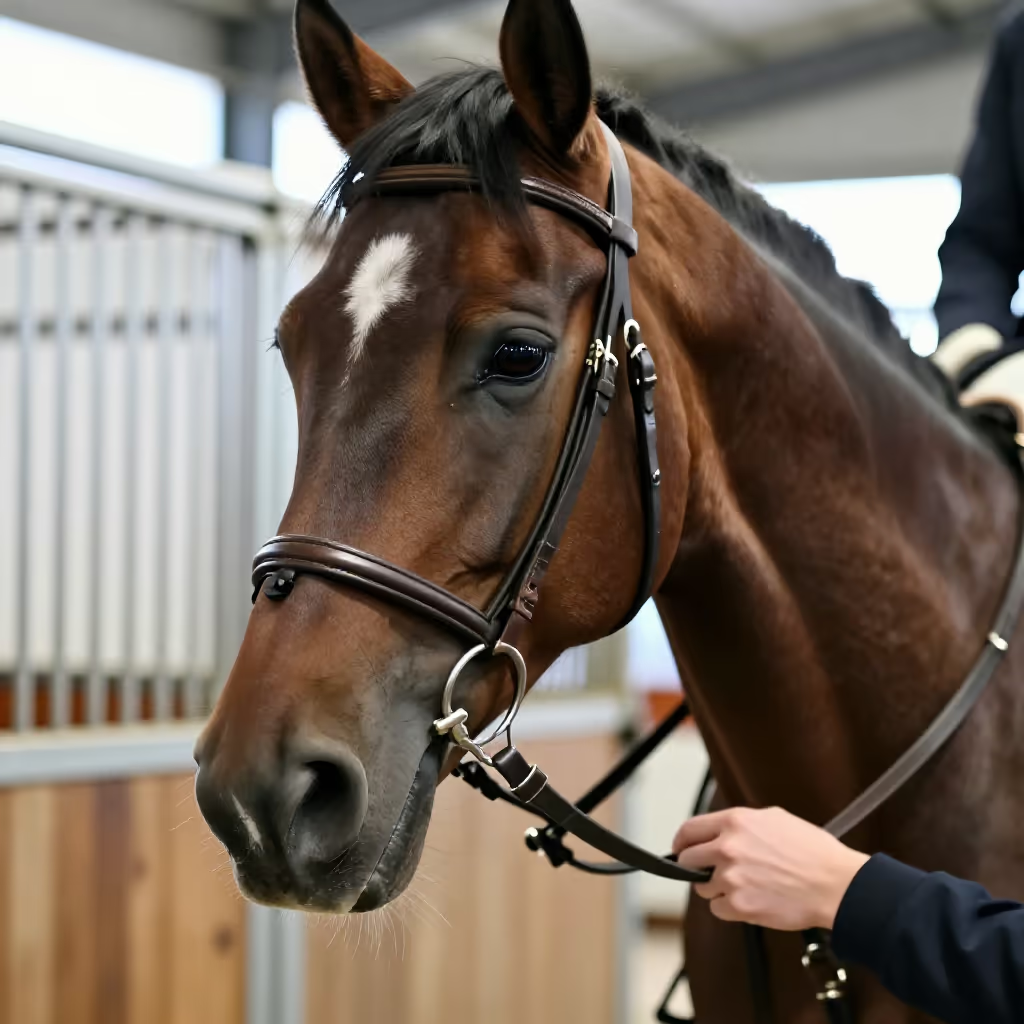
bit
The part of a horse's bridle that lies in the animal's mouth and is used for steering.
Der Reiter wählte ein sanftes Gebiss für das junge Pferd.
The rider chose a gentle bit for the young horse.
| gender | neuter das |
|---|---|
| plural | die Gebisse |
| genitive | des Gebisses |
| singular | plural | |
|---|---|---|
| nominative | das Gebiss | die Gebisse |
| accusative | das Gebiss | die Gebisse |
| dative | dem Gebiss | den Gebissen |
| genitive | des Gebisses | der Gebisse |
The article changes with the case; it is shown in colour.
The word 'Gebiss' is related to the verb 'beißen' (to bite). The prefix 'Ge-' forms a collective noun here, as it often does in German. So das Gebiss is the complete set of teeth with which one bites.
Der Hund hat ein sehr kräftiges Gebiss.
The dog has very strong teeth.
The context reveals which meaning is intended: In connection with 'Zahnarzt' (dentist) or 'Pflege' (care), it refers to natural teeth. With 'Großeltern' (grandparents) or 'reinigen' (to clean), artificial teeth are often meant. The word 'Pferd' (horse) or 'Reiten' (riding) points to the part of the bridle.
Der Zahnarzt kontrollierte das Gebiss des Jungen.
The dentist checked the boy's teeth.
Er reinigt sein Gebiss jeden Abend gründlich.
He cleans his dentures thoroughly every evening.
Dieses Gebiss ist für das Pferdemaul zu scharf.
This bit is too harsh for the horse's mouth.
When referring to a dental prosthesis, 'Gebiss' (dentures) is often used with verbs such as 'tragen' (to wear), 'einsetzen' (to put in), 'herausnehmen' (to take out), or 'reinigen' (to clean). People also speak of a 'künstliches Gebiss' (artificial set of teeth).
Mein Opa trägt seit letztem Jahr ein Gebiss.
My grandpa has worn dentures since last year.
dental prosthesis
Both words refer to an artificial replacement for missing teeth. „Gebiss“ usually means a removable set of dentures, while „Zahnersatz“ is the broader term for various artificial devices. Use „Gebiss“ for dentures and „Zahnersatz“ when a crown, bridge, or implant may also be meant.

Nach dem Verlust vieler Zähne bekam sie ein herausnehmbares Gebiss.
After losing many teeth, she got removable dentures.
Nach dem Verlust eines Zahns bekam sie eine Brücke als Zahnersatz.
After losing a tooth, she got a bridge as a dental replacement.