

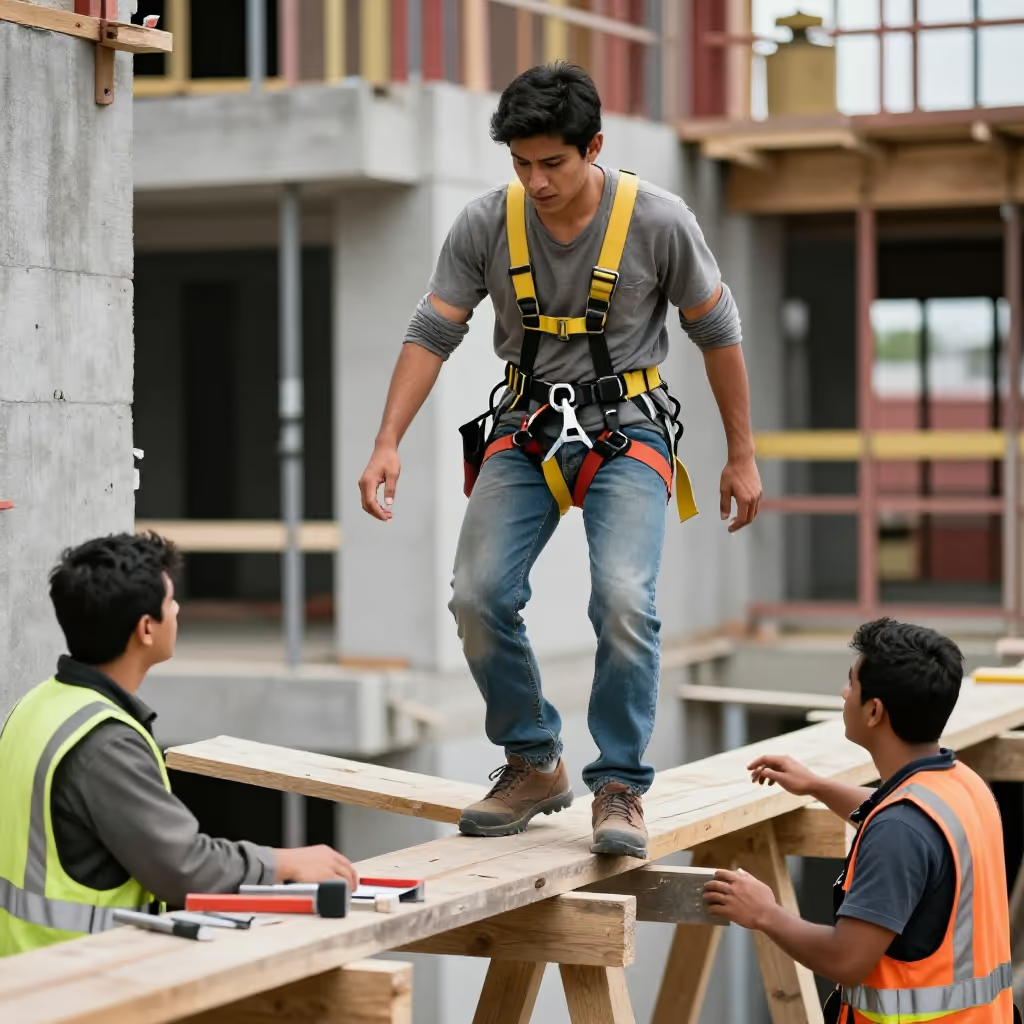
riskieren
to risk
To do something where there is the possibility of a negative outcome, damage, or loss; to put something at stake.
EXAMPLE
Wer ohne Ticket fährt, riskiert eine hohe Geldstrafe.
Anyone who rides without a ticket risks a large fine.
to risk
Loading your saved state.
to risk
To do something where there is the possibility of a negative outcome, damage, or loss; to put something at stake.
Wer ohne Ticket fährt, riskiert eine hohe Geldstrafe.
Anyone who rides without a ticket risks a large fine.

to risk something
To dare or try something even though success is not certain.
Obwohl die Idee gewagt war, haben wir es riskiert und ein neues Unternehmen gegründet.
Although the idea was bold, we risked it and founded a new company.

to risk a glance
To look somewhere briefly and often secretly or cautiously.
Er riskierte einen schnellen Blick auf die Lösungen seines Nachbarn.
He risked a quick glance at his neighbor's answers.
The verb 'riskieren' (to risk) belongs to the noun 'das Risiko' (risk). When you risk something, you 'ein Risiko eingehen' (take a risk).
Er ging ein hohes Risiko ein, als er sein ganzes Geld in diese Aktie investierte.
He took a high risk when he invested all his money in this stock.
'Riskieren' (to risk) is very often used with an infinitive construction with 'zu' (to). This describes which negative outcome is being risked.
Er riskierte, seinen Flug zu verpassen, weil er zu spät losfuhr.
He risked missing his flight because he left too late.
The verb 'riskieren' (to risk) always needs an accusative object. Common objects are negative consequences such as 'eine Niederlage riskieren' (to risk a defeat), 'eine Verletzung riskieren' (to risk an injury), or 'eine Strafe riskieren' (to risk a penalty/fine).
Der Sportler wollte keine schwere Verletzung riskieren und beendete den Wettkampf.
The athlete did not want to risk a serious injury and ended the competition.
The expression 'einen Blick riskieren' (to risk a glance) is very common. It means to look somewhere briefly, cautiously, or secretly.
Sie riskierte einen Blick auf die Uhr, weil der Vortrag so langweilig war.
She risked a glance at the clock because the lecture was so boring.
to insert / to begin / to use
In a game or a bet, both words can be associated with a possible loss. Einsetzen specifically refers to staking a certain amount of money on an outcome, whereas riskieren more generally emphasizes the danger of a loss or negative outcome. For a specific bet amount, einsetzen is therefore often the better choice.

Mia riskierte zehn Euro, obwohl sie den Ausgang nicht kannte.
Mia risked ten euros even though she did not know the outcome.
Mia setzte zehn Euro auf den Sieg ihrer Mannschaft ein.
Mia staked ten euros on her team winning.