


gefahrlos
safe
Without posing or being associated with danger or risk; safe.
EXAMPLE
Nach der Entschärfung der Bombe war das Betreten des Geländes wieder gefahrlos möglich.
After the bomb was defused, entering the site was possible again safely.
safe
Loading your saved state.
safe
Without posing or being associated with danger or risk; safe.
Nach der Entschärfung der Bombe war das Betreten des Geländes wieder gefahrlos möglich.
After the bomb was defused, entering the site was possible again safely.
The adjective is made up of 'Gefahr' (danger) and the ending '-los' (-less). The ending '-los' means 'without', so 'gefahrlos' literally means 'without danger'.
Dank der neuen Brücke ist der Schulweg für die Kinder jetzt gefahrlos.
Thanks to the new bridge, the way to school is now safe for the children.
'Gefahrlos' (safe/safely) can describe an action as an adverb or stand before a noun as an adjective. As an adverb it stays unchanged; as an adjective it is declined.
Man kann das Medikament gefahrlos einnehmen.
You can take the medication safely.
This word is often used in contexts where safety is important. It is frequently found in instructions, warnings, or descriptions of products and places.
Die Chemikalie kann nach der Verdünnung gefahrlos entsorgt werden.
The chemical can be disposed of safely after dilution.
sure / safe
Sicher and gefahrlos can both describe an activity with no expected harm. Sicher is broader and can also emphasize that the people involved are protected or that there is good safety provision. Gefahrlos specifically describes the activity itself as involving no danger or risk. Use „gefahrlos“ when exactly this absence of danger is meant.
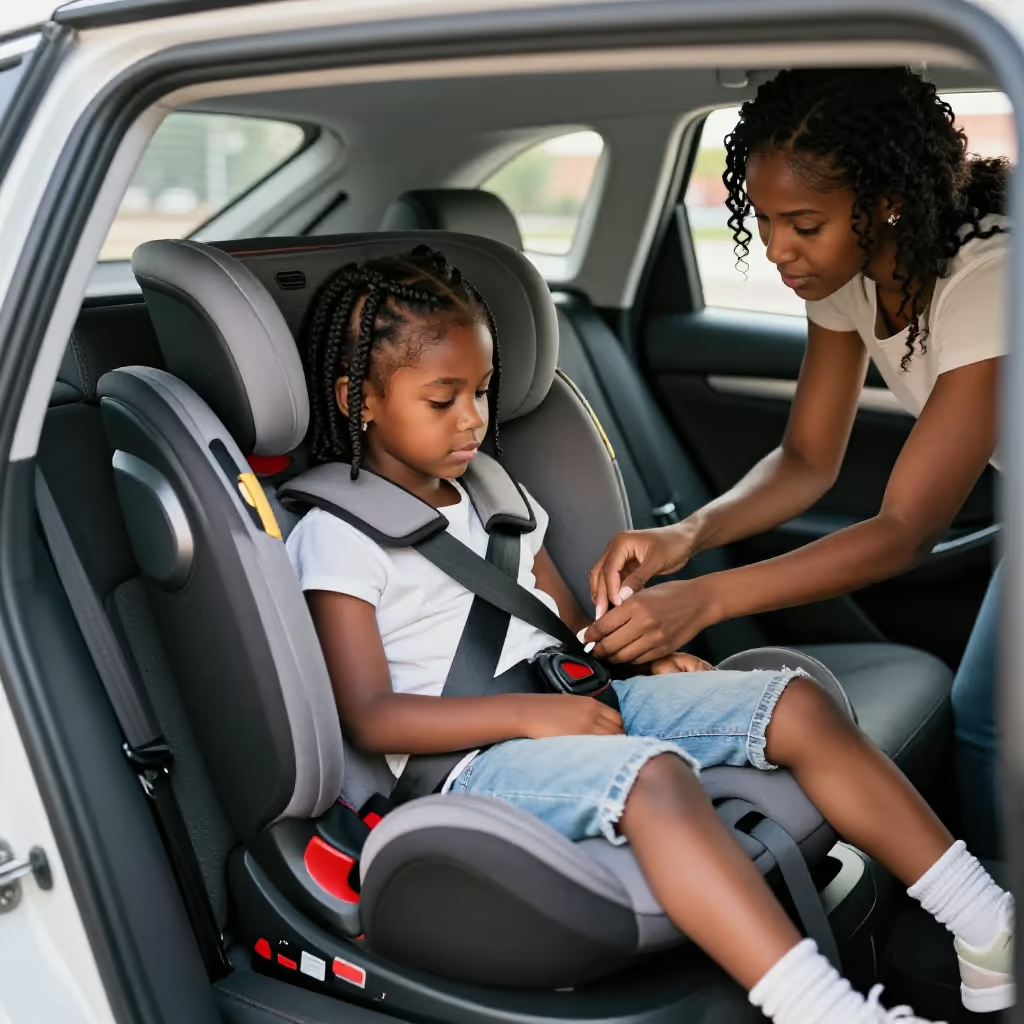
Das Klettern an dieser niedrigen Wand ist gefahrlos, weil dabei kein nennenswertes Risiko besteht.
Climbing on this low wall is risk-free because it involves no significant risk.
Das Klettern an dieser Wand ist sicher, weil die Kinder gut gesichert sind.
Climbing on this wall is safe because the children are properly secured.