

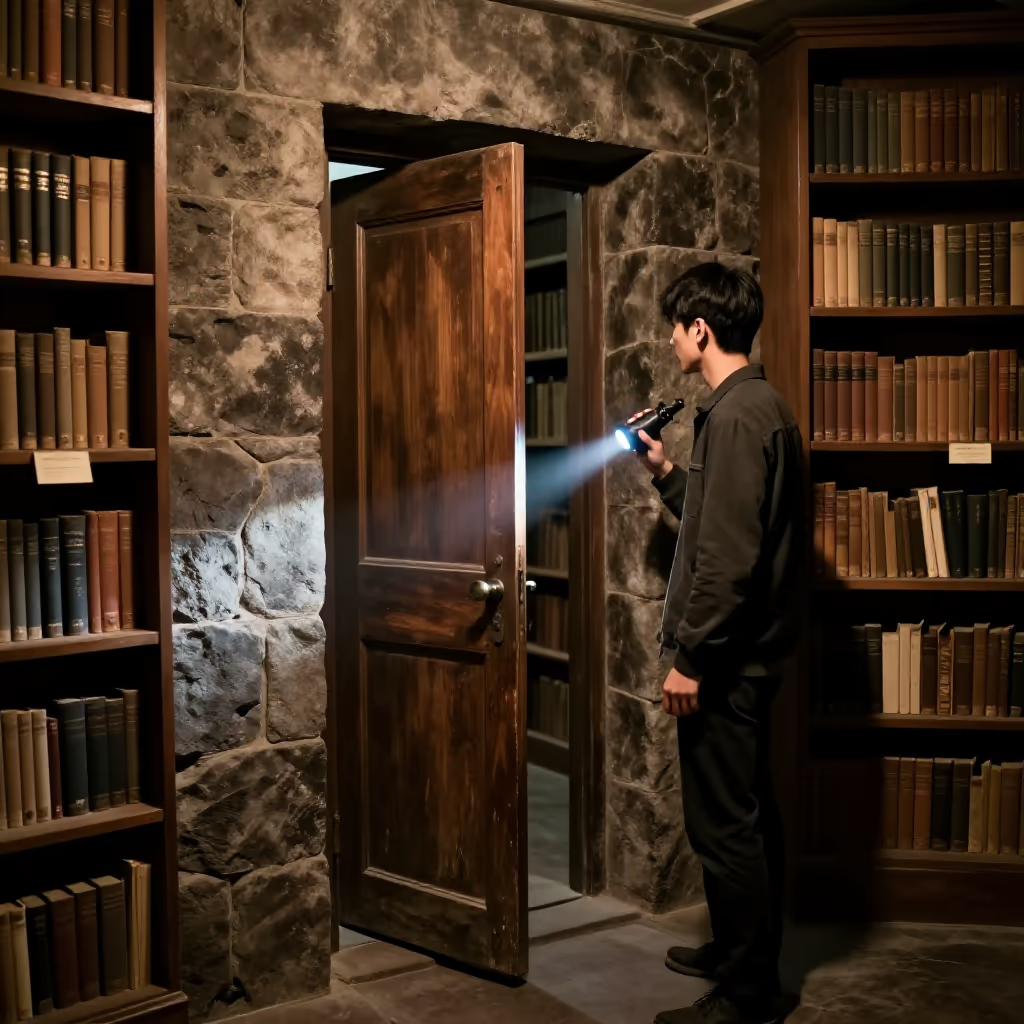
Something that is full of secrets, seems puzzling or inexplicable, and therefore arouses curiosity.
example
Der alte Mann erzählte uns eine geheimnisvolle Geschichte aus seiner Jugend.
The old man told us a mysterious story from his youth.
Usage tips
Word composition
The word is made up of 'das Geheimnis' (the secret/mystery) and the ending '-voll' (-ful). So it literally means 'full of secrets.'
EXAMPLE
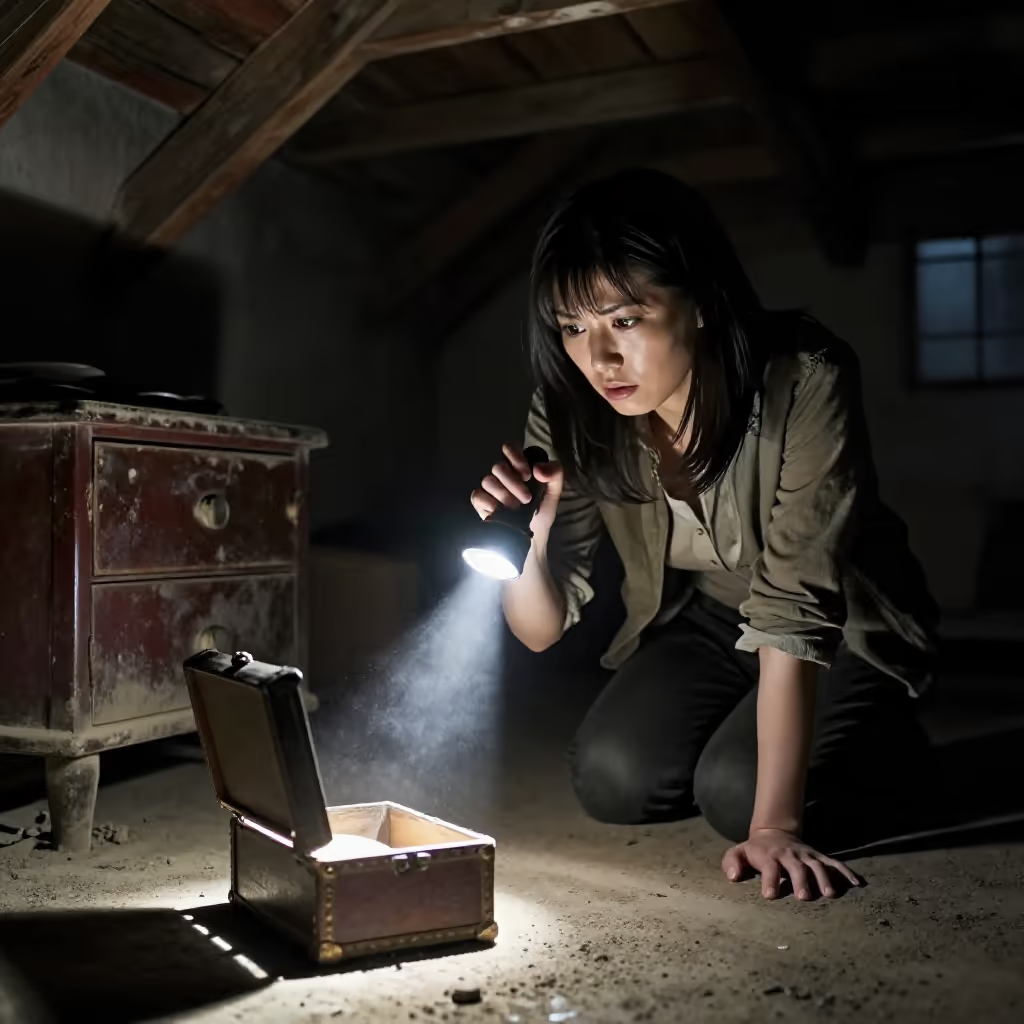
Im Keller des alten Hauses herrschte eine geheimnisvolle Atmosphäre.
There was a mysterious atmosphere in the basement of the old house.
Typical combinations
'Geheimnisvoll' (mysterious) often describes things that have an inexplicable or fascinating aura. Typical combinations are 'ein geheimnisvoller Blick' (a mysterious look), 'ein geheimnisvolles Lächeln' (a mysterious smile), 'ein geheimnisvoller Ort' (a mysterious place), or 'eine geheimnisvolle Person' (a mysterious person).
EXAMPLE
Sie gab mir nur eine geheimnisvolle Antwort auf meine Frage.
She gave me only a mysterious answer to my question.
Flexible use
You can use 'geheimnisvoll' (mysterious) flexibly in a sentence: before a noun, after a verb like 'sein' (to be) or 'wirken' (to seem/appear), or as an adverb describing a verb.
EXAMPLE
Das war eine geheimnisvolle Nachricht.
That was a mysterious message.
Compare with
antonym
geheimnisvoll vs offensichtlich
obvious / apparently
'offensichtlich' and 'geheimnisvoll' are opposites when it comes to clarity. 'offensichtlich' says that something is clear and easy to recognize. 'geheimnisvoll' says that something seems puzzling and you do not understand it right away. 'offensichtlich' fits when the explanation or cause is clearly in front of you. 'geheimnisvoll' fits when something leaves questions open and therefore seems exciting or strange.
geheimnisvoll
Der alte Brief auf dem Tisch wirkt geheimnisvoll.
The old letter on the table seems mysterious.
offensichtlich
Nach dem Test war offensichtlich, dass sie gut vorbereitet gewesen war.
After the test, it was obvious that she had been well prepared.