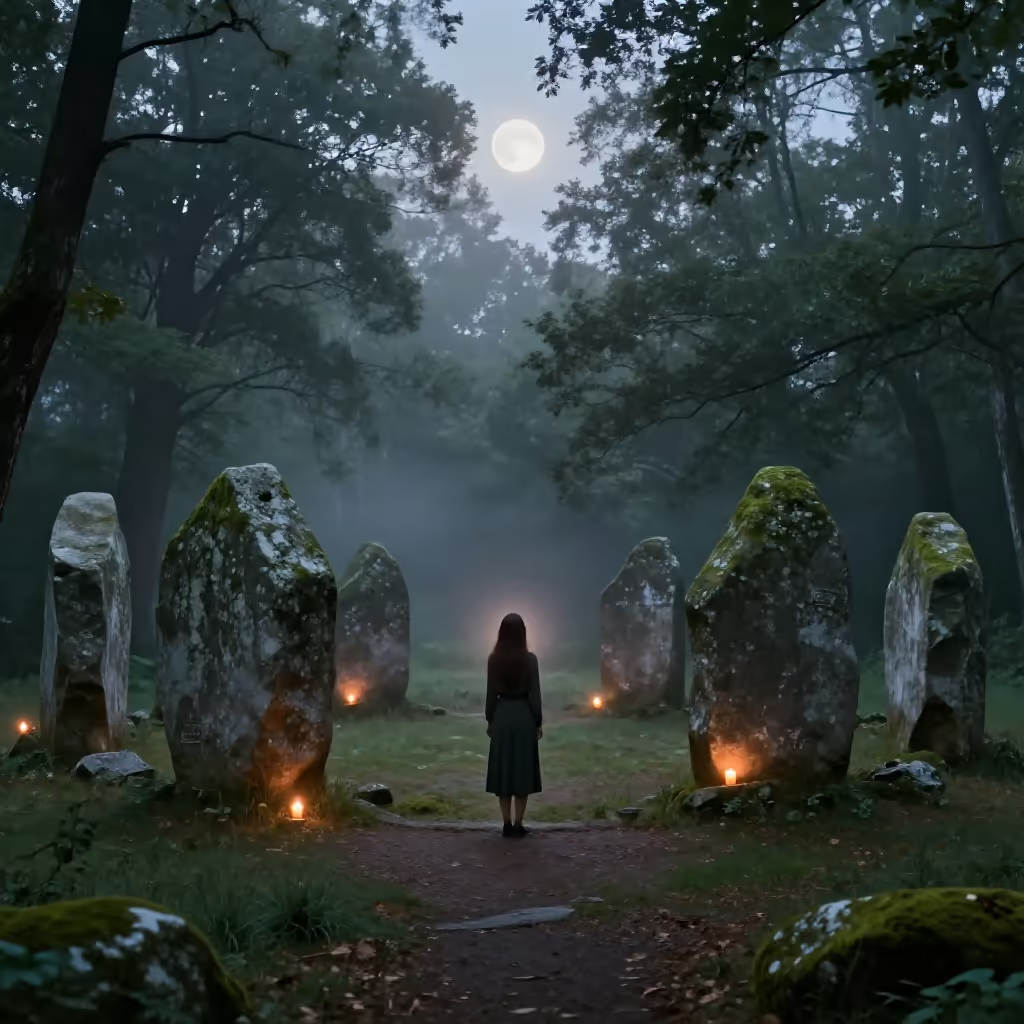
Mysterious, enigmatic, and inexplicable in a way that is often associated with spirituality, magic, or the supernatural.
example
Die alten Ruinen im Nebel hatten eine mystische Atmosphäre.
The old ruins in the fog had a mystical atmosphere.

Usage tips
Word structure
The adjective 'mystisch' (mystical) is derived from the noun 'die Mystik' (mysticism). The ending '-isch' is a typical ending for adjectives that express belonging or relation.
EXAMPLE
Die Mystik beschäftigt sich mit spirituellen Grenzerfahrungen.
Mysticism deals with extreme spiritual experiences.
Context clue
The general meaning 'geheimnisvoll' (mysterious) often refers to places or moods. The specific meaning 'zur Mystik gehörend' (belonging to mysticism) is found in religious, philosophical, or historical texts.
EXAMPLE
Der neblige Wald hatte eine mystische Ausstrahlung.
The foggy forest had a mystical aura.
Typical collocations
In the meaning 'geheimnisvoll' (mysterious), 'mystisch' (mystical) is often used to describe a special atmosphere or effect. Typical nouns are 'Ort' (place), 'Stimmung' (mood), 'Kraft' (power), or 'Erlebnis' (experience).
EXAMPLE
Viele Menschen reisen zu diesem Berg, weil er als mystischer Ort gilt.
Many people travel to this mountain because it is considered a mystical place.
Typical collocations
When it refers to the spiritual tradition, 'mystisch' (mystical) often appears with technical terms. Typical nouns are 'Tradition' (tradition), 'Theologie' (theology), 'Erfahrung' (experience), or 'Denker' (thinker).
EXAMPLE
In ihrem Vortrag sprach sie über die Rolle der Frau in der mystischen Tradition.
In her lecture, she spoke about the role of women in the mystical tradition.
Compare with
confusable
mystisch vs religiös
religious
'religiös' and 'mystisch' can both have to do with faith, spirituality, or things outside everyday life. 'religiös' is used when something is about religion, faith, prayers, rules, or religious topics. 'mystisch' means more mysterious and hard to explain; it can feel spiritual, but it does not have to belong to a specific religion. In a special sense, 'mystisch' can also mean a religious experience of the divine. Learners may confuse the words because both occur in spiritual contexts. As a guide: 'religiös' fits religion and religious practice, while 'mystisch' fits mystery, atmosphere, and inner experience.
mystisch
Der alte Wald wirkte im Nebel fast mystisch.
The old forest seemed almost mystical in the fog.
religiös
Für ihre Familie ist der Sonntag ein religiöser Tag mit Gebet und Besuch in der Kirche.
For her family, Sunday is a religious day with prayer and a visit to church.