

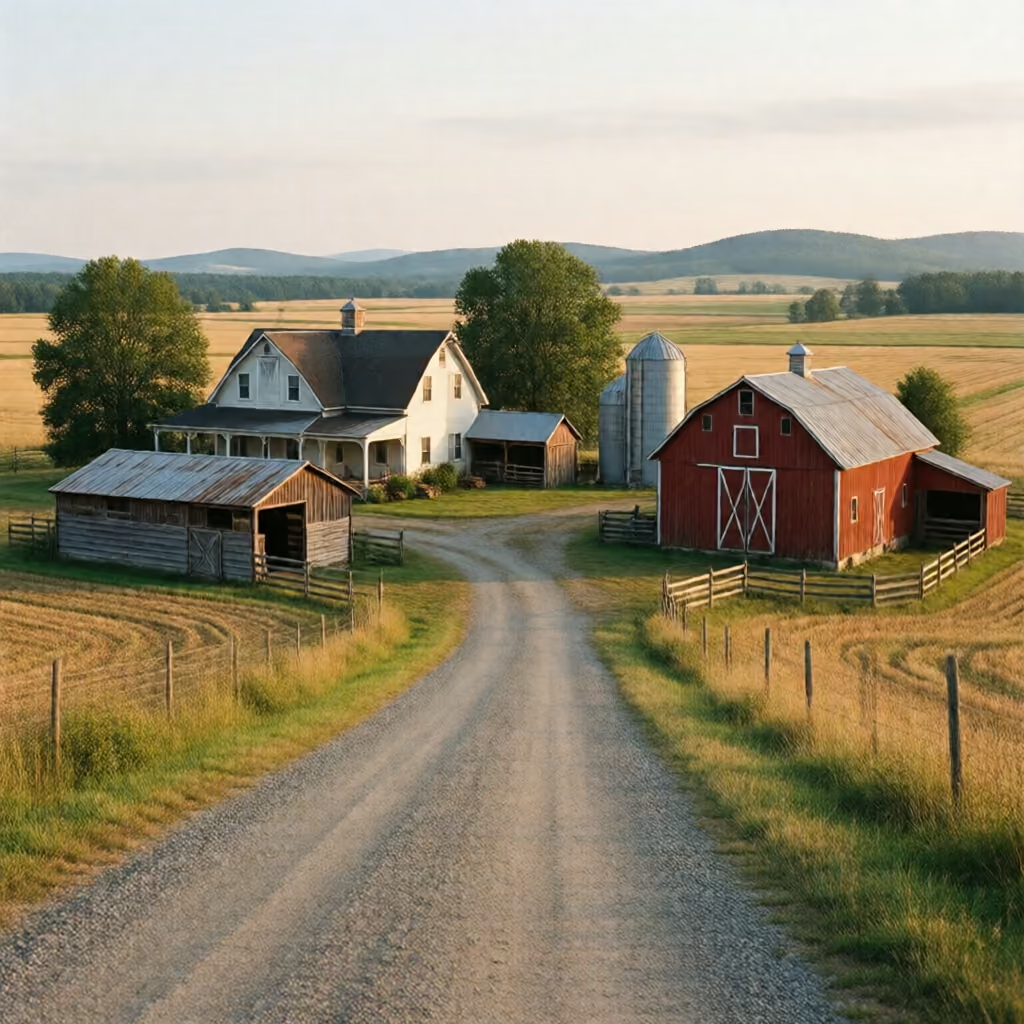
das Gehöft
farmstead
A rural property consisting of a farmhouse and several farm buildings.
EXAMPLE
Das Gehöft liegt abgelegen zwischen den Feldern.
The farmstead lies in an isolated location among the fields.
farmstead
das Gehöft, die Gehöfte
Loading your saved state.
farmstead
A rural property consisting of a farmhouse and several farm buildings.
Das Gehöft liegt abgelegen zwischen den Feldern.
The farmstead lies in an isolated location among the fields.
| gender | neuter das |
|---|---|
| plural | die Gehöfte |
| genitive | des Gehöfts |
| singular | plural | |
|---|---|---|
| nominative | das Gehöft | die Gehöfte |
| accusative | das Gehöft | die Gehöfte |
| dative | dem Gehöft | den Gehöften |
| genitive | des Gehöfts des Gehöftes | der Gehöfte |
The article changes with the case; it is shown in colour.
'Gehöft' (farmstead) is used mainly in rural and descriptive contexts, such as landscapes, agriculture, or old settlements. The word often sounds factual or slightly literary.
Am Waldrand steht ein altes Gehöft mit roten Ziegeldächern.
An old farmstead with red-tiled roofs stands at the edge of the forest.
Common collocations include 'ein abgelegenes Gehöft' (an isolated farmstead), 'ein verlassenes Gehöft' (an abandoned farmstead), and 'ein Gehöft bewirtschaften' (to run a farmstead). 'Auf einem Gehöft leben' (to live on a farmstead) is also a typical sentence pattern.
Die Familie bewirtschaftet ein kleines Gehöft am Fuß des Berges.
The family runs a small farmstead at the foot of the mountain.
The preposition 'auf' (on/at) is often used for activities and life at this place: You live, work, or reside 'auf einem Gehöft' (on a farmstead).
Seit ihrer Kindheit arbeitet sie auf dem Gehöft ihrer Großeltern.
She has worked on her grandparents' farmstead since childhood.