


gehören
to belong to
To be in someone's possession; to be someone's property.
EXAMPLE
Wem gehört dieser Schirm?
Who does this umbrella belong to?
to belong
Loading your saved state.
to belong to
To be in someone's possession; to be someone's property.
Wem gehört dieser Schirm?
Who does this umbrella belong to?
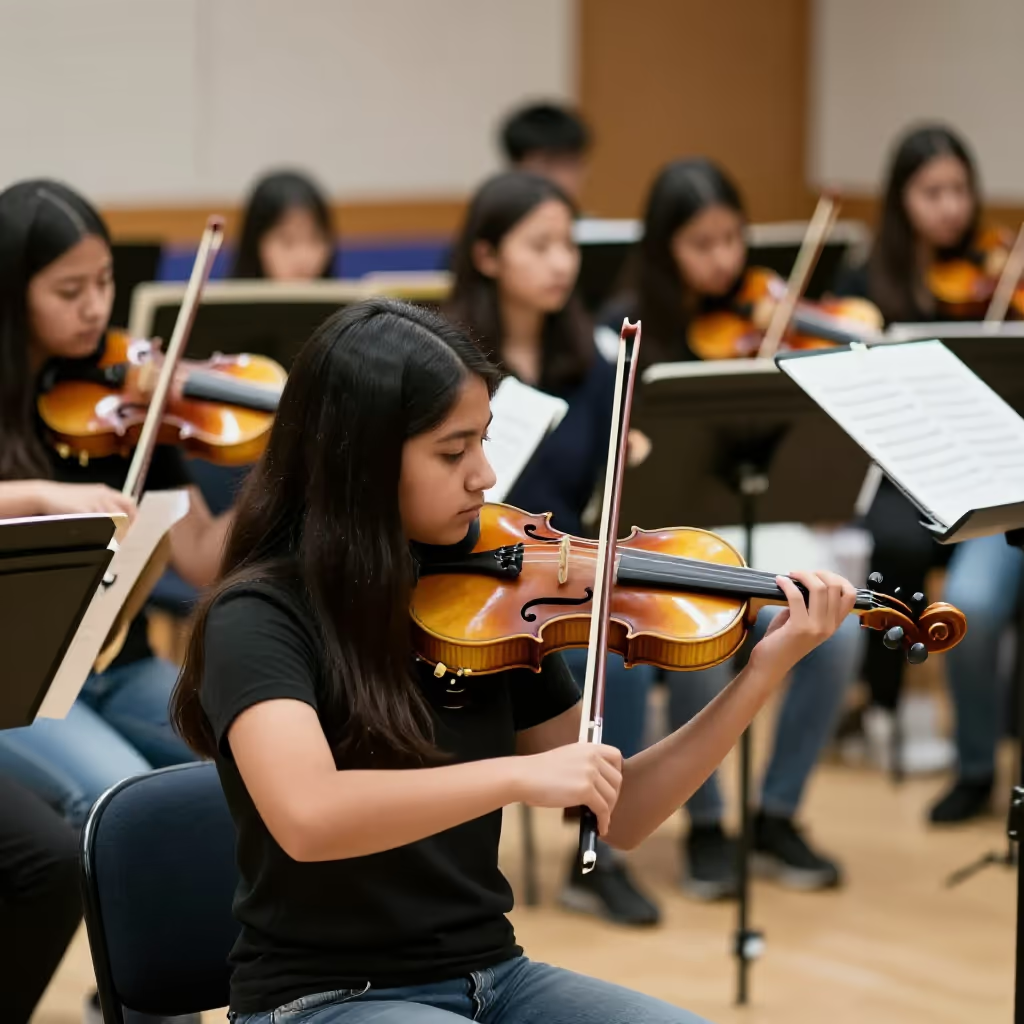
to belong to
To be part of a group, category, or whole.
Löwen gehören zur Familie der Katzen.
Lions belong to the cat family.
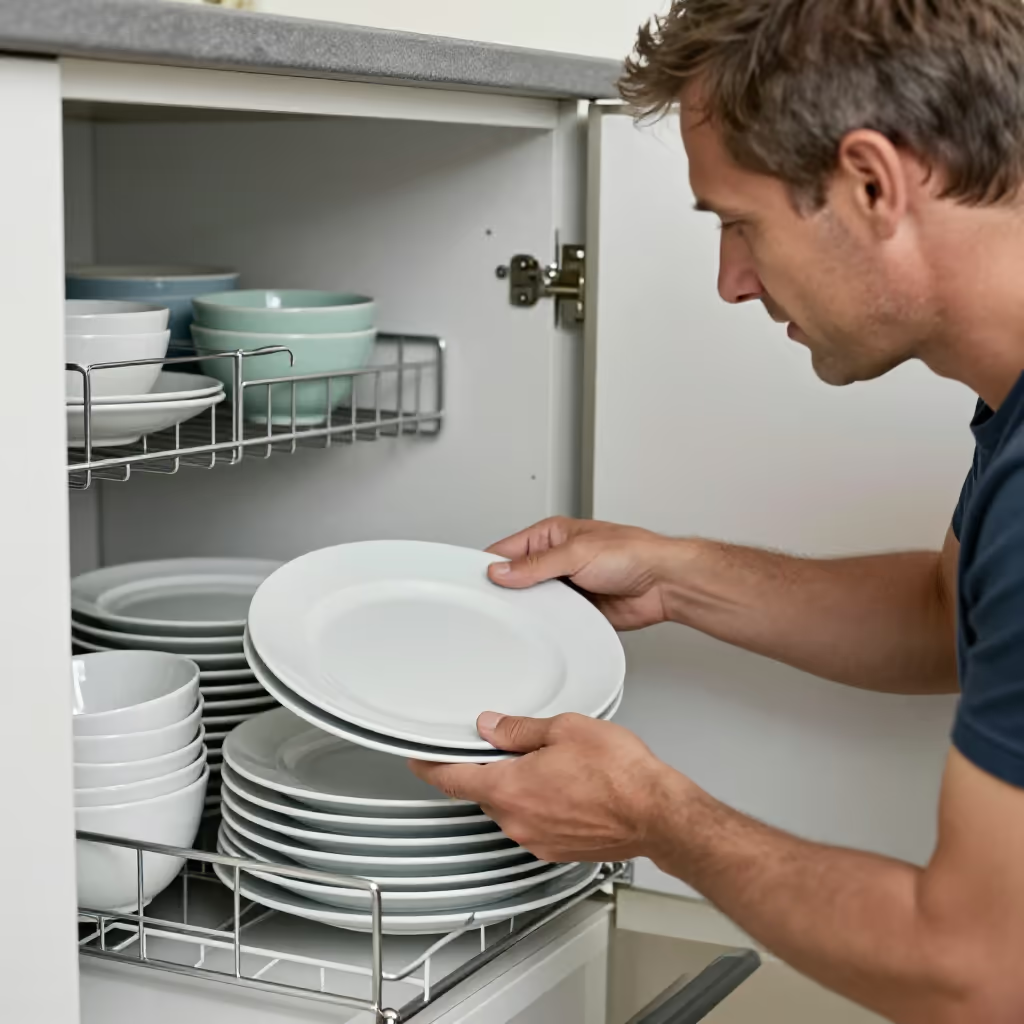
to belong
To fit or need to be placed in a certain place or position.
Die schmutzigen Teller gehören in die Spülmaschine.
The dirty plates belong in the dishwasher.

to be proper
To conform to social conventions or good manners.
Es gehört sich nicht, bei Tisch zu schmatzen.
It isn't proper to smack your lips at the table.
To express possession, the person something belongs to is always in the dative. The object that is owned is the subject of the sentence.
Das Fahrrad gehört meinem Bruder.
The bicycle belongs to my brother.
When 'gehören' (to belong) means to be part of a group or category, it is always used with the preposition 'zu' and the dative.
Dieses Thema gehört nicht zur Prüfung.
This topic is not part of the exam.
To express that something belongs in a specific place, use 'gehören' (to belong) followed by a location phrase, usually with a preposition such as 'in', 'auf', or 'an'.
Die Bücher gehören zurück ins Regal.
The books belong back on the shelf.
The expression 'es gehört sich' (it is proper) is an impersonal phrase used to talk about good manners or social rules. The 'es' is a fixed part of it.
Es gehört sich, „Danke“ zu sagen, wenn man ein Geschenk bekommt.
It is proper to say 'thank you' when you receive a gift.
to fit / suit / pass
Gehören refers here to the intended or proper place for something. Passen, by contrast, says that the size, shape, or practical suitability is right for a particular place. So a cup may gehören in a certain cupboard but not passen because it is too tall.

Die großen Tassen gehören in den oberen Küchenschrank.
The large cups belong in the upper kitchen cupboard.
Die großen Tassen passen wegen ihrer Höhe nicht in den oberen Küchenschrank.
The large cups do not fit in the upper kitchen cupboard because of their height.