


das Land
country
A state or nation with its own government and its own territory.
EXAMPLE
Frankreich ist ein Nachbarland von Deutschland.
France is a neighboring country of Germany.
country / countryside / land
Loading your saved state.
country
A state or nation with its own government and its own territory.
Frankreich ist ein Nachbarland von Deutschland.
France is a neighboring country of Germany.
countryside
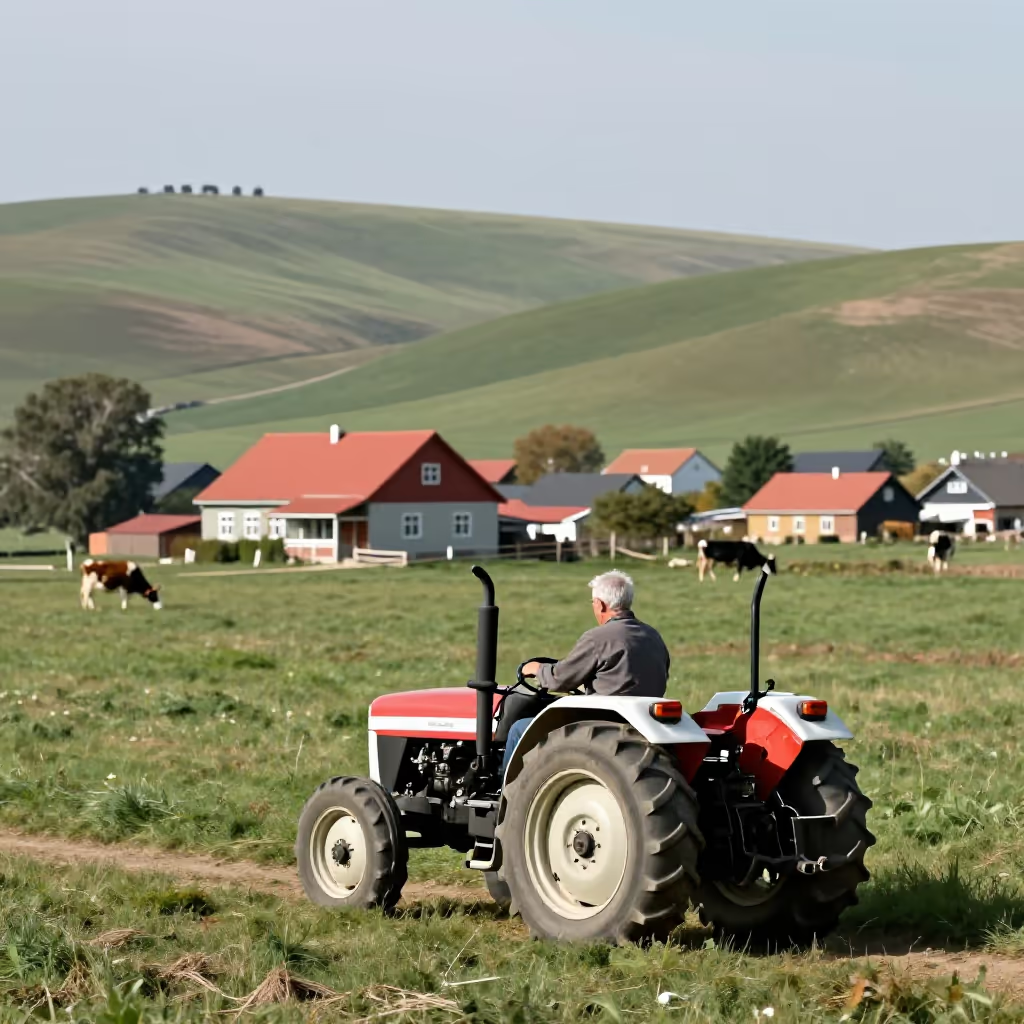
The rural region outside of cities, often associated with nature and agriculture.
Viele Stadtbewohner ziehen am Wochenende aufs Land, um sich zu erholen.
Many city dwellers go to the countryside on weekends to relax.
state
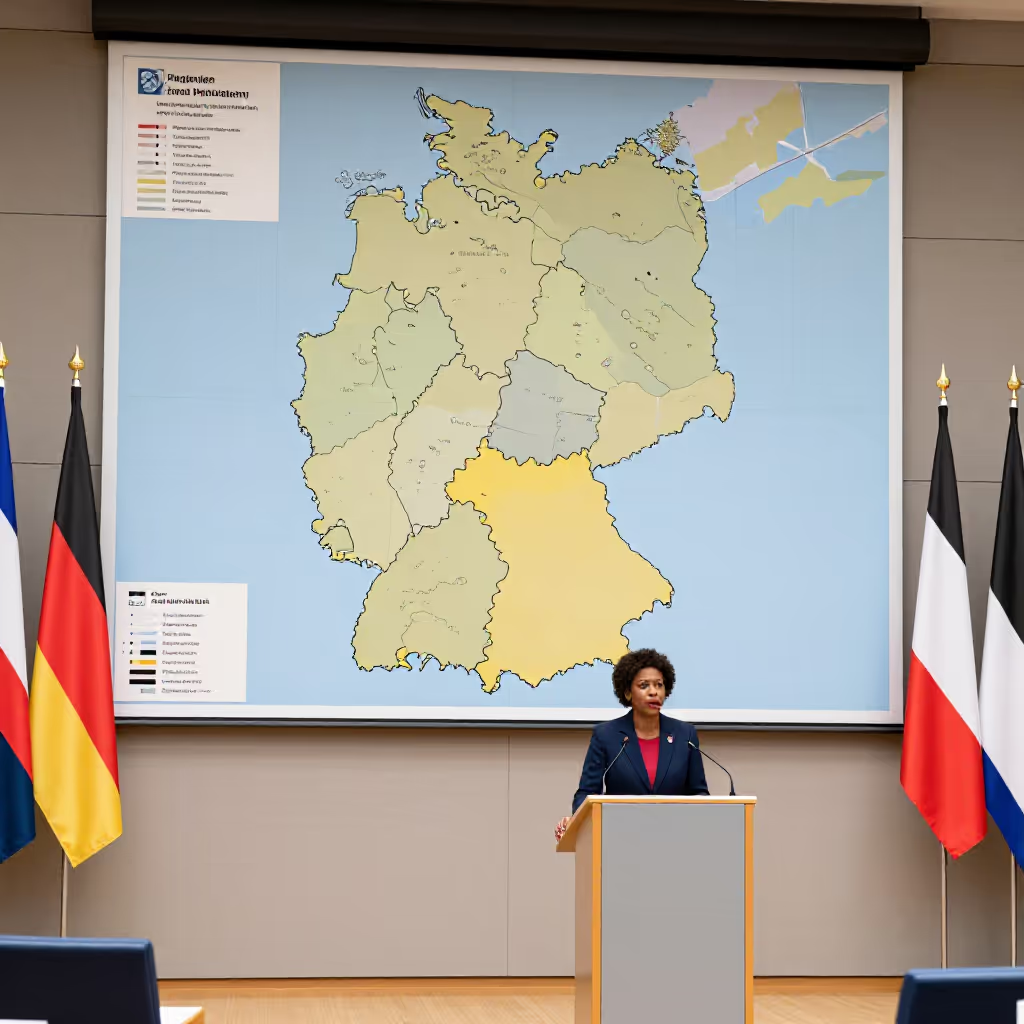
A federal state as a constituent state of a federal country such as Germany or Austria.
Das Land Nordrhein-Westfalen hat die meisten Einwohner.
The state of North Rhine-Westphalia has the most inhabitants.
land
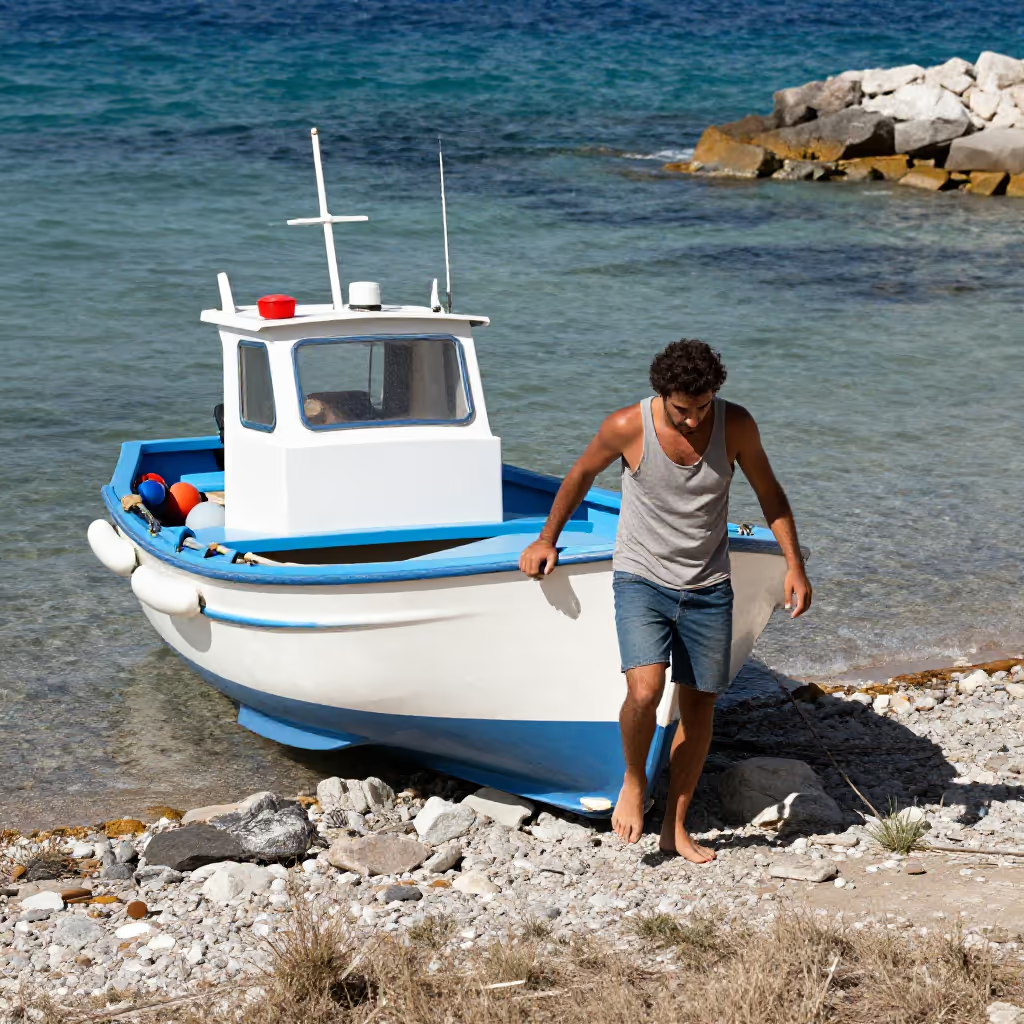
Solid ground as opposed to the sea or another body of water.
Nach wochenlanger Seereise sahen die Matrosen endlich wieder Land.
After weeks of sea travel, the sailors finally saw land again.

to see light at the end
Colloquial for: to be able to see the end of a difficult task or situation; to find a way out.
Nach all den Überstunden sehe ich bei diesem Projekt endlich Land.
After all the overtime, I can finally see light at the end of the tunnel with this project.
Pay attention to the prepositions and the context to distinguish the meanings. 'In einem Land' usually means a country, while 'auf dem Land' refers to the countryside.
In welchem Land möchtest du am liebsten leben?
Which country would you most like to live in?
'Land' is the basis for many important words. Examples are 'das Ausland' (foreign country/abroad), 'das Inland' (domestic country/home country), or 'das Nachbarland' (neighboring country).
Nächstes Jahr möchte ich eine Reise ins Ausland machen.
Next year I would like to take a trip abroad.
The plural 'die Länder' almost always refers to countries (m01) or federal states (m03). For the rural region (m02), the plural is hardly ever used.
Die Länder der Europäischen Union haben eine gemeinsame Währung.
The countries of the European Union have a common currency.
For the meaning 'ländliche Region' (rural region), the prepositions are crucial. 'Aufs Land' (with accusative) describes movement there, while 'auf dem Land' (with dative) describes a location.
Am Wochenende fahren wir oft aufs Land.
We often drive to the countryside on weekends.
The exclamation 'Land in Sicht!' (Land in sight!) is a fixed expression. It is used not only on ships, but also figuratively when the end of a long, difficult phase has been reached.
Nach der langen Fahrt rief jemand: „Land in Sicht!“
After the long journey, someone shouted: 'Land in sight!'
The idiom 'Land sehen' is meant figuratively. It means that in a difficult or drawn-out situation, you are finally making progress or finding a solution.
Ich muss nur noch dieses Kapitel schreiben, dann sehe ich bei meiner Abschlussarbeit endlich Land.
I only have to write this chapter, and then I can finally see light at the end of the tunnel with my thesis.
reason / ground
Das Land refers generally to an area or solid ground, for example for agricultural use. Der Grund refers more specifically to a piece of land as property. When the focus is on using the area, Land is appropriate; when ownership is central, Grund is more precise.
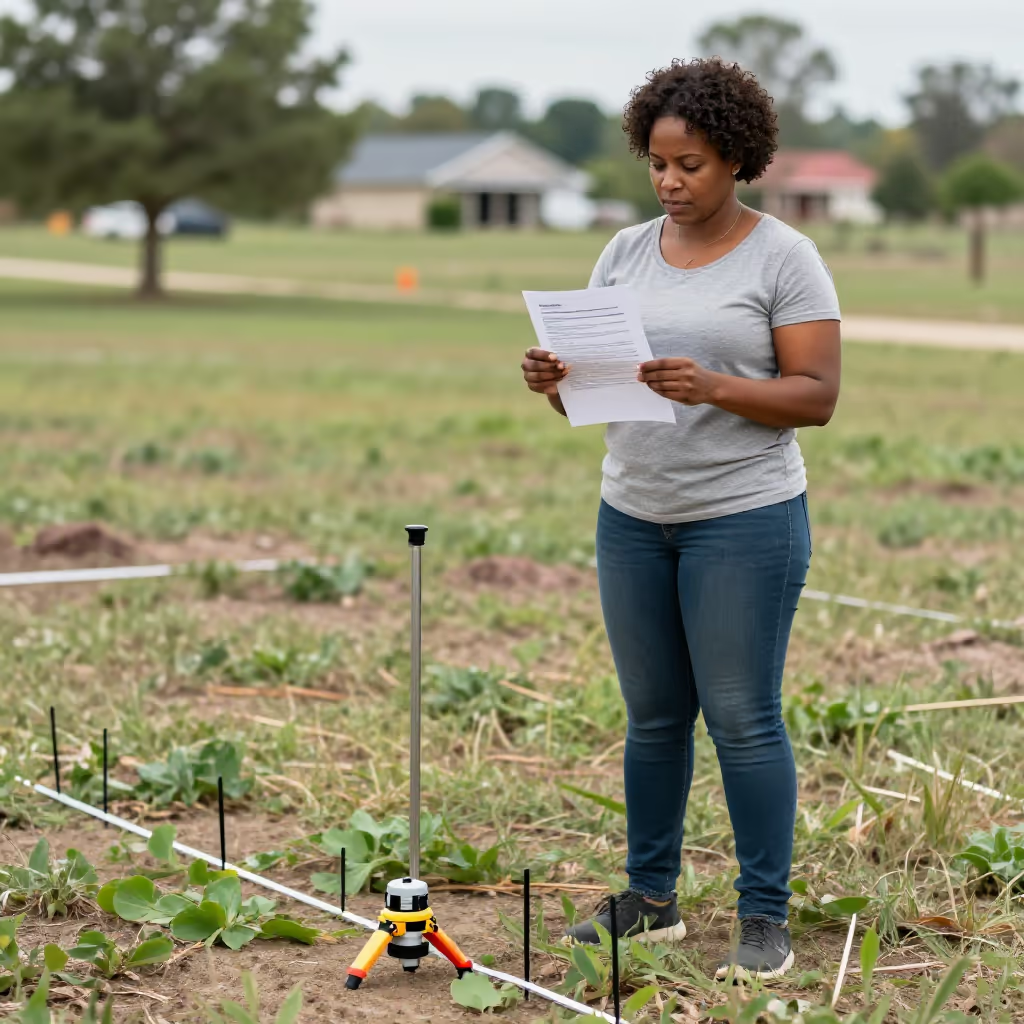
Die Familie nutzt das Land am Ortsrand für den Gemüseanbau.
The family uses the land on the edge of town to grow vegetables.
Der Grund am Ortsrand gehört der Familie seit vielen Jahren.
The land on the edge of town has belonged to the family for many years.