

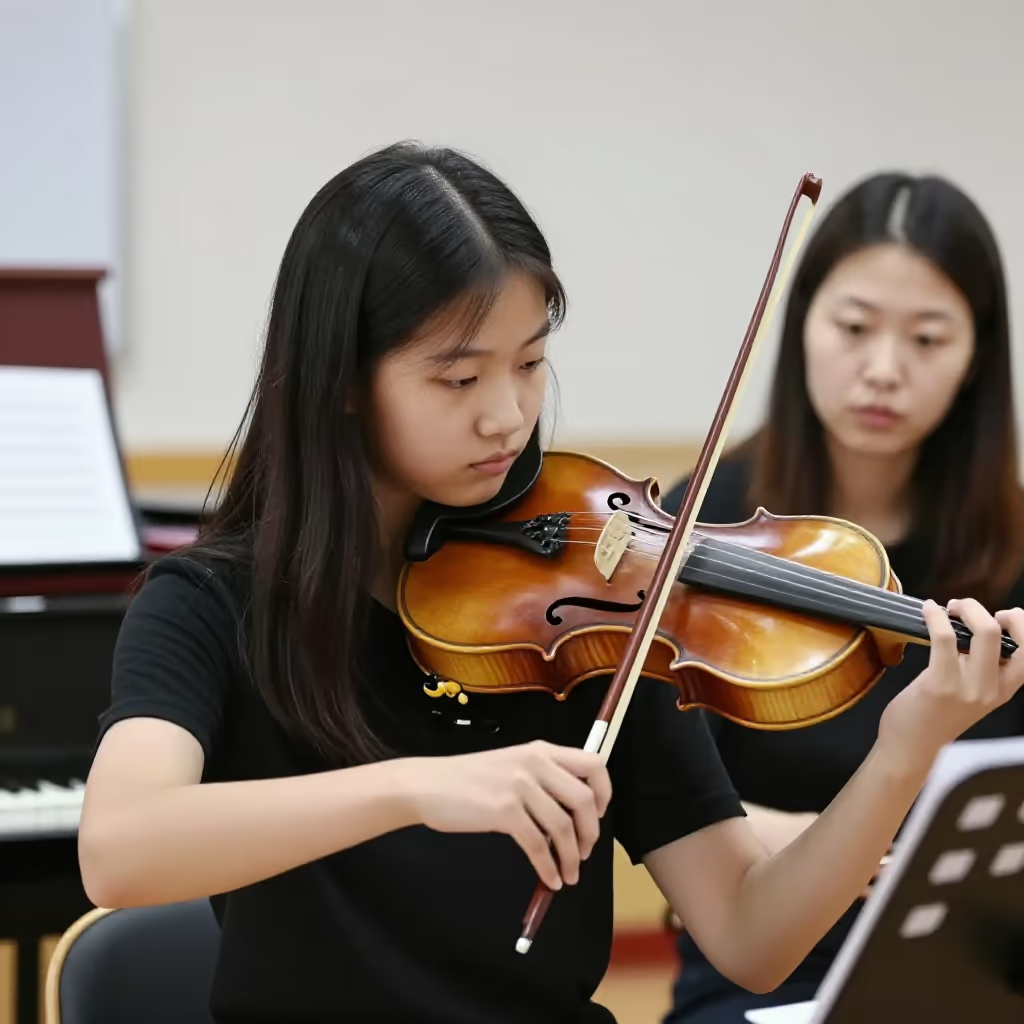
die Geige
violin
A string instrument with four strings that is played with a bow and has a high pitch. It is also known as the violin.
Sie spielt seit ihrer Kindheit Geige im Orchester.
She has played violin in the orchestra since childhood.

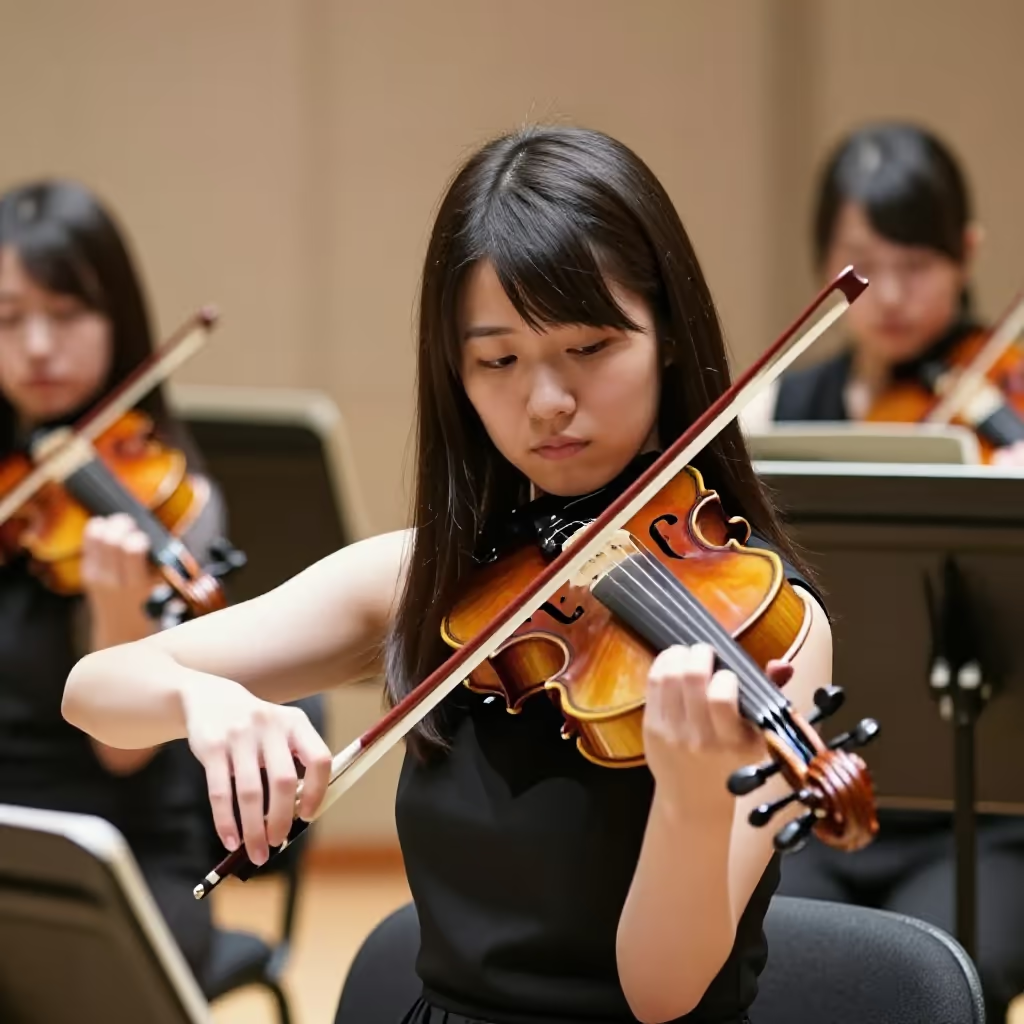
violin
Loading your saved state.
violin
A string instrument with four strings that is played with a bow and has a high pitch. It is also known as the violin.
Sie spielt seit ihrer Kindheit Geige im Orchester.
She has played violin in the orchestra since childhood.

The noun 'die Geige' (the violin) belongs to a word family. The person who plays the instrument is 'der Geiger' (the male violinist) or 'die Geigerin' (the female violinist), and the activity itself can be referred to as 'geigen' (to play the violin).
Der Geiger stimmte sein Instrument vor dem Konzert.
The violinist tuned his instrument before the concert.
When referring to the instrument, 'Geige' (violin) is often combined with the verbs 'spielen' (to play), 'üben' (to practice), or 'stimmen' (to tune).
Er übt jeden Tag zwei Stunden Geige.
He practices violin for two hours every day.
The idiom 'die erste Geige spielen' (to play first fiddle) is a fixed expression. It is used to express that someone is the most important or most dominant person in a group.
In diesem Projekt will jeder die erste Geige spielen.
In this project, everyone wants to play first fiddle.
The word 'erste' (first) is the crucial clue to the idiomatic meaning. When you hear or read 'die erste Geige spielen' (to play first fiddle), it almost always refers to the figurative meaning of being in the leading position.
Der Chef spielt in allen wichtigen Entscheidungen die erste Geige.
The boss plays first fiddle in all important decisions.
violin
'die Geige' and 'die Violine' refer to the same instrument. Both words mean the high-pitched string instrument with four strings that is played with a bow. Learners may confuse them because there is no important difference in meaning. 'Geige' usually sounds more normal and familiar in everyday language. 'Violine' sounds a bit more formal and is often used in music schools, concerts, or more technical texts. The important thing is: for the instrument, both words are correct.

Nach der Schule übt Lena jeden Tag eine halbe Stunde Geige.
After school, Lena practices violin for half an hour every day.
Im Konzert spielt die Solistin eine alte Violine aus Italien.
In the concert, the soloist plays an old violin from Italy.