

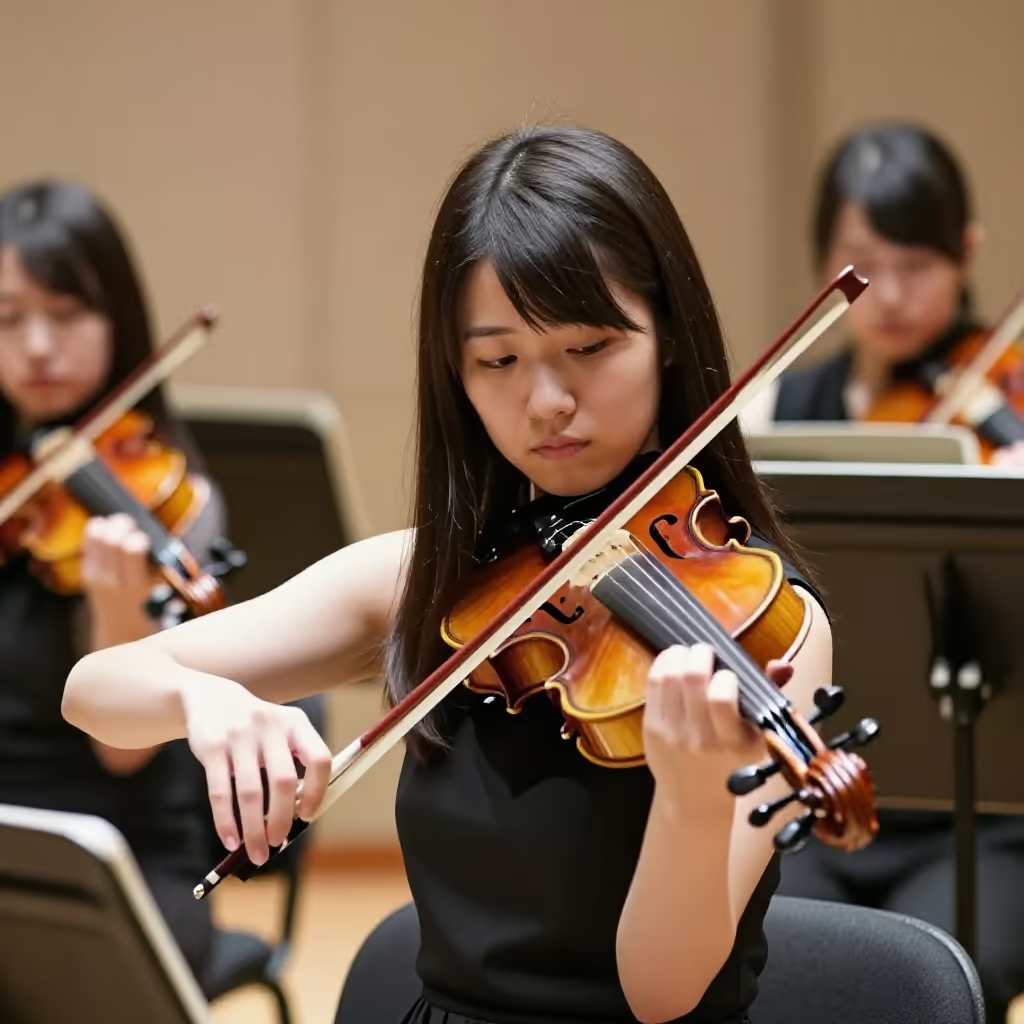
A string instrument with four strings that is held on the shoulder while playing. It is the highest-pitched instrument of the violin family and is also called a fiddle.
example
Sie spielt seit ihrer Kindheit Violine und ist heute Konzertmeisterin.
She has played violin since childhood and is now concertmaster.
Usage tips
Use without an article
When talking about learning or mastering the instrument as a skill, 'Violine' (violin) is often used without an article. The most common combination is 'Violine spielen' (to play violin).
EXAMPLE
Meine Tochter möchte gern Violine lernen.
My daughter would like to learn violin.
Formal style
The word 'Violine' (violin) is often used in formal contexts, especially in classical music. It sounds more technical and elevated than other terms.
EXAMPLE
Im Programm stand ein Konzert für Violine und Orchester.
The program included a concerto for violin and orchestra.
Typical verbs
Besides 'spielen' (to play), 'Violine' (violin) is often combined with verbs such as 'üben' (to practice), 'stimmen' (to tune), or 'unterrichten' (to teach).
EXAMPLE
Vor dem Konzert muss der Musiker seine Violine stimmen.
Before the concert, the musician has to tune his violin.
Compare with
synonym · confusable
Violine vs Geige
violin
'die Geige' and 'die Violine' refer to the same instrument. Both words mean the high-pitched string instrument with four strings that is played with a bow. Learners may confuse them because there is no important difference in meaning. 'Geige' usually sounds more normal and familiar in everyday language. 'Violine' sounds a bit more formal and is often used in music schools, concerts, or more technical texts. The important thing is: for the instrument, both words are correct.
Violine
Im Konzert spielt die Solistin eine alte Violine aus Italien.
In the concert, the soloist plays an old violin from Italy.
Geige
Nach der Schule übt Lena jeden Tag eine halbe Stunde Geige.
After school, Lena practices violin for half an hour every day.