

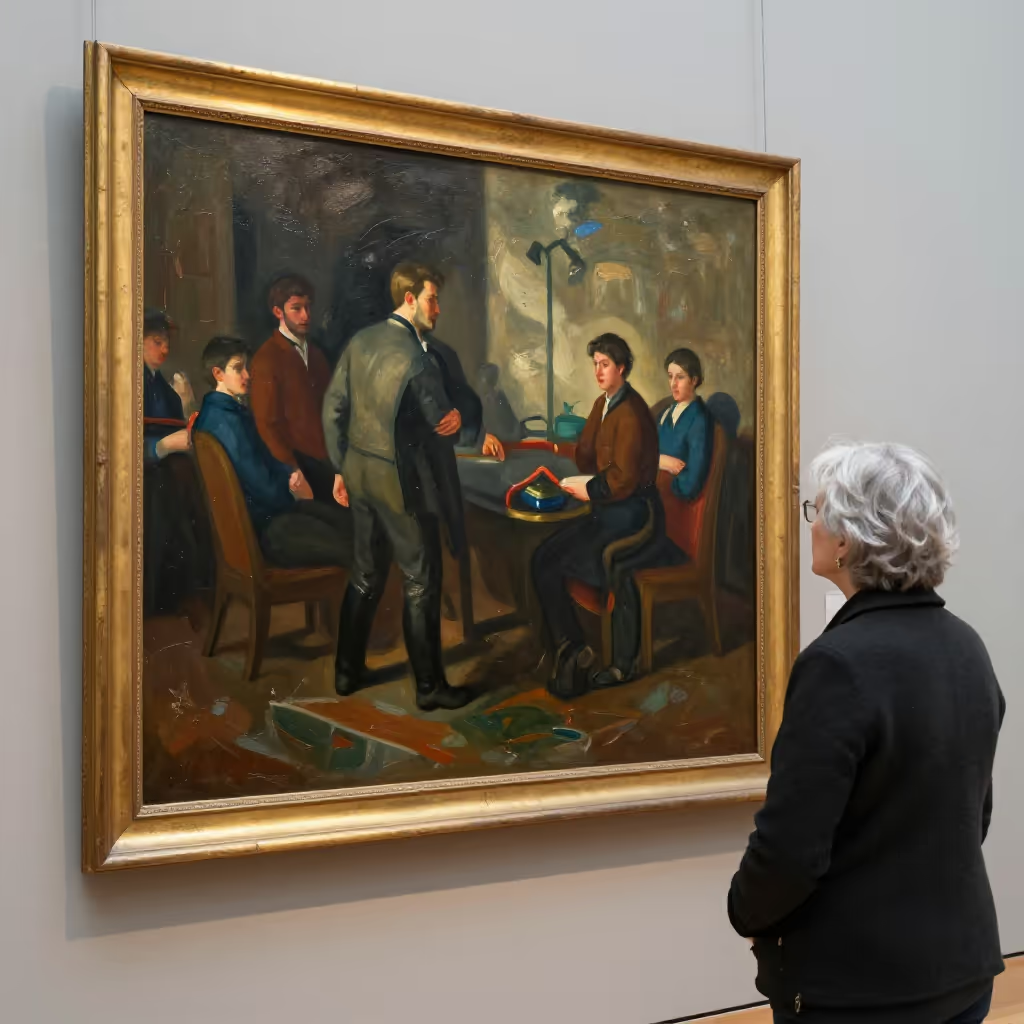
A work of art created by applying paint to a surface such as canvas, wood, or paper; a painted picture. The word is a noun (das Gemälde).
example
Im Museum hing ein beeindruckendes Gemälde von Caspar David Friedrich.
An impressive painting by Caspar David Friedrich was hanging in the museum.
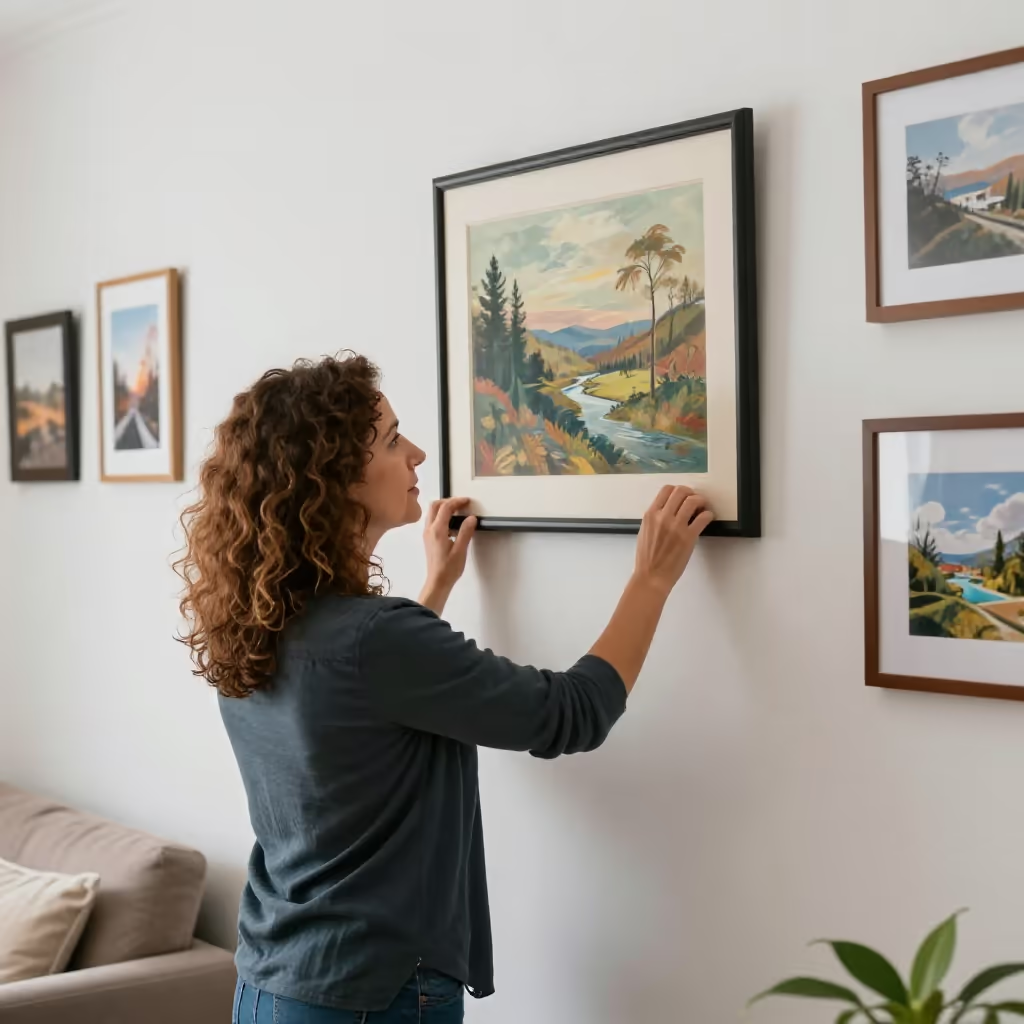
Usage tips
Word structure
The noun 'Gemälde' (painting) is derived from the verb 'malen' (to paint). The prefix 'Ge-' here often expresses the result of an action. So a 'Gemälde' is what has been created by painting.
EXAMPLE
Der Künstler hat dieses berühmte Gemälde in nur drei Wochen gemalt.
The artist painted this famous painting in just three weeks.
Typical verbs
Common verbs used with 'Gemälde' (painting) are 'ein Gemälde malen' (to paint a painting), 'ein Gemälde betrachten' (to look at a painting), 'ein Gemälde ausstellen' (to exhibit a painting), or 'ein Gemälde restaurieren' (to restore a painting).
EXAMPLE
Im Kunstunterricht lernen die Schüler, alte Gemälde zu betrachten und zu analysieren.
In art class, the students learn to look at and analyze old paintings.
Use in context
The word 'Gemälde' (painting) is used specifically for works of art created with paint on a surface. It emphasizes artistic value and is typically used in the context of art, museums, and galleries.
EXAMPLE
Die Galerie verkauft hauptsächlich Gemälde moderner Künstler.
The gallery mainly sells paintings by modern artists.
Compare with
near_synonym · confusable
Gemälde vs Bild
picture / image
'das Bild' and 'das Gemälde' can both mean a work of art or a visual representation. However, 'Bild' is much more general: it can be a photo, a drawing, or a painted work. 'Gemälde' is more specific and means a picture that was painted with paint, often as a work of art. Learners may confuse the words because every painting is a picture. But not every picture is a painting.
Gemälde
Im Museum blieb Anna lange vor einem alten Gemälde stehen.
In the museum, Anna stood for a long time in front of an old painting.