

füllen
fill
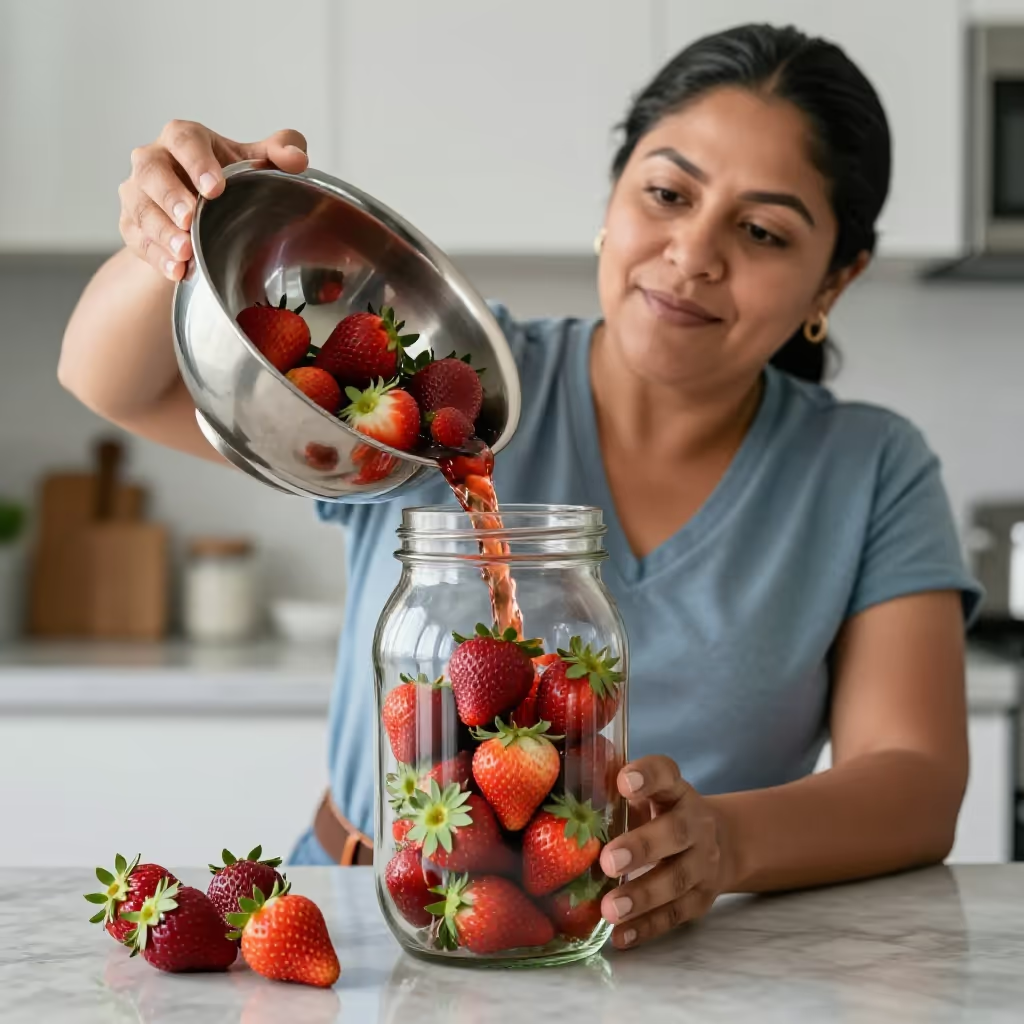
To put something into a container, room, or form until it is full.
EXAMPLE
Kannst du bitte die Wasserflaschen für die Wanderung füllen?
Can you please fill the water bottles for the hike?
to fill
Loading your saved state.
fill
To put something into a container, room, or form until it is full.
Kannst du bitte die Wasserflaschen für die Wanderung füllen?
Can you please fill the water bottles for the hike?

fill up
The state in which a place or container becomes full by itself or through outside influence.
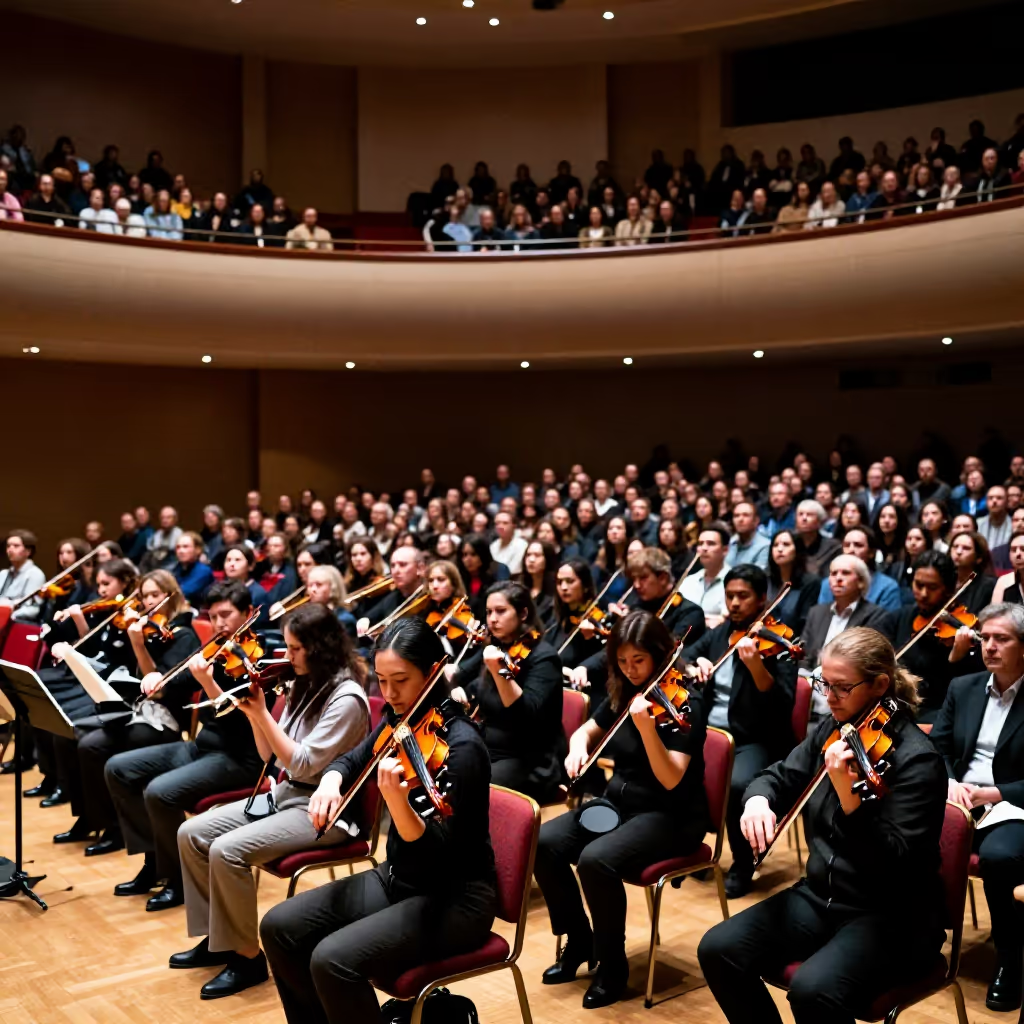
Vor dem Konzert füllte sich der Saal schnell mit Zuschauern.
Before the concert, the hall quickly filled up with spectators.

fill
To fill a place with people, sounds, or a particular atmosphere, or to structure a period of time with activities.
Der Duft von frisch gebackenem Kuchen füllte die ganze Küche.
The smell of freshly baked cake filled the whole kitchen.

fill
To fill a person with a strong feeling such as joy, pride, or sadness.
Die Anerkennung für ihre Arbeit füllte sie mit großem Stolz.
The recognition for her work filled her with great pride.

fill a gap
To remedy a lack or fill a vacant position or function.
Mit der Einstellung des neuen Experten konnten wir eine wichtige Lücke im Team füllen.
By hiring the new expert, we were able to fill an important gap in the team.
The verb 'füllen' (to fill) is closely related to the adjective 'voll' (full). When you fill something, you make sure that it becomes full. This connection helps you remember the meaning.
Er füllte sein Glas, bis es ganz voll war.
He filled his glass until it was completely full.
When you want to indicate what something is filled with, you use the preposition 'mit' followed by the dative. The structure is: subject fills accusative object with dative object.
Die Kinder füllen den Eimer mit Sand.
The children fill the bucket with sand.
The reflexive form 'sich füllen' (to fill up) describes that a place or container becomes full. The subject of the sentence is then the place or container itself, not the person filling it.
Langsam füllte sich der Platz mit Menschen.
The square slowly filled up with people.
In addition to containers such as glasses or bottles, 'füllen' (to fill) is also often used in the expression 'ein Formular füllen' (to fill in a form). Here it means entering information.
Bitte füllen Sie dieses Formular vollständig aus.
Please fill out this form completely.
In a figurative meaning, a feeling can also 'füllen' (fill) a person. The structure is: a feeling (subject) fills a person (accusative object).
Ihre Worte füllten ihn mit Hoffnung.
Her words filled him with hope.
The expression 'eine Lücke füllen' (to fill a gap) means to make up for a lack or fill a missing position. It is often used in professional or social contexts.
Der neue Mitarbeiter soll die Lücke im Marketing-Team füllen.
The new employee is supposed to fill the gap in the marketing team.
to fulfill
erfüllen and füllen can both express that a strong feeling completely takes hold of a person. erfüllen is the usual choice. With a person as the object, füllen is also possible, but sounds more vivid or literary.
Nach der Zusage füllte sie eine tiefe Freude.
After she received the confirmation, she was filled with deep joy.
Nach der Zusage erfüllte sie eine tiefe Freude.
After she received the confirmation, she was filled with deep joy.