

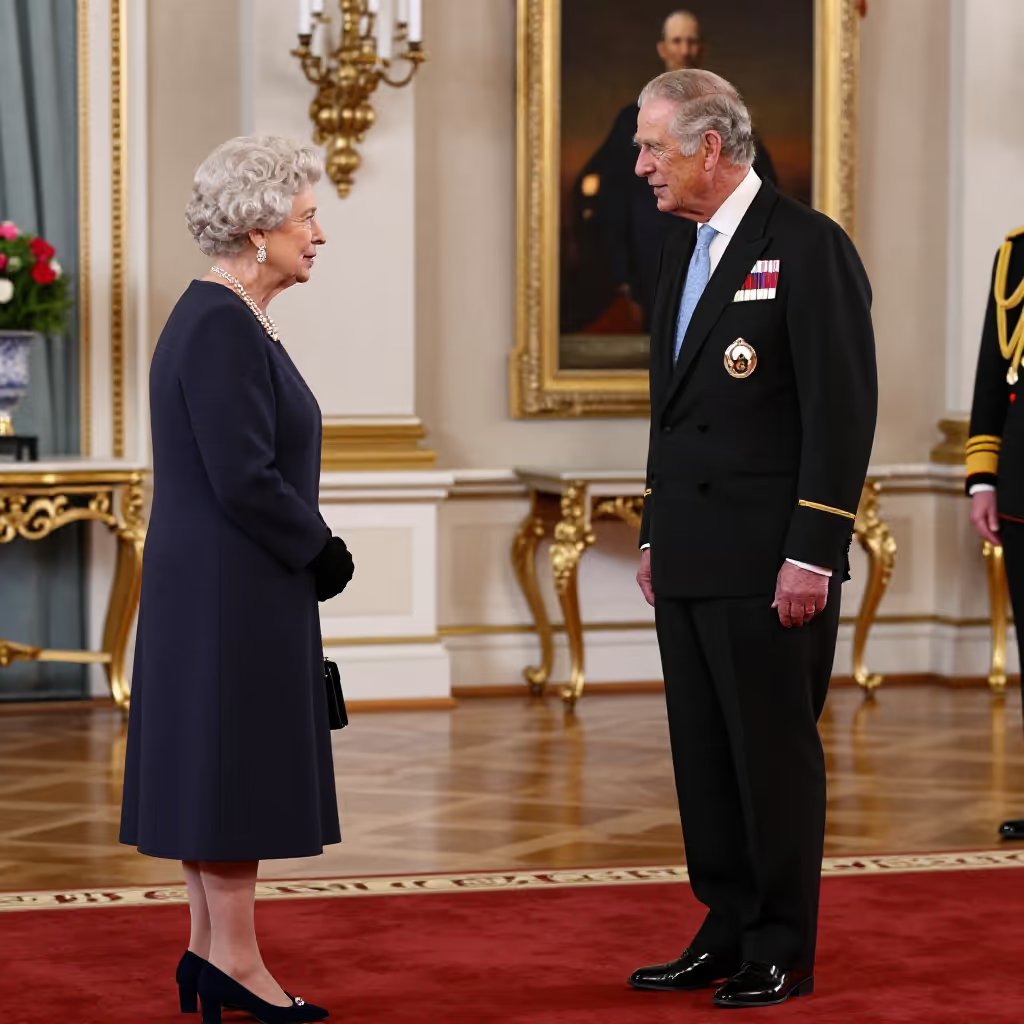
A formal term for a husband, often perceived as elevated or outdated. The word is frequently used in official or courtly contexts.
example
Die Königin erschien in Begleitung ihres Gemahls zur Zeremonie.
The queen appeared at the ceremony accompanied by her consort.

Usage tips
Register and style
'Der Gemahl' (husband/consort) is a word of elevated written language. It is not used in normal everyday speech and can sound outdated or ironic.
EXAMPLE
In der offiziellen Einladung stand: „Die Ministerin und ihr Gemahl werden erwartet.“
The official invitation read: 'The minister and her husband are expected.'
Word family
The word belongs to a formal word family related to marriage. The feminine counterpart is 'die Gemahlin' (wife), and the related verb is 'sich vermählen' (to marry).
EXAMPLE
Das Paar wurde feierlich vermählt.
The couple was solemnly married.
Typical context
You often find the word in reports about royal families, high-ranking politicians, or in historical texts. A typical compound is, for example, 'der Prinzgemahl' (the prince consort).
EXAMPLE
Der Gemahl der dänischen Königin trug den Titel Prinzgemahl.
The husband of the Danish queen held the title of prince consort.
Compare with
near_synonym · confusable
Gemahl vs Mann
man
'der Mann' and 'der Gemahl' can both mean a person's husband. 'der Mann' is the normal everyday word for this and sounds natural in conversation. 'der Gemahl' is very formal, elevated, or old-fashioned. You are more likely to hear it in official texts, on very ceremonial occasions, or in courtly contexts. Learners may confuse the words because both can express a marriage relationship. In practice: in everyday life, people almost always say 'mein Mann' (my husband), not 'mein Gemahl'.
Gemahl
Die Königin erschien zusammen mit ihrem Gemahl zur Feier.
The queen appeared at the celebration together with her consort.
Mann
Frau Schmidt wartet vor der Schule auf ihren Mann.
Mrs. Schmidt is waiting for her husband in front of the school.