

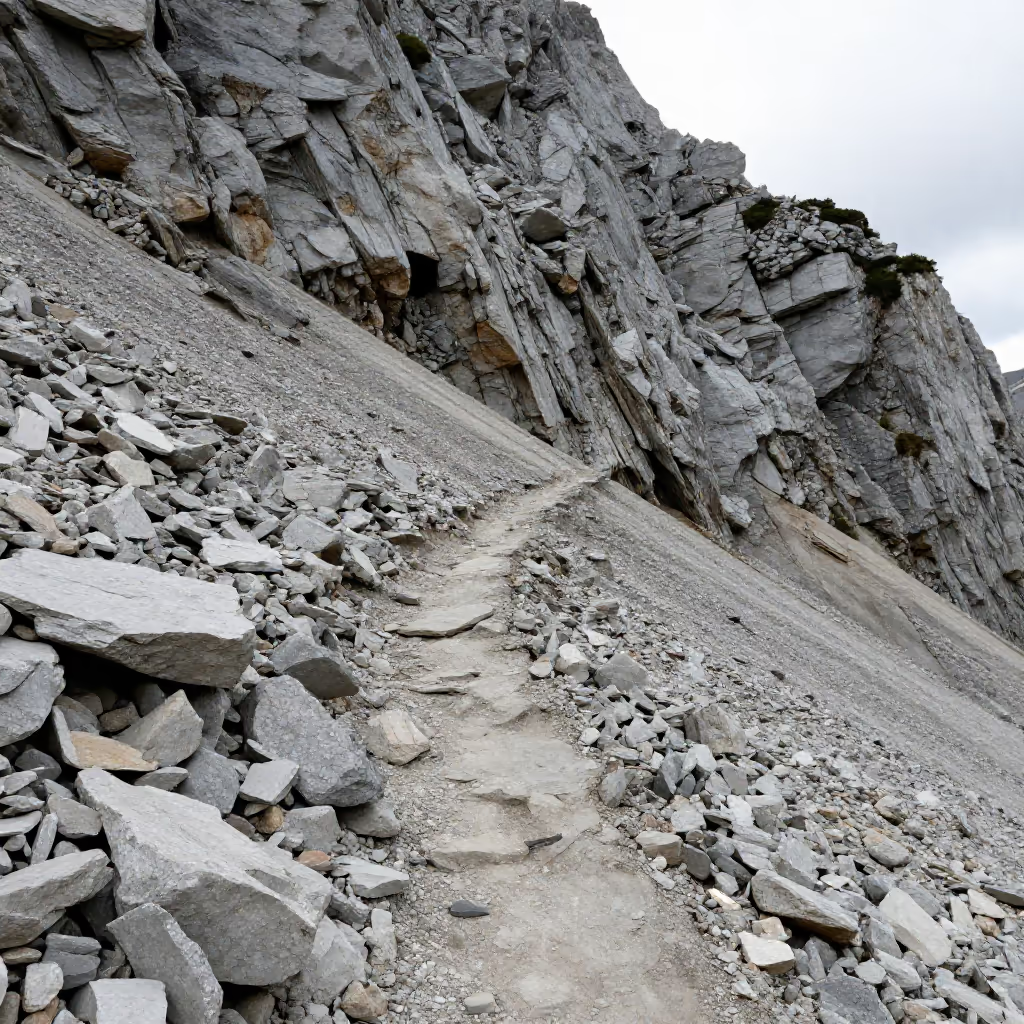
A collection of loose, coarse chunks of rock and stones, often found on mountain slopes or at the foot of cliffs.
example
Nach dem Steinschlag war der Wanderweg von Geröll blockiert.
After the rockfall, the hiking trail was blocked by rubble.
Usage tips
Word structure
The word 'Geröll' (rubble) is related to the verb 'rollen' (to roll). The prefix 'Ge-' here, as often in German, indicates a collection or quantity — so it refers to a collection of rock that has rolled down a slope.
EXAMPLE
Am Fuße des Berges sammelte sich über die Jahre viel Geröll an.
Over the years, a lot of rubble collected at the foot of the mountain.
Singular only
'Geröll' (rubble) is a collective term and is used as an uncountable noun only in the singular. A plural form 'die Gerölle' does not exist in standard German.
EXAMPLE
Vorsicht, der Weg ist voller Geröll und sehr rutschig.
Careful, the path is full of rubble and very slippery.
Typical collocations
'Geröll' (rubble) is often used in contexts involving nature and mountains. Typical phrases are 'ein Feld aus Geröll' (a field of rubble), 'von Geröll bedeckt sein' (to be covered with rubble), or 'über Geröll klettern' (to climb over rubble).
EXAMPLE
Die Bergsteiger mussten vorsichtig über ein großes Geröllfeld steigen.
The mountaineers had to carefully cross a large field of rubble.
Compare with
confusable
Geröll vs Stein
stone
'der Stein' and 'das Geröll' both have to do with rock. 'Stein' means a single piece of rock. 'Geröll' means many loose stones and coarse chunks of rock together, often on a slope, on a mountain path, or below a cliff. The words can be confused because Geröll is made up of stones. If you mean one single piece, say 'Stein'. If you mean a mass of loose stones as an area or obstacle, say 'Geröll'.
Geröll
Auf dem Bergweg rutschen wir langsam über das lose Geröll.
On the mountain path, we slowly slide over the loose rubble.
Stein
Tom hebt einen flachen Stein auf und wirft ihn ins Wasser.
Tom picks up a flat stone and throws it into the water.