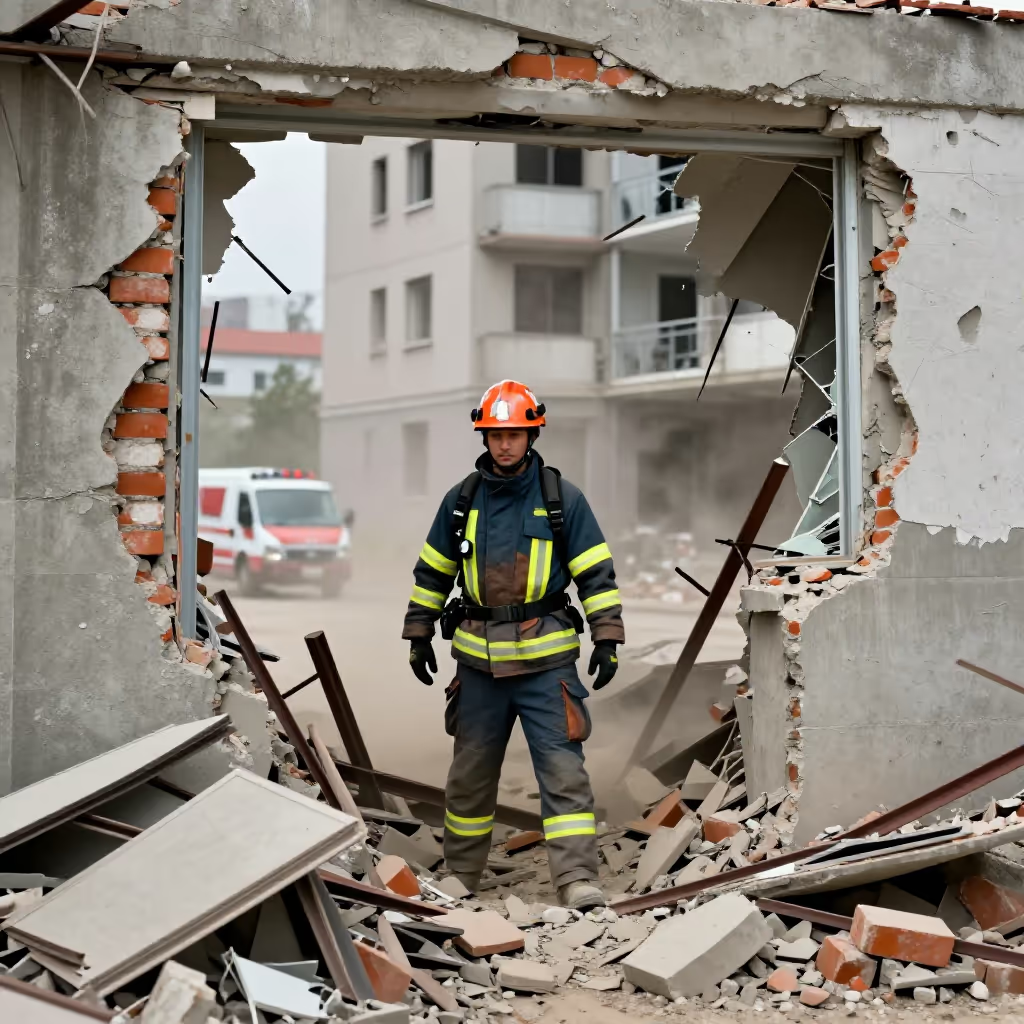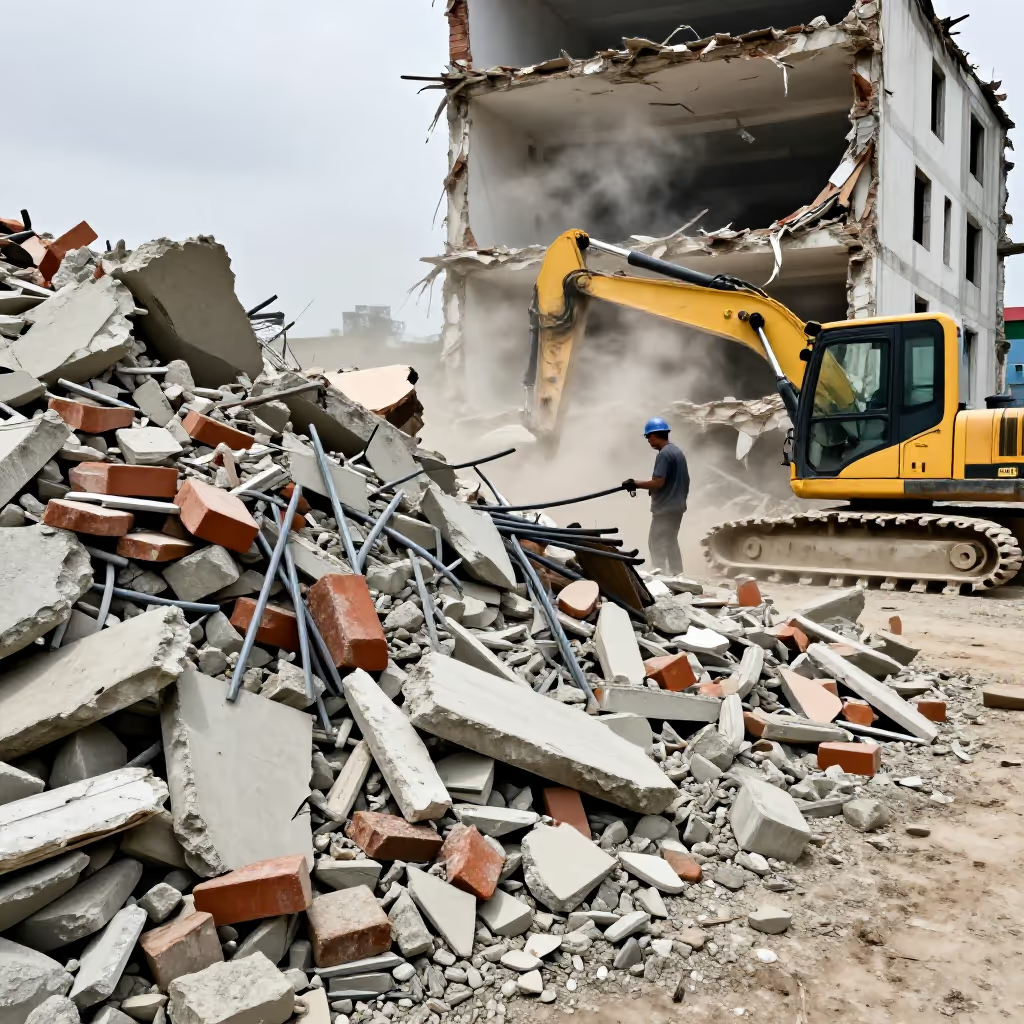
A pile of broken stones, bricks, mortar, and other remains from destroyed or demolished buildings.
example
Die Aufräumarbeiten begannen damit, den ganzen Schutt vom Grundstück zu entfernen.
The cleanup work began with removing all the rubble from the property.
Usage tips
Singular only
The word 'Schutt' (rubble) is an uncountable noun and is used almost exclusively in the singular. You say 'viel Schutt' (a lot of rubble), but not 'vielen Schutten'.
EXAMPLE
Nach dem Abriss des Hauses lag überall Schutt.
After the demolition of the house, there was rubble everywhere.
Word family
'Schutt' (rubble) is related to the verb 'schütten' (to pour/dump). It describes material that has been 'geschüttet' (poured/dumped) or thrown into a pile.
EXAMPLE
Der Bagger schüttete den Schutt auf den LKW.
The excavator dumped the rubble onto the truck.
Typical verbs
In connection with construction rubble, verbs that describe removal are often used. Typical phrases are 'Schutt wegräumen' (to clear away rubble), 'Schutt abtransportieren' (to haul away rubble), or 'Schutt entsorgen' (to dispose of rubble).
EXAMPLE
Die Feuerwehr musste zuerst den Schutt wegräumen, um zu den Verschütteten zu gelangen.
The fire department first had to clear away the rubble to reach the people buried under it.
Fixed expression
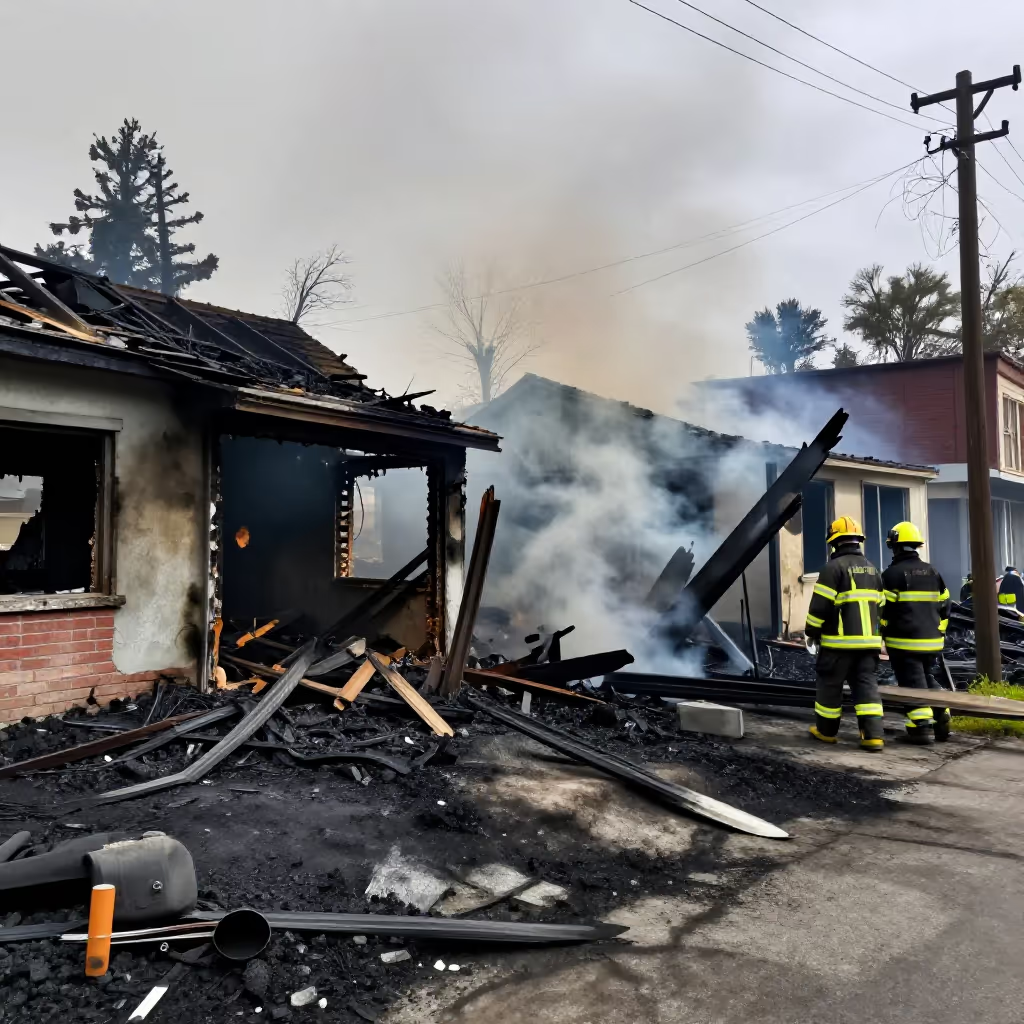
The expression 'etwas in Schutt und Asche legen' (to reduce something to rubble and ashes) is a fixed unit. It means to destroy something completely, usually through fire or violence.
EXAMPLE
Der Krieg hat ganze Städte in Schutt und Asche gelegt.
The war reduced entire cities to rubble and ashes.
Compare with
confusable
Schutt vs Müll
trash / garbage
'der Müll' and 'der Schutt' both describe things that need to be cleared away or disposed of. The difference lies in the type of material. 'Müll' is general trash or garbage, for example packaging, food scraps, or old household junk. 'Schutt' usually comes from construction work, demolition, or destruction and consists of stones, bricks, mortar, or similar remains. Learners may confuse the words because both are unusable material. For normal waste, you say 'Müll'; for remains from buildings or construction sites, you say 'Schutt'.
Schutt
Nach dem Abriss lag überall Schutt auf dem Grundstück.
After the demolition, there was rubble all over the property.
Müll
Bitte bring den Müll nach dem Kochen noch nach draußen.