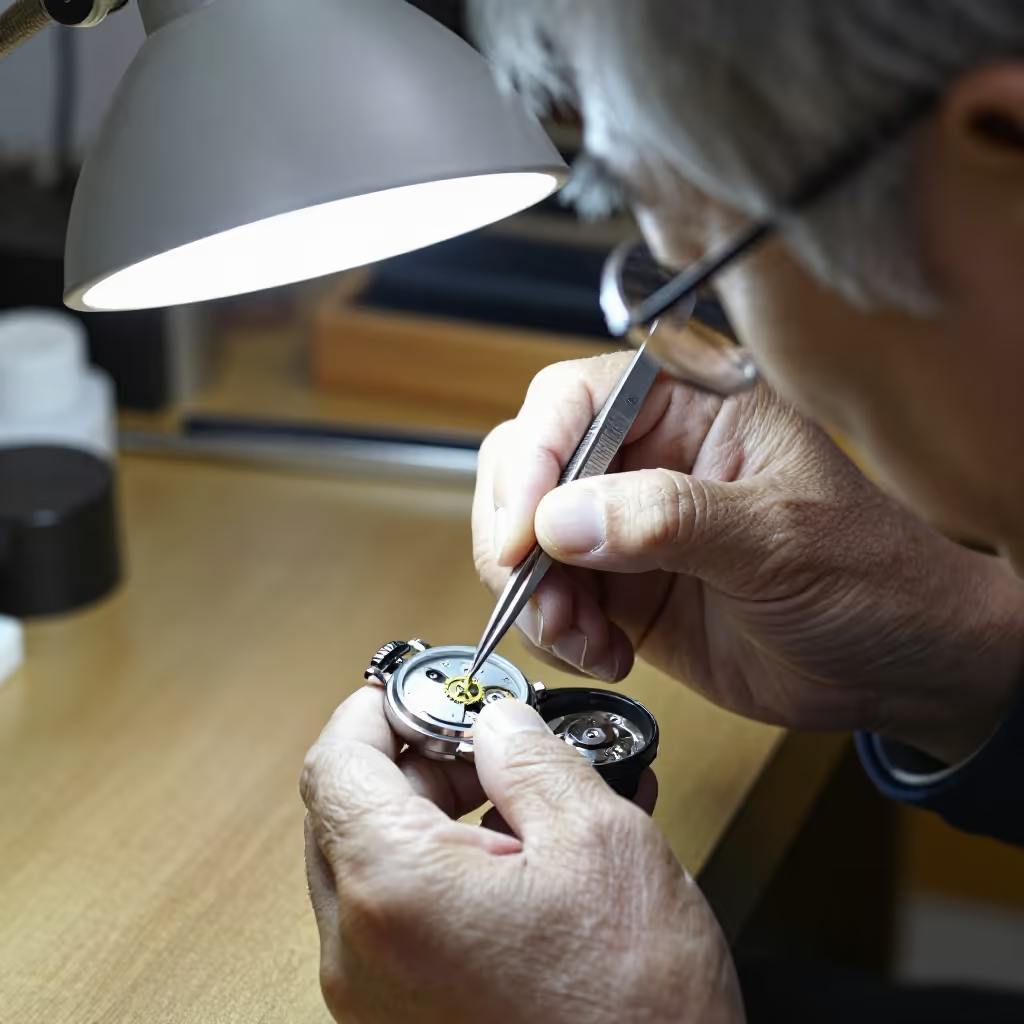
Able to carry something out with the hands or body in a dexterous and precise way; manually or physically talented.
example
Mit geschickten Händen faltete sie die winzigen Papierfiguren.
With skillful hands, she folded the tiny paper figures.

Usage tips
Origin of the word
Although “geschickt” (skillful/clever) looks like the past participle of “schicken” (to send), its meaning has changed greatly. It derives from the older meaning “suitable” or “appropriate” and today no longer has anything to do with sending.
EXAMPLE
Der Handwerker war sehr geschickt und reparierte die Uhr schnell.
The craftsman was very skillful and repaired the clock quickly.
Two meanings
A distinction is made between physical and strategic skill. If it is about hands, crafts, or sports, physical skill is meant. If it is about questions, negotiations, or plans, cleverness is meant.
EXAMPLE
Der Chirurg braucht sehr geschickte Hände.
The surgeon needs very skillful hands.
Collocations for cleverness
In the sense of “klug” (smart/clever), “geschickt” is often used for strategic actions. Typical combinations are “ein geschickter Zug” (a clever move), “eine geschickte Taktik” (a clever tactic), or “eine geschickte Formulierung” (a clever wording).
EXAMPLE
Mit diesem geschickten Zug hat sie das Spiel für sich entschieden.
With this clever move, she decided the game in her favor.
Use as an adverb
“Geschickt” can also be used as an adverb to describe how an action is carried out. It then usually stands directly with the verb.
EXAMPLE
Er hat sich geschickt aus der unangenehmen Situation herausgeredet.
He cleverly talked his way out of the unpleasant situation.
Compare with
near_synonym · confusable
geschickt vs schlau
smart / cunning
'schlau' and 'geschickt' can both mean that someone acts cleverly. 'schlau' more strongly emphasizes that someone understands quickly and finds a good solution. Sometimes it can also sound a bit cunning, when someone is looking for their own advantage. 'geschickt' can also mean clever or tactical, but very often it also describes physical or practical skill, for example with the hands. Learners may confuse the words because both can fit clever action. When it is about thinking and understanding, 'schlau' is usually more natural. When someone carries something out well or solves a situation tactically, 'geschickt' fits better.
geschickt
Im Büro löste Lisa den Konflikt mit einer geschickten Frage.
At the office, Lisa resolved the conflict with a skillful question.
schlau
Nach dem Gespräch waren wir schlau genug, den Vertrag noch einmal zu prüfen.
After the conversation, we were smart enough to check the contract again.