

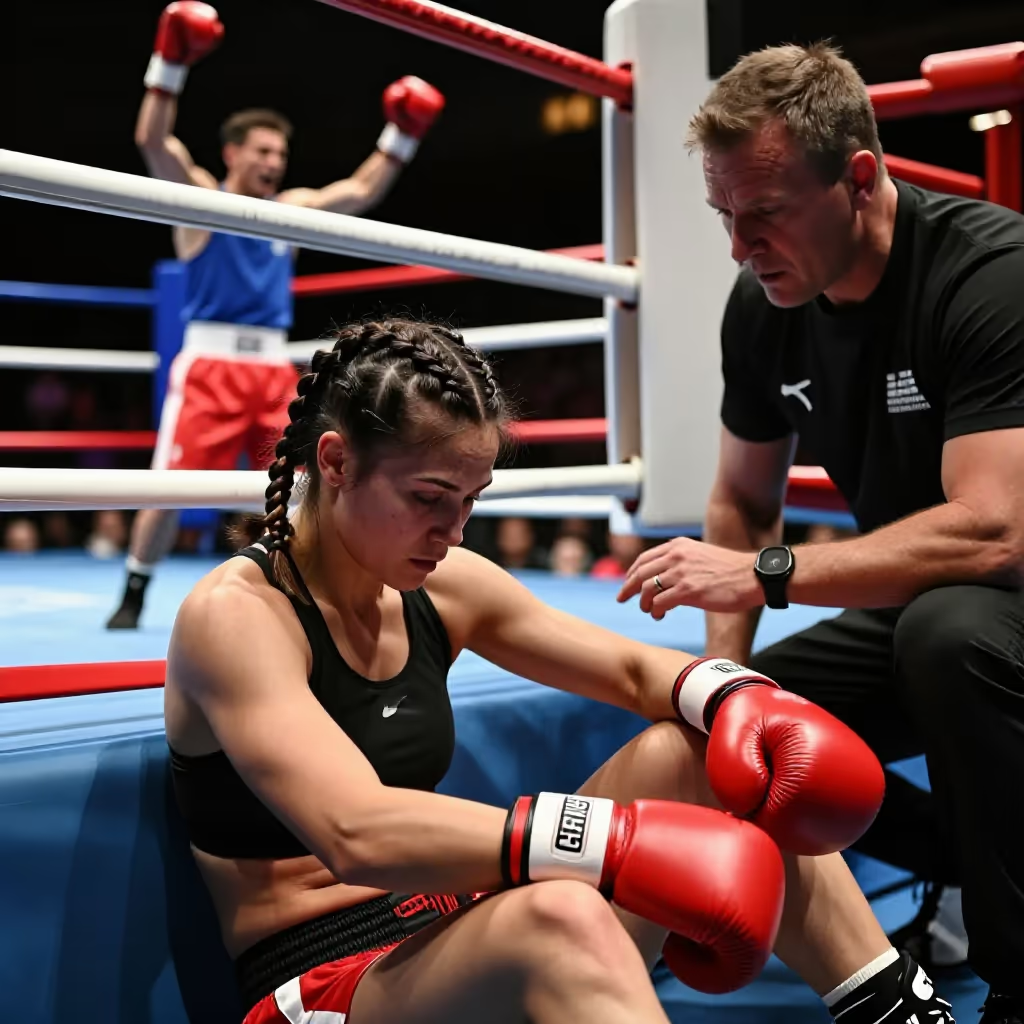
geschlagen
beaten
Having been defeated in a fight, competition, or dispute.
EXAMPLE
Nach einem langen Finale musste sich die Mannschaft knapp geschlagen geben.
After a long final, the team had to admit they were narrowly beaten.
beaten / whipped
Loading your saved state.
beaten
Having been defeated in a fight, competition, or dispute.
Nach einem langen Finale musste sich die Mannschaft knapp geschlagen geben.
After a long final, the team had to admit they were narrowly beaten.

a full
Used for emphasis before expressions of time or quantity to stress their length or size; roughly means 'entire' or 'full'.
Wir haben geschlagene zwei Stunden im Stau gestanden.
We were stuck in traffic for a full two hours.

whipped / beaten
Beaten into a stiff or foamy mass, usually referring to cream or egg whites.
Für den Kuchen benötigen Sie steif geschlagenes Eiweiß.
For the cake, you need egg whites beaten until stiff.

to be afflicted with
An idiom expressing that someone suffers from a particular negative condition, trait, or fate.
Er scheint mit völliger Ahnungslosigkeit geschlagen zu sein.
He seems to be afflicted with complete cluelessness.
'Geschlagen' is the past participle of the verb 'schlagen' (to hit/beat). Almost all meanings derive from the basic idea of hitting or defeating: you can be beaten in sports, cream is whipped, or you can be struck by fate.
Die geschlagene Mannschaft verließ enttäuscht das Spielfeld.
The beaten team left the playing field disappointed.
In the meaning 'besiegt' (defeated), the reflexive expression 'sich geschlagen geben' is often used. It means that you accept your defeat or give up.
Nach stundenlanger Diskussion gab er sich endlich geschlagen.
After hours of discussion, he finally admitted defeat.
When 'geschlagen' emphasizes an expression of time or quantity, it stands unchanged directly before the number. It stresses how long something is or how large the amount is, often with a feeling of surprise or annoyance.
Ich habe geschlagene drei Stunden auf diesen Anruf gewartet.
I waited a full three hours for this call.
You can always recognize this meaning from the context of cooking or baking. Typical combinations are 'geschlagene Sahne' (whipped cream) or 'steif geschlagenes Eiweiß' (egg whites beaten until stiff).
Der Kuchen wird mit geschlagener Sahne serviert.
The cake is served with whipped cream.
The expression 'mit etwas geschlagen sein' (to be afflicted with something) is fixed and always uses the preposition 'mit' followed by the dative. It describes that someone suffers from a negative trait or an unfortunate circumstance.
Er ist mit einer schrecklichen Singstimme geschlagen.
He is afflicted with a terrible singing voice.
whole / quite
Ganz and geschlagen can come before an expression of time and emphasize the full duration. Ganz can remain neutral, while geschlagen usually emphasizes an unusually long duration or the speaker's annoyance about it more strongly. Use ganz for a factual statement and geschlagen for emphasized surprise.

Der Kurs dauerte geschlagene drei Stunden.
The course lasted a whole three hours.
Der Kurs dauerte ganze drei Stunden.
The course lasted a full three hours.