In a figurative sense, to be endowed with a special talent, a positive quality, or great good fortune.
example
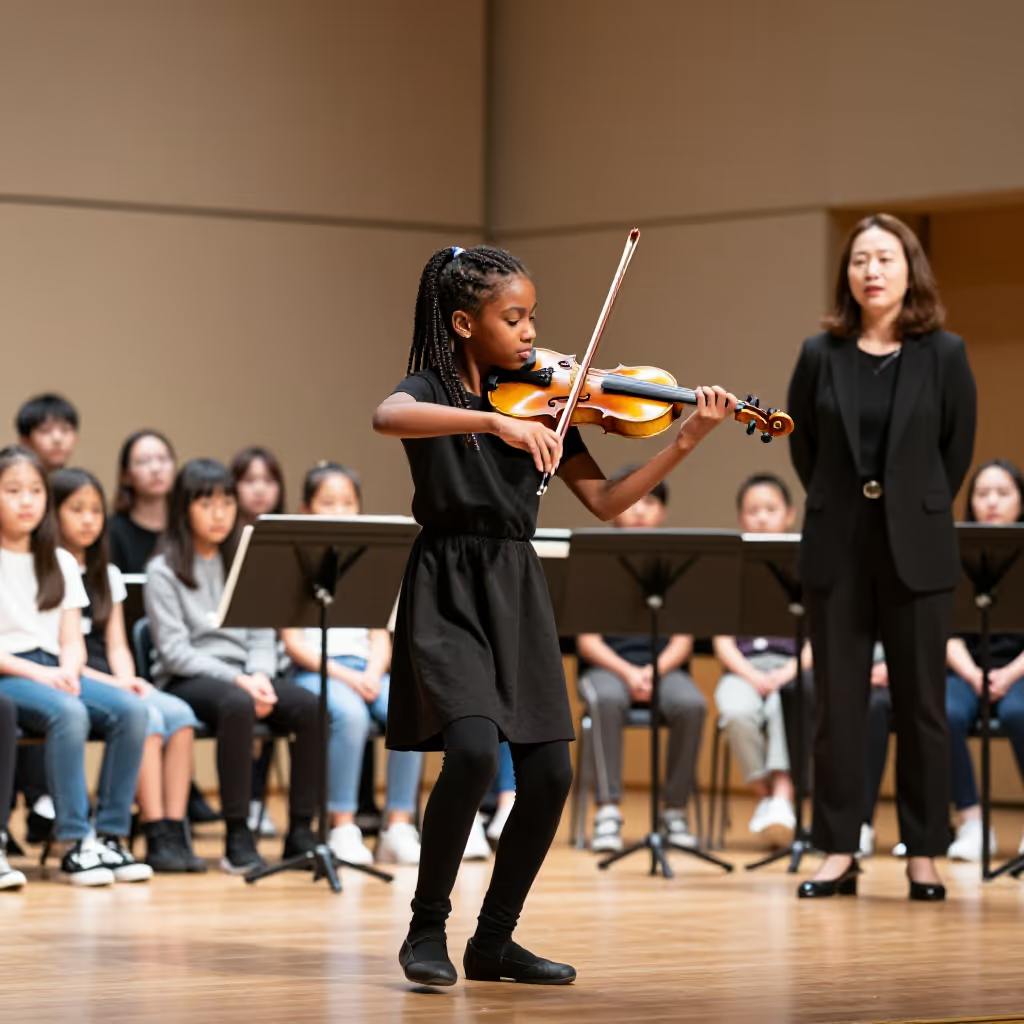
Sie ist mit einer außergewöhnlichen musikalischen Begabung gesegnet.
She is blessed with an exceptional musical talent.

Usage tips
Participle as adjective
'Gesegnet' is the past participle of the verb 'segnen' (to bless). All meanings, including the ironic one, derive from the idea that you have received something (good or bad) from a higher power or from fate.
EXAMPLE
Er fühlt sich mit seiner Familie wirklich gesegnet.
He feels truly blessed with his family.
Fixed construction
To express that someone has a special talent or good fortune, you use the fixed construction 'mit etwas gesegnet sein' (to be blessed with something). The preposition 'mit' and the dative are essential here.
EXAMPLE
Sie ist mit einer Engelsgeduld gesegnet.
She is blessed with the patience of an angel.
Ironic use
This meaning is purely ironic and means the opposite of the literal meaning. You can recognize it when 'gesegnet' is used in a clearly negative or annoying context.
EXAMPLE
Noch ein Meeting heute? Wir sind ja wirklich gesegnet!
Another meeting today? We really are blessed!
Context: religion
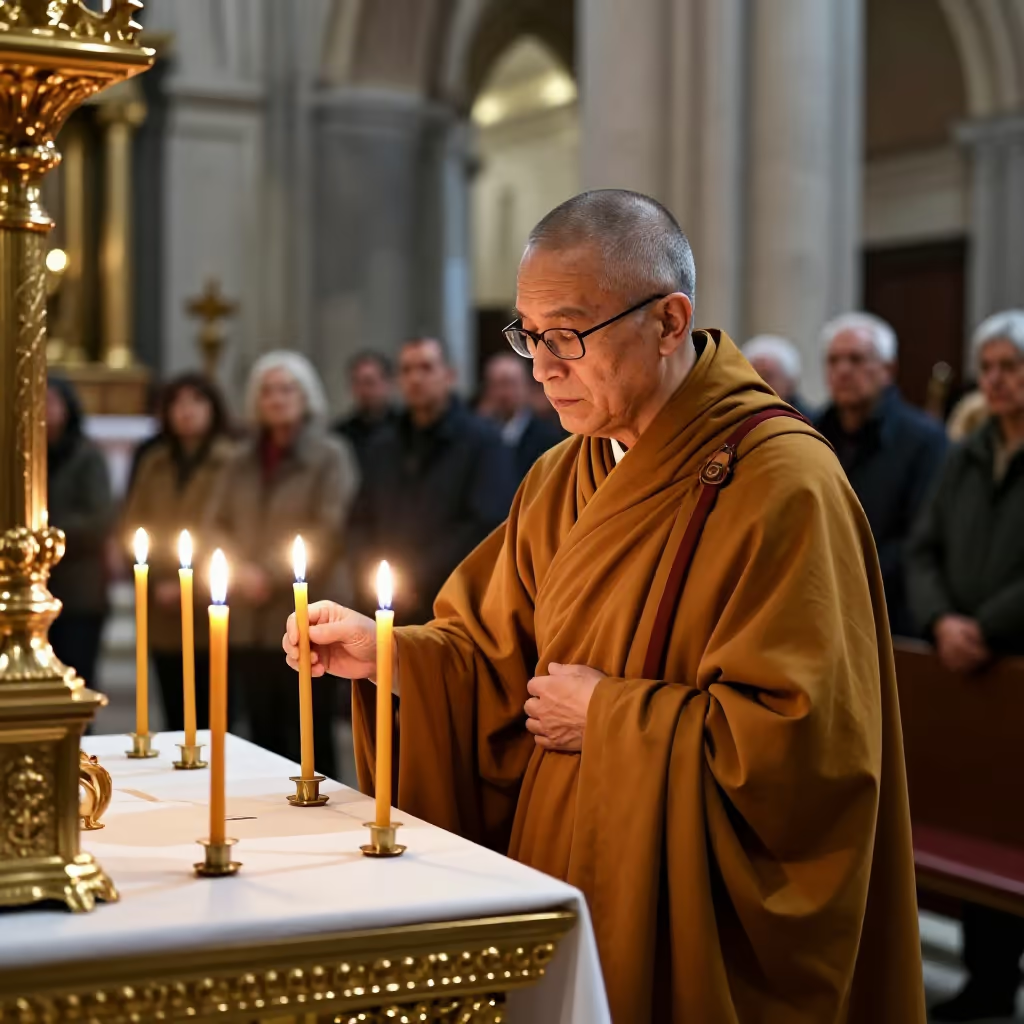
You can recognize the literal meaning of 'gesegnet' from the religious or spiritual context. It then describes things or people that have received a blessing in a rite.
EXAMPLE
Der Priester sprach über das gesegnete Wasser.
The priest spoke about the blessed water.
Fixed expression
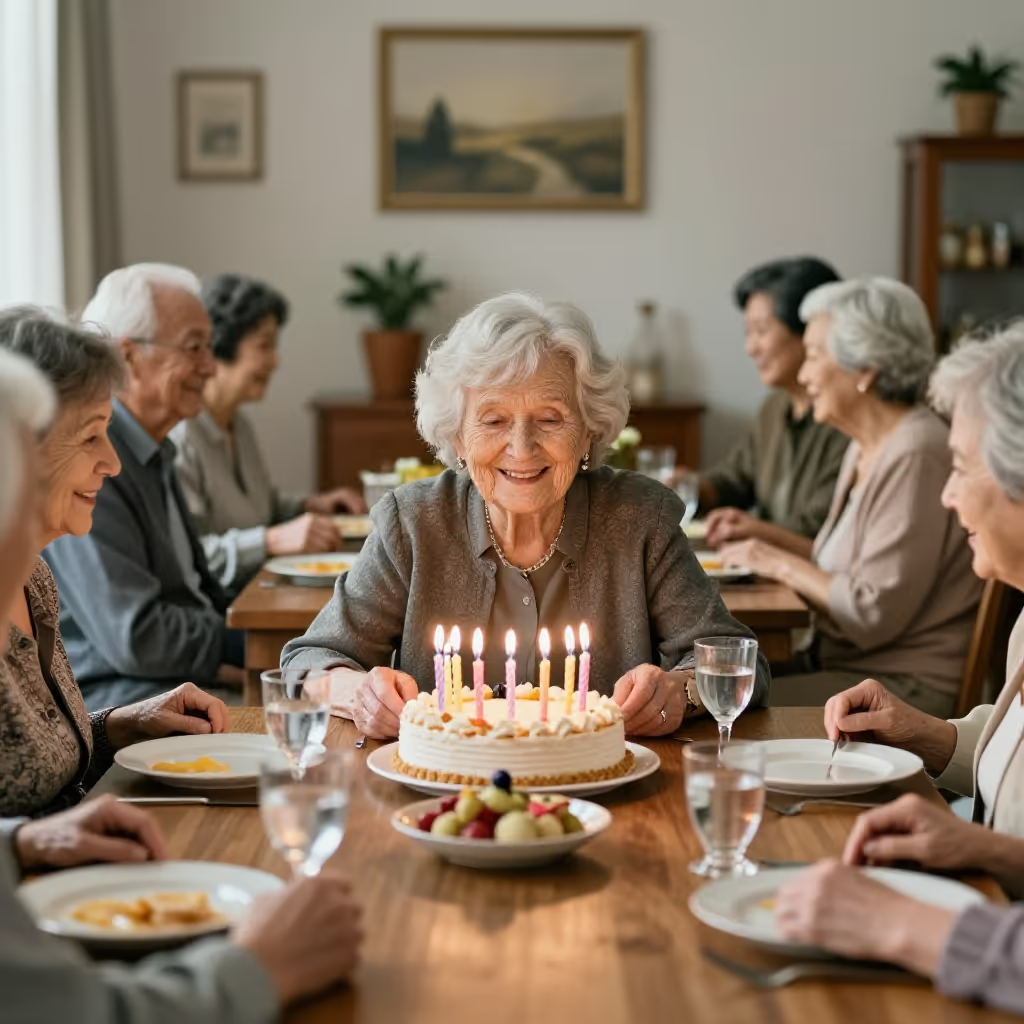
The expression 'ein gesegnetes Alter' (a blessed/ripe old age) is a fixed collocation. It is used to speak about a very advanced age in a respectful and positive way.
EXAMPLE
Er erreichte das gesegnete Alter von 102 Jahren.
He reached the ripe old age of 102.
Compare with
near_synonym · confusable
gesegnet vs hoch
high
'hoch' and 'gesegnet' can both refer to age, but they are used differently. 'hoch' is the normal, neutral description: someone has reached an advanced age. 'gesegnet' occurs in the fixed expression 'ein gesegnetes Alter' (a blessed / ripe old age) and sounds warmer, more solemn, or more respectful. Learners may confuse the words because both point in a similar direction when talking about age. But 'gesegnet' does not generally replace 'hoch'. For example, you would not naturally say 'ein gesegneter Preis' instead of 'ein hoher Preis' (a high price).
gesegnet
Der alte Lehrer hat ein gesegnetes Alter erreicht.
The old teacher reached a ripe old age.
hoch
Meine Großmutter ist trotz ihres hohen Alters noch sehr aktiv.
Despite her advanced age, my grandmother is still very active.