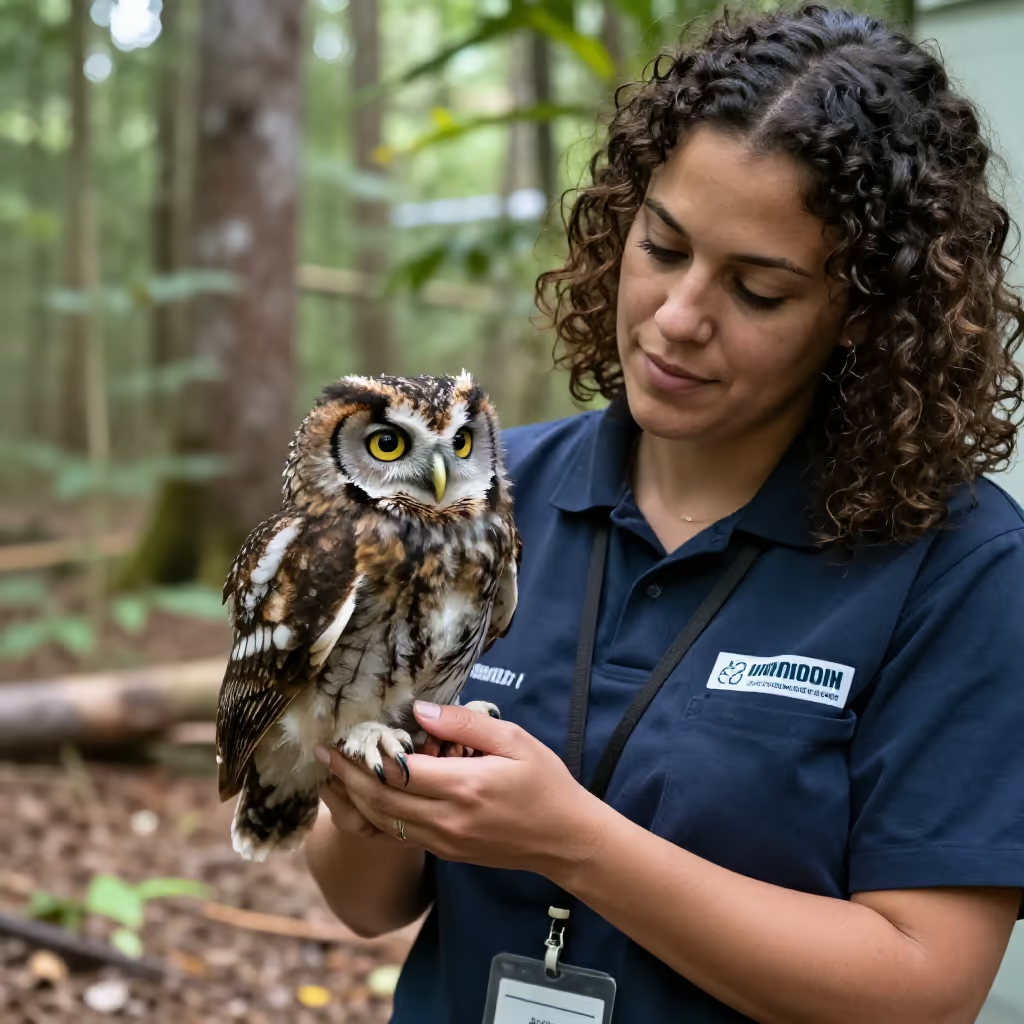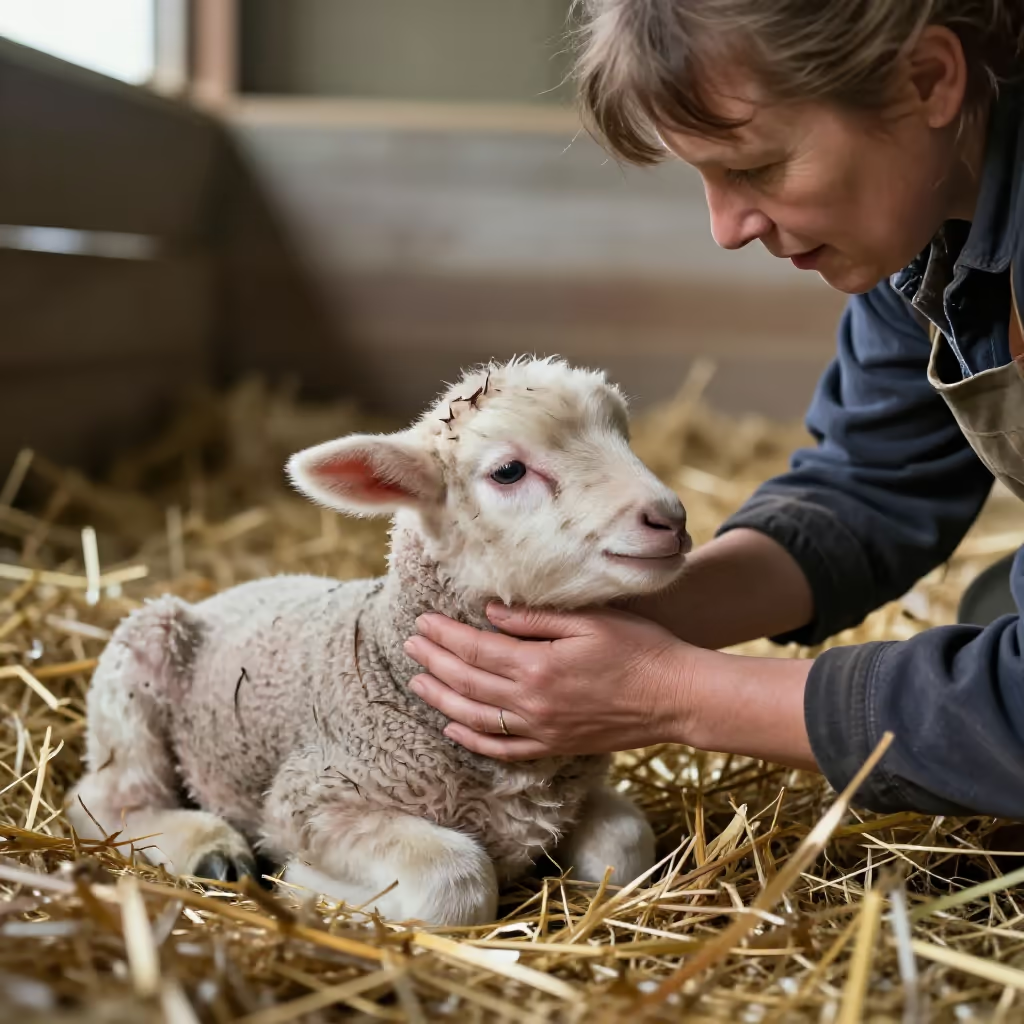
A living being, whether human or animal, often with the connotation that it was created by a higher power (God, nature).
example
Der Mensch ist nur ein kleines Geschöpf im riesigen Universum.
Humans are only small creatures in the vast universe.

Usage tips
Word family
'Geschöpf' (creature) derives from the verb 'schaffen' (in the sense of 'to create'). A Geschöpf is therefore something that has been created. The form with 'Ge-' and an umlaut is typical for such derivations.
EXAMPLE
In der Geschichte geht es um ein künstlich geschaffenes Geschöpf.
The story is about an artificially created creature.
Context clue
The neutral meaning 'Lebewesen' (living being) is found in religious or philosophical contexts. The negative meaning 'Marionette' (puppet) is used in political or social contexts and is often complemented by a genitive or 'von' (of/by) to name the person exerting influence.
EXAMPLE
Alle Geschöpfe der Natur verdienen unseren Schutz.
All creatures of nature deserve our protection.
Register and style
In the meaning 'Lebewesen' (living being), the word often has an elevated, literary, or poetic sound. In normal everyday language, you would more likely say 'Tier' (animal), 'Lebewesen' (living being), or 'Mensch' (human/person).
EXAMPLE
Er betrachtete die kleine Katze als ein verletzliches Geschöpf.
He regarded the small cat as a vulnerable creature.
Negative meaning
When a person is referred to as the 'Geschöpf' (creature) of another person, this is strongly derogatory. It expresses that the person has no opinion of their own and is completely dependent.
EXAMPLE
Sie wehrte sich gegen den Vorwurf, nur ein willenloses Geschöpf ihres Mentors zu sein.
She defended herself against the accusation of being merely a will-less creature of her mentor.
Compare with
near_synonym
Geschöpf vs Tier
animal
'das Tier' and 'das Geschöpf' can both mean a living being. 'Tier' is the normal term when talking about dogs, birds, fish, or insects. 'Geschöpf' is broader because it can also include humans. It also often sounds softer, more poetic, or more religious, because it recalls something that was created. In everyday language, you usually say 'Tier' when you mean a specific animal. 'Geschöpf' fits better when you are speaking with compassion or talking generally about living beings.
Geschöpf
Das kleine Geschöpf zitterte im Regen, und Lena nahm es mit nach Hause.
The little creature was trembling in the rain, and Lena took it home with her.
Tier
Im Zoo darf man kein Tier ohne Erlaubnis füttern.
At the zoo, you are not allowed to feed any animal without permission.