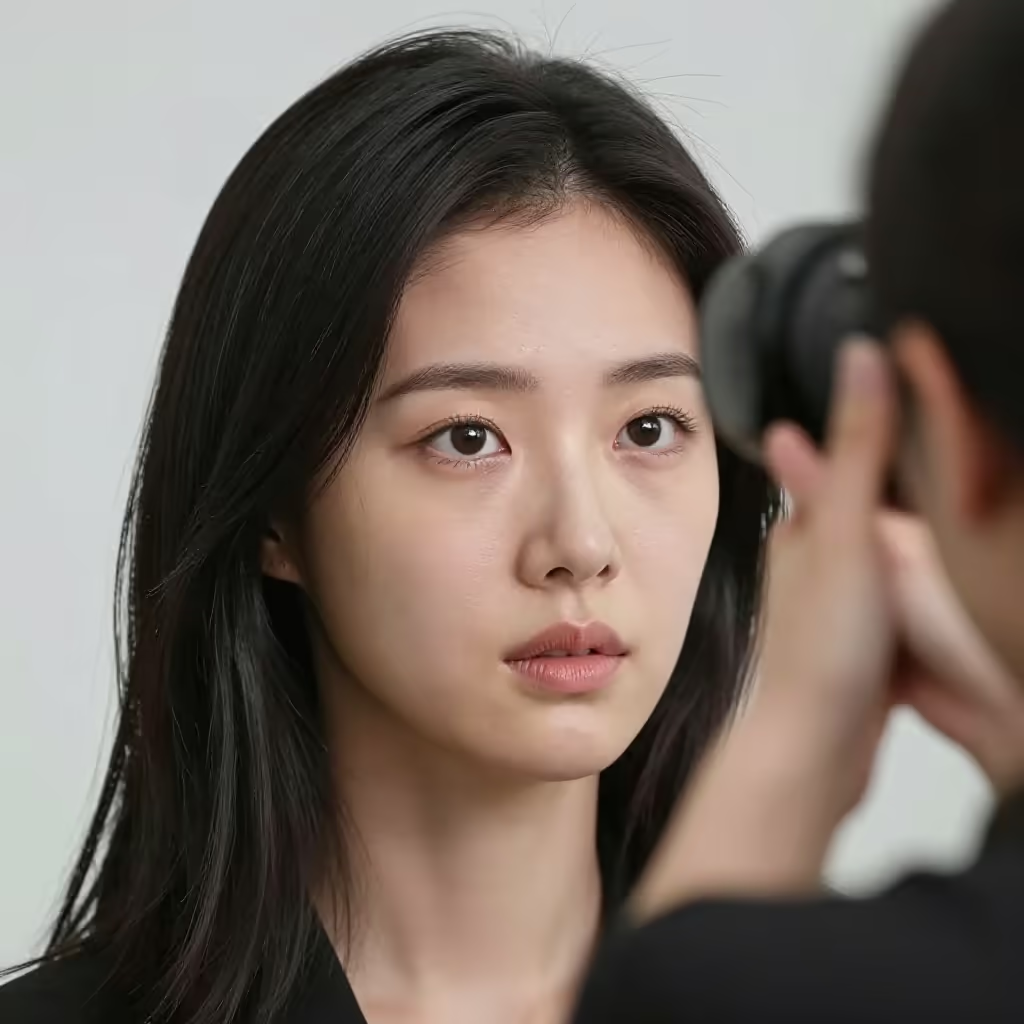
An individual feature of the face, such as the shape of the nose, mouth, or eyes, that contributes to the overall impression. The word is usually used in the plural.
example
Er hatte die markanten Gesichtszüge seines Vaters geerbt.
He had inherited his father's striking facial features.

Usage tips
Compound word
The word is made up of 'Gesicht' (face) and 'Zug' (feature/line). Here, a 'Zug' can mean a line or a feature. So a 'Gesichtszug' is literally a characteristic feature of the face.
EXAMPLE
Ihre sanften Gesichtszüge erinnerten ihn an seine Mutter.
Her gentle facial features reminded him of his mother.
Use in the plural
Although there is a singular form, 'Gesichtszug' is almost always used in the plural ('die Gesichtszüge' — the facial features). People usually talk about the whole set of features, not just a single one.
EXAMPLE
Die Gesichtszüge der alten Frau erzählten eine lange Geschichte.
The old woman's facial features told a long story.
Typical adjectives
'Gesichtszüge' (facial features) is often combined with certain adjectives to describe the character of a face. Common examples are 'markante' (striking), 'feine' (delicate), 'sanfte' (gentle), or 'harte' (hard) Gesichtszüge.
EXAMPLE
Das Model hatte sehr markante Gesichtszüge.
The model had very striking facial features.
Figurative meaning
In the figurative meaning, 'Gesichtszüge' (features) describes the typical characteristics of abstract things such as an era, a culture, or a work of art. The expression 'die Gesichtszüge von etwas tragen' (to bear the features of something) is common here.
EXAMPLE
Der Roman trägt die düsteren Gesichtszüge seiner Zeit.
The novel bears the dark features of its time.
Compare with
near_synonym · confusable
Gesichtszug vs Zug
train / move / draft
'der Zug' and 'der Gesichtszug' can both mean a feature of the face. In this meaning, 'Zug' is usually used in the plural: 'die Züge'. But without clear context, the word is easy to misunderstand because 'Zug' has many other meanings. 'Gesichtszug' is more precise because it is immediately clear that it is about the face. 'Gesichtszug' is also usually used in the plural. Learners may confuse the words because 'Züge' and 'Gesichtszüge' are used very similarly. For clear everyday language, 'Gesichtszüge' is often the safer choice.
Gesichtszug
Die Gesichtszüge des Kindes erinnerten mich an seinen Vater.
The child's facial features reminded me of his father.