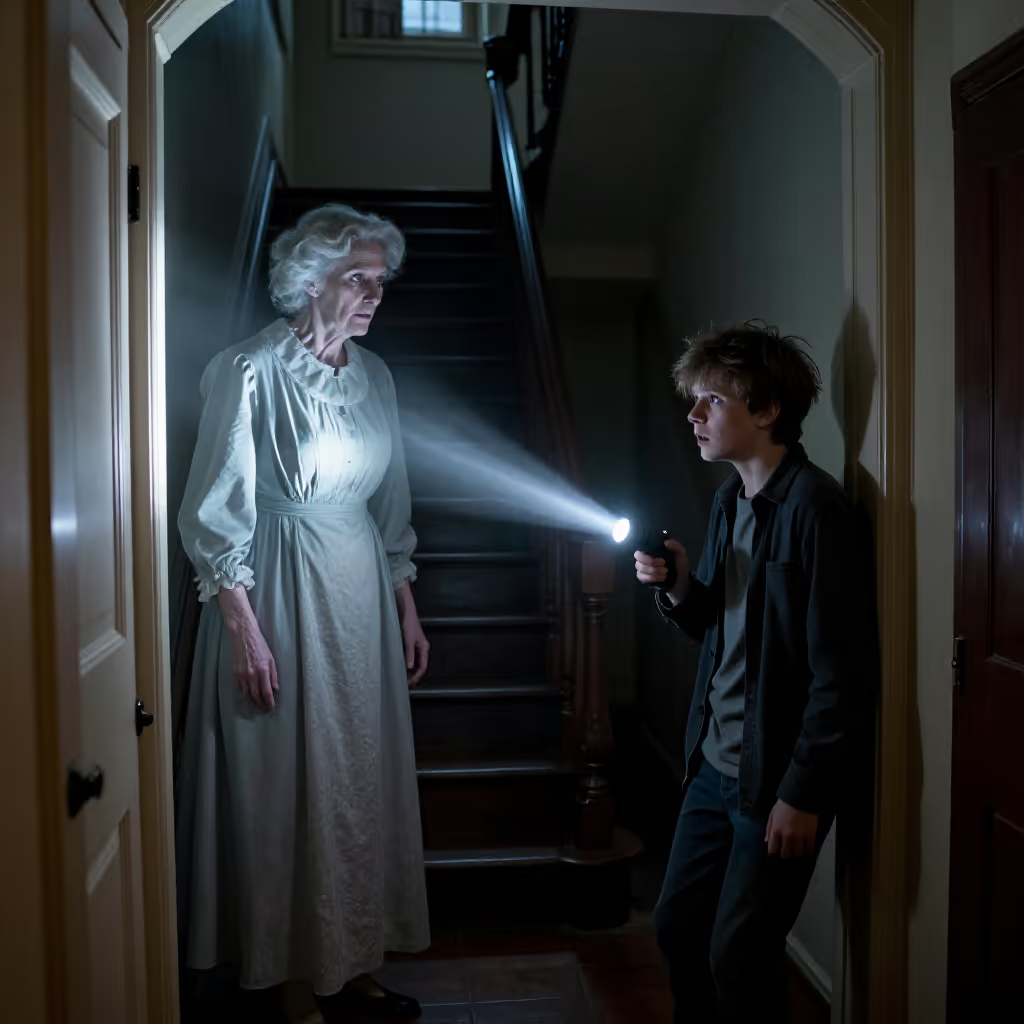
The spirit of a deceased person that becomes visible or perceptible to living people; a phantom or haunting figure.
example
Die Kinder erzählen sich Gruselgeschichten von einem Gespenst, das im alten Schloss umgehen soll.
The children tell each other scary stories about a ghost that is said to haunt the old castle.

Usage tips
Word family
'Gespenst' (ghost) belongs to a word family related to spooky things. The related verb is 'spuken' (to haunt), and the adjective is 'gespenstisch' (spooky, ghostly).
EXAMPLE
In dem alten Haus soll es spuken.
The old house is said to be haunted.
Typical collocations
When talking about real ghosts, the phrase 'ein Gespenst geht um' (a ghost is haunting/going around) is often used. Someone who is only imagining something 'sieht Gespenster' (sees ghosts).
EXAMPLE
Man sagt, dass in dieser Burg nachts ein Gespenst umgeht.
They say that a ghost haunts this castle at night.
Context clue
You can often recognize the figurative meaning by the structure 'das Gespenst von/der...' (the specter of...), followed by an abstract threat. Here, the ghost is a symbol of a fear.
EXAMPLE
Das Gespenst der Inflation macht den Leuten Sorgen.
The specter of inflation is worrying people.
Compare with
synonym
Gespenst vs Geist
spirit / mind
'der Geist' and 'das Gespenst' can both mean an eerie apparition of a deceased person. In stories or when talking about hauntings, they can often be used in similar ways. 'Gespenst' sounds more like a visible, frightening figure, especially in fairy tales, films, or old houses. 'Geist' is somewhat more general and can also mean the soul of a deceased person. For a spooky apparition, 'Gespenst' is often especially vivid.
Gespenst
Paula glaubt, dass sie im Keller ein Gespenst gesehen hat.
Paula believes she saw a ghost in the basement.
Geist
Im alten Schloss soll der Geist einer früheren Besitzerin wohnen.
The ghost of a former owner is said to live in the old castle.