

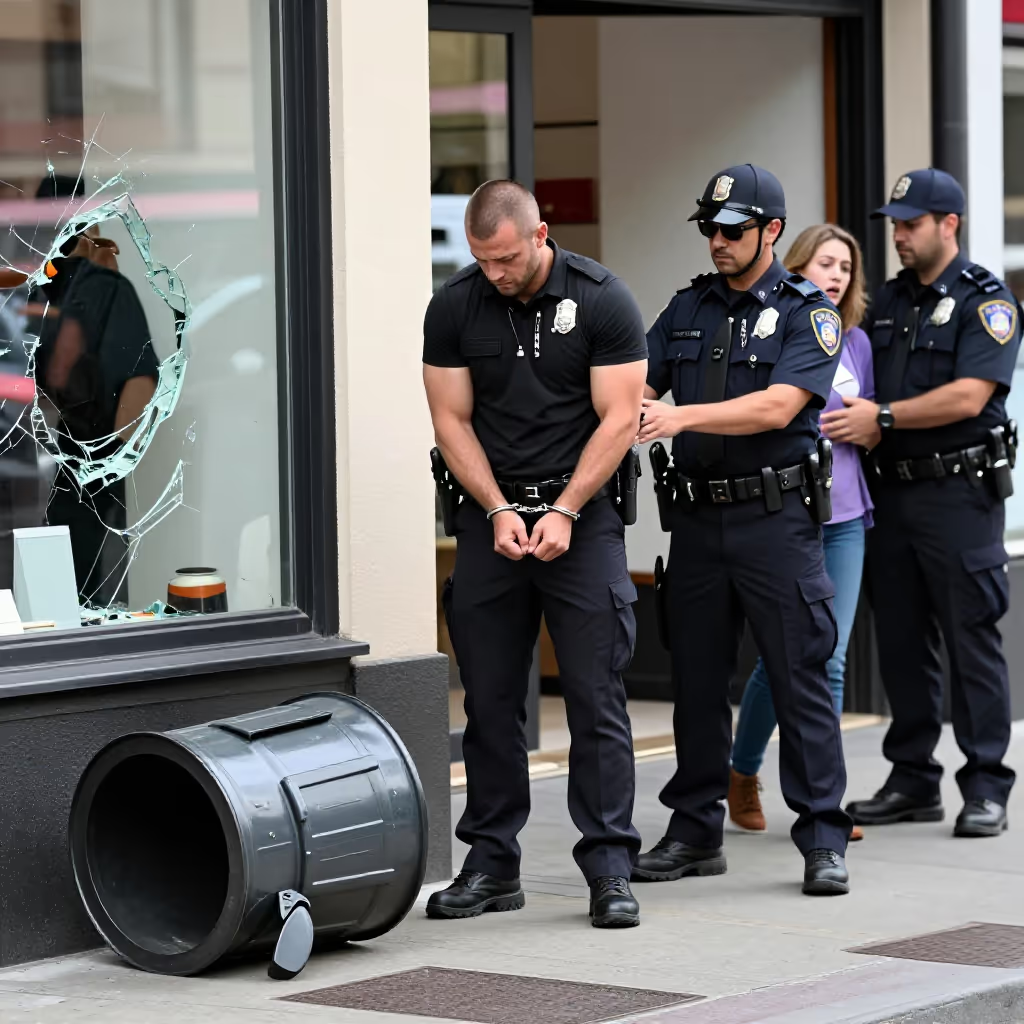
A person who uses physical violence against other people or property in order to injure, damage, or coerce. The term is often used in legal and police contexts.
example
Die Polizei konnte den Gewalttäter nach kurzer Flucht festnehmen.
The police were able to arrest the violent offender after a short chase.

Usage tips
Compound word
The word is made up of 'die Gewalt' (violence) and 'der Täter' (offender/perpetrator). So it literally describes an offender who uses violence.
EXAMPLE
Die Zeugen konnten den Gewalttäter genau beschreiben.
The witnesses were able to describe the violent offender precisely.
Word family
The word belongs to a family of words around 'Gewalt' (violence). The related adjective is 'gewalttätig' (violent), and a single act is called 'die Gewalttat' (act of violence).
EXAMPLE
Die Polizei warnt vor einem gewalttätigen Mann in der Gegend.
The police are warning about a violent man in the area.
Formal usage
'Gewalttäter' (violent offender) is a formal term used mainly in the language of the police, the justice system, and the news.
EXAMPLE
In der Pressemitteilung der Polizei wurde der Flüchtige als Gewalttäter bezeichnet.
In the police press release, the fugitive was described as a violent offender.
Compare with
antonym
Gewalttäter vs Opfer
victim / sacrifice
'das Opfer' and 'der Gewalttäter' stand in clear contrast in situations involving violence. The 'Opfer' is the person who is injured, threatened, or harmed. The 'Gewalttäter' is the person who uses violence. 'Gewalttäter' is used especially often in police reports, in the news, or in serious conversations about crimes. 'Opfer' describes the affected side, while 'Gewalttäter' describes the acting and guilty side.
Gewalttäter
Nach der Tat sucht die Polizei den Gewalttäter.
After the crime, the police are looking for the violent offender.
Opfer
Am Bahnhof befragen die Polizisten das Opfer des Angriffs.
At the train station, the police officers question the victim of the attack.