

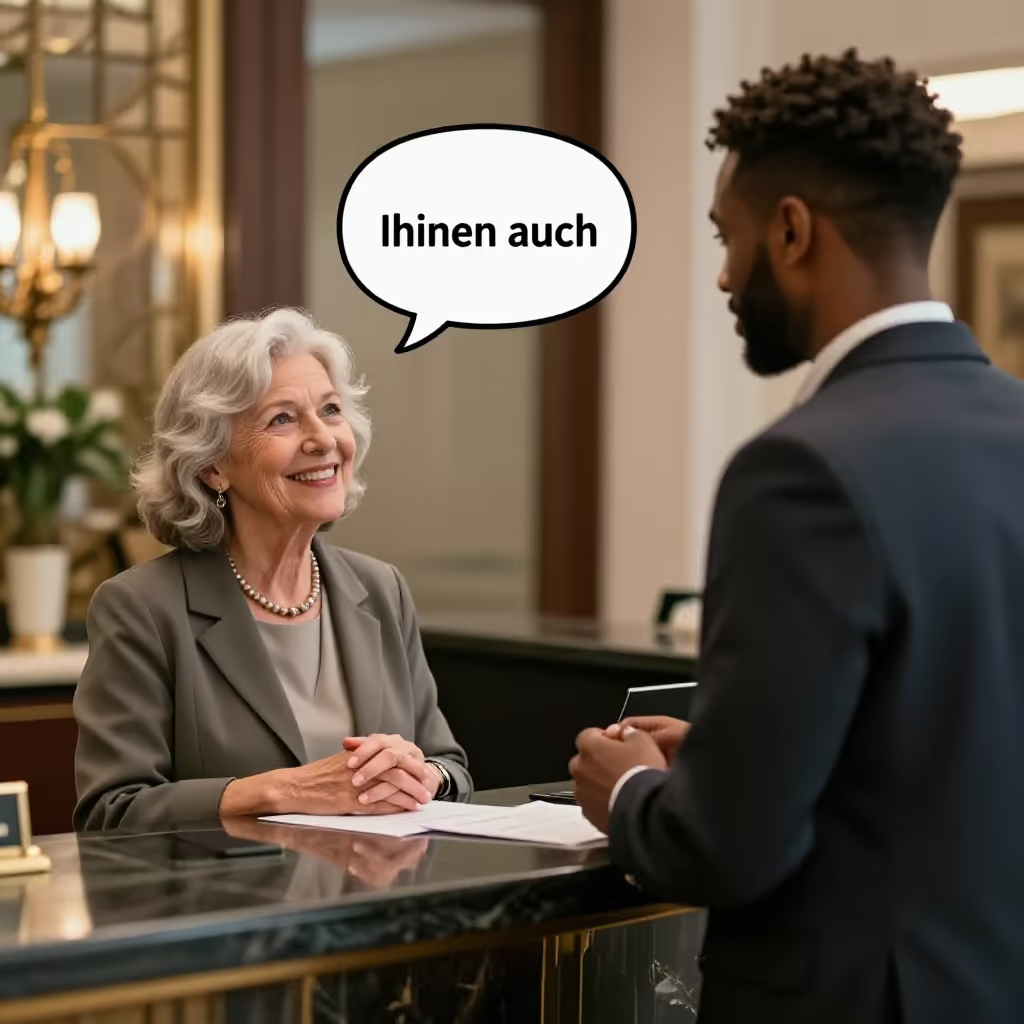
gleichfalls
likewise
A formal and polite response to a wish, meaning 'I wish you the same'; likewise.
EXAMPLE
„Ich wünsche Ihnen ein schönes Wochenende!“ – „Danke, gleichfalls!“
'I wish you a nice weekend!' – 'Thank you, likewise!'
likewise
Loading your saved state.
likewise
A formal and polite response to a wish, meaning 'I wish you the same'; likewise.
„Ich wünsche Ihnen ein schönes Wochenende!“ – „Danke, gleichfalls!“
'I wish you a nice weekend!' – 'Thank you, likewise!'
The word is made up of 'gleich' (the same) and 'falls' (in the case). So it literally means 'in the same case' and expresses that you wish someone the same thing they have just wished you.
„Eine gute Heimfahrt!“ – „Danke, gleichfalls!“
'Have a good trip home!' – 'Thank you, likewise!'
'Gleichfalls' (likewise) is a short, independent response. It is used almost exclusively as a direct reaction to a wish from another person.
„Ich wünsche dir einen schönen Tag!“ – „Gleichfalls!“
'I wish you a nice day!' – 'Likewise!'
This word is considered polite and somewhat more formal. It is an appropriate and respectful response in almost any situation.
„Frohe Feiertage, Herr Meier.“ – „Vielen Dank, Frau Schmidt, gleichfalls.“
'Happy holidays, Mr. Meier.' – 'Thank you very much, Ms. Schmidt, likewise.'
likewise
Ebenfalls and gleichfalls can both be used to politely return a wish. Ebenfalls is neutral and can also be incorporated into ordinary sentences. In such replies, gleichfalls is more formulaic and usually more formal, so it is especially suitable in a polite, official situation.

Auf den Wunsch „Schönen Abend!“ antwortete Lea dem Kunden: „Ihnen gleichfalls!“
In response to the wish “Have a nice evening!”, Lea said to the customer, “Likewise!”
Auf den Wunsch „Schönen Abend!“ antwortete Lea ihrer Freundin: „Dir ebenfalls!“
In response to the wish “Have a nice evening!”, Lea said to her friend, “You too!”