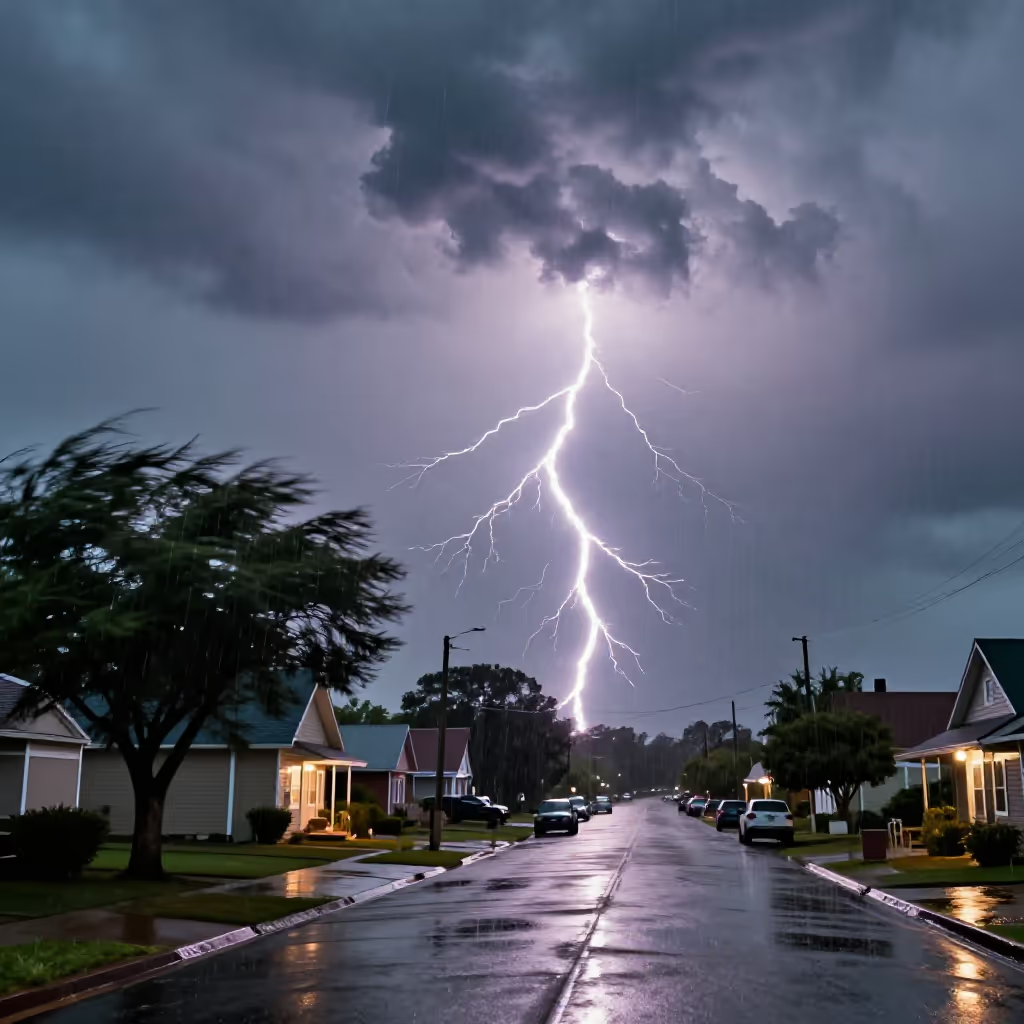
A weather event characterized by lightning and thunder and often accompanied by heavy rain, hail, or storms.
example
Wegen des heftigen Gewitters wurde das Open-Air-Konzert unterbrochen.
Because of the severe thunderstorm, the open-air concert was interrupted.

Usage tips
Word structure
The word consists of the prefix 'Ge-' and the noun 'Wetter' (weather). The prefix 'Ge-' is often used to form collective terms or intensive phenomena, so here it refers to a special, intense form of weather.
EXAMPLE
Das Gebirge ist bei Gewitter besonders gefährlich.
The mountains are especially dangerous during a thunderstorm.
Typical verbs
Fixed verbs are often used to describe a thunderstorm: 'Ein Gewitter zieht auf' (a thunderstorm is approaching), 'ein Gewitter bricht los' (a thunderstorm breaks out), and 'das Gewitter entlädt sich' (the thunderstorm reaches its peak/releases its force).
EXAMPLE
Am Horizont zieht ein dunkles Gewitter auf.
A dark thunderstorm is approaching on the horizon.
Context clue
You can recognize the figurative meaning from the context. If the text mentions 'zu Hause' (at home), 'im Büro' (in the office), 'Streit' (argument), or emotional reactions, it usually means a conflict and not the weather.
EXAMPLE
Nach seiner Bemerkung herrschte ein eisiges Schweigen vor dem Gewitter.
After his remark, there was an icy silence before the storm.
Fixed expression
In the figurative meaning, the phrase 'es gab ein Gewitter' (there was a storm/blowup) is often used. The 'es' is a fixed part here and introduces the sentence in order to describe the emotional outburst.
EXAMPLE
Als die Wahrheit herauskam, gab es ein riesiges Gewitter in der Familie.
When the truth came out, there was a huge blowup in the family.
Compare with
near_synonym
Gewitter vs Streit
argument / dispute
'der Streit' and 'das Gewitter' can both describe a loud, tense situation between people. 'Streit' is the normal and direct word for a conflict. 'Gewitter' is meant figuratively here: it describes an argument or emotional outburst that is sudden, loud, and intense. The word brings lightning and thunder to mind. If you want to stay factual, say 'Streit'. If you want to emphasize the strong tension and the outburst, 'Gewitter' can fit.
Gewitter
Als die Rechnung kam, brach am Tisch ein richtiges Gewitter los.
When the bill came, a real storm broke out at the table.
Streit
In der Schule gab es gestern Streit wegen der Gruppenarbeit.
At school yesterday, there was an argument about the group project.