

glühen
to glow
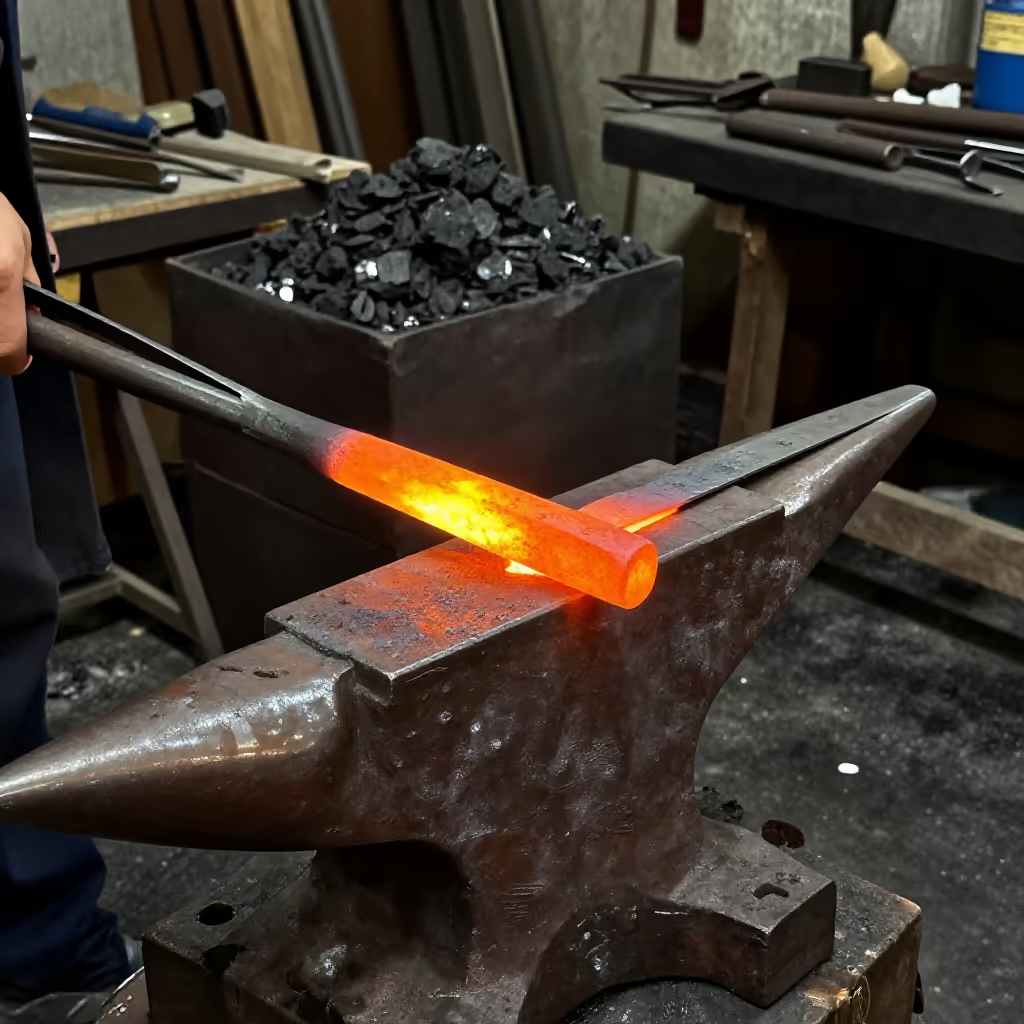
To emit light because of intense heat, without burning or having a flame. This is typical of metals or coal at high temperatures.
EXAMPLE
Das Eisen glühte rot in der Esse des Schmieds.
The iron glowed red in the blacksmith's forge.
to glow / burn
Loading your saved state.
to glow
To emit light because of intense heat, without burning or having a flame. This is typical of metals or coal at high temperatures.
Das Eisen glühte rot in der Esse des Schmieds.
The iron glowed red in the blacksmith's forge.

to glow
Figuratively, to be very hot or feel very hot, often referring to the human body. It can be caused by fever, exertion, shame, or exposure to the sun.
Nach dem Sonnenbad glühte ihre Haut am ganzen Körper.
After sunbathing, her skin was glowing all over her body.

to burn for
Figuratively, to feel very strong passion, enthusiasm, or devotion for a person, an idea, or an activity.
Sie ist eine echte Künstlerin, die für ihre Arbeit glüht.
She is a true artist who burns for her work.
The verb 'glühen' (to glow) is closely related to the noun 'die Glut' (embers/glow). 'Glut' refers to the red-glowing, hot mass of something that burns without a flame, such as charcoal. This connection helps you understand the core meaning of intense, flameless heat.
Nach dem Feuer war nur noch die Glut der Kohlen zu sehen.
After the fire, only the glow of the coals could still be seen.
You can tell whether 'glühen' (to glow) is meant literally or figuratively from the subject. If we are talking about metal or coal, it is about real heat. If we are talking about body parts like cheeks or skin, it is usually a reaction to emotions, exertion, or fever.
Das Metall begann in der Hitze zu glühen.
The metal began to glow in the heat.
In the literal meaning, 'glühen' (to glow) is often combined with materials that become very hot. Typical subjects are 'das Eisen' (the iron), 'der Stahl' (the steel), 'das Metall' (the metal), or 'die Kohle' (the coal).
Die Kohlen im Grill glühen perfekt für das Fleisch.
The coals in the grill are glowing perfectly for the meat.
When it is about the body, 'glühen' (to glow) is often combined with the causes. Typical phrases are 'vor Fieber glühen' (to glow with fever), 'vor Scham glühen' (to glow with shame), or 'vor Anstrengung glühen' (to glow from exertion).
Nach dem langen Lauf glühte sein Gesicht vor Anstrengung.
After the long run, his face was glowing from exertion.
To express that someone has a great passion for something, 'glühen' (to burn) is always used with the preposition 'für' (for) and the accusative. The structure is: jemand glüht für etwas/jemanden (someone burns for something/someone).
Er glüht für den Umweltschutz und engagiert sich in vielen Projekten.
He burns for environmental protection and is involved in many projects.
to burn
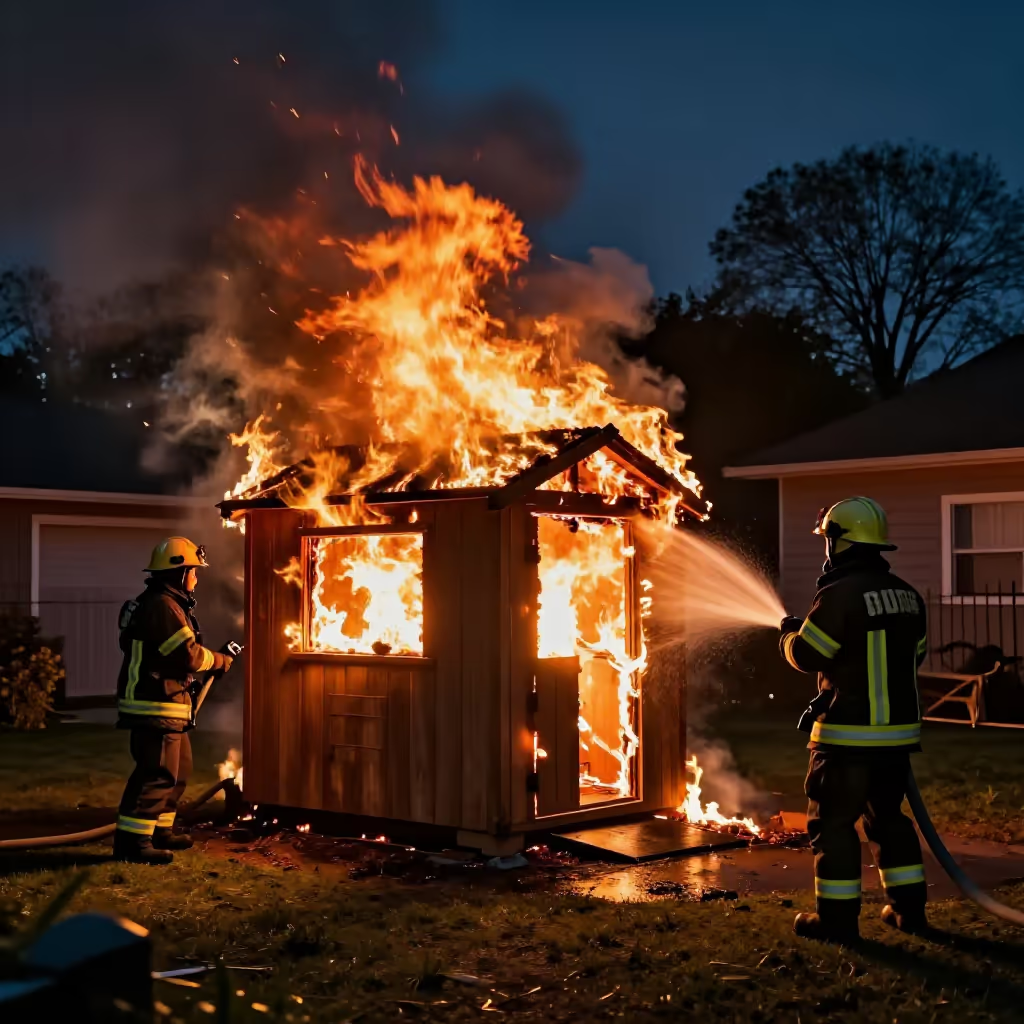
Brennen and glühen can both occur with intensely heated coal. Brennen tends to indicate fire or a flame, while glühen describes light and intense heat without a flame. Use brennen for visible flames; with hot, red-glowing coal without a flame, glühen is more appropriate.
Die Kohle glüht noch rot, obwohl keine Flammen mehr zu sehen sind.
The coal is still glowing red, although there are no more flames to be seen.
Die Kohle brennt noch, und über dem Grill stehen kleine Flammen.
The coal is still burning, and small flames are rising above the grill.