

brennen
to burn
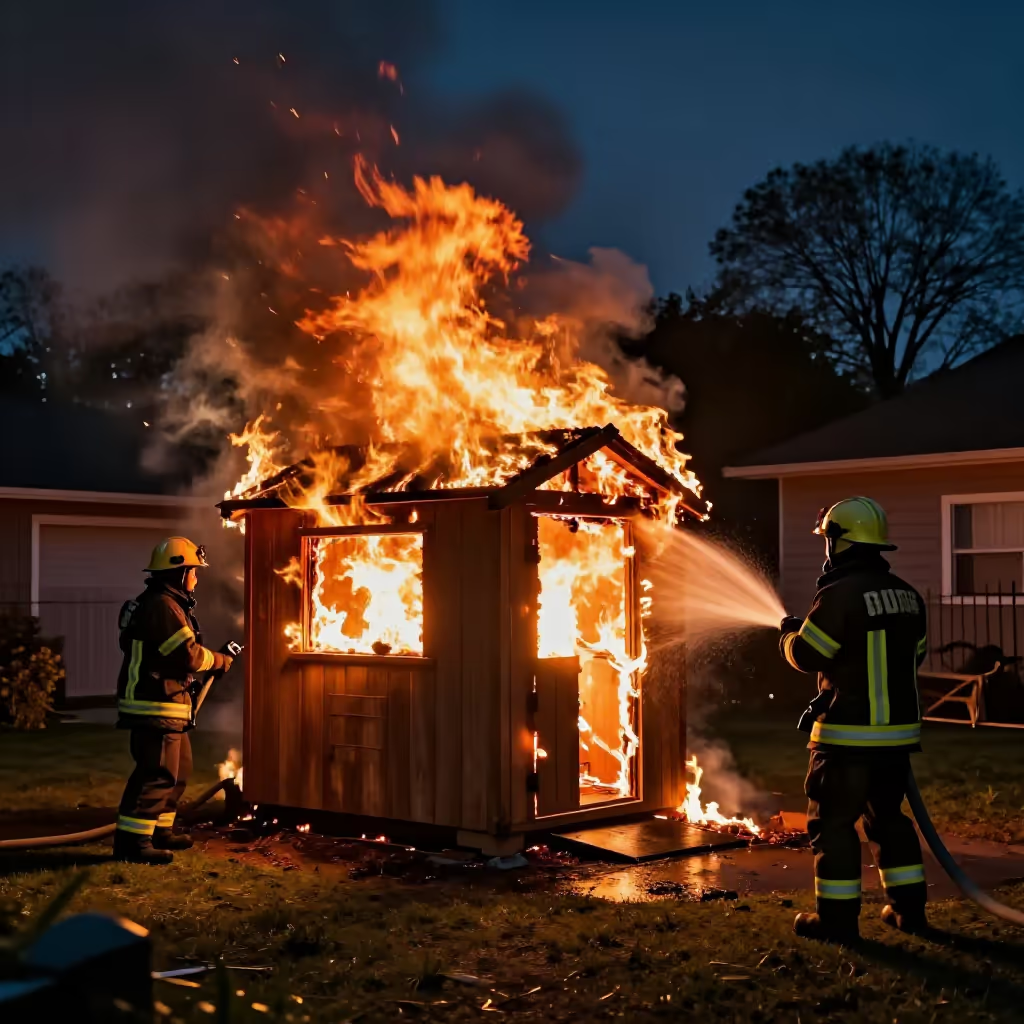
To be destroyed by fire or to be in flames.
EXAMPLE
Das alte Lagerhaus brennt lichterloh.
The old warehouse is burning fiercely.
to burn
Loading your saved state.
to burn
To be destroyed by fire or to be in flames.
Das alte Lagerhaus brennt lichterloh.
The old warehouse is burning fiercely.

to burn
To cause a sharp, stinging, or hot feeling on the skin, in the eyes, or in the throat.
Das Desinfektionsmittel brennt in der Wunde.
The disinfectant burns in the wound.

to burn for something
To feel a very strong passion or enthusiasm for something or someone.
Sie brennt für den Tierschutz und investiert ihre ganze Freizeit dafür.
She burns for animal welfare and invests all her free time in it.

to burn
To give off light or heat; to be switched on. Refers to lamps, candles, or the sun.
Lass bitte das Licht im Flur brennen.
Please leave the light in the hallway burning.
to distill
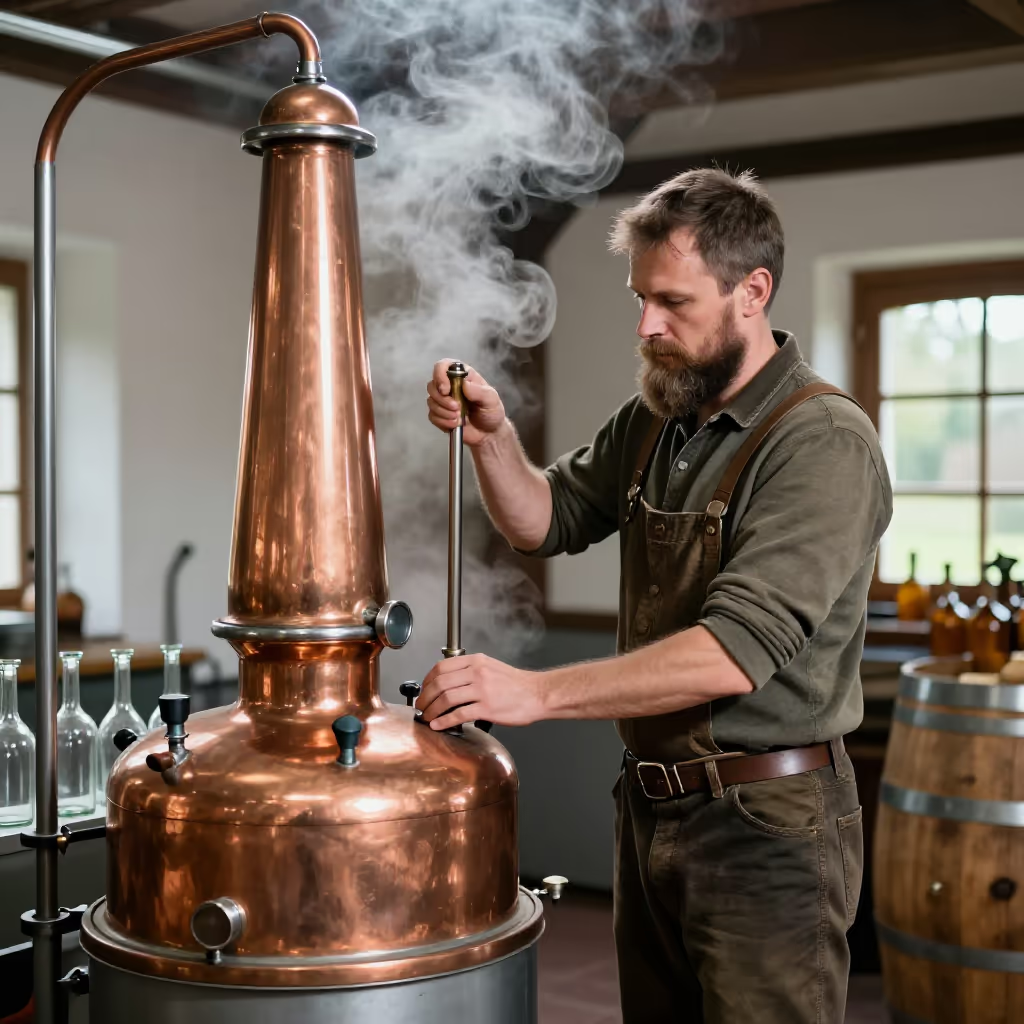
To produce alcohol through distillation.
Der Bauer brennt aus seinen Äpfeln einen hervorragenden Schnaps.
The farmer distills an excellent schnapps from his apples.
to burn
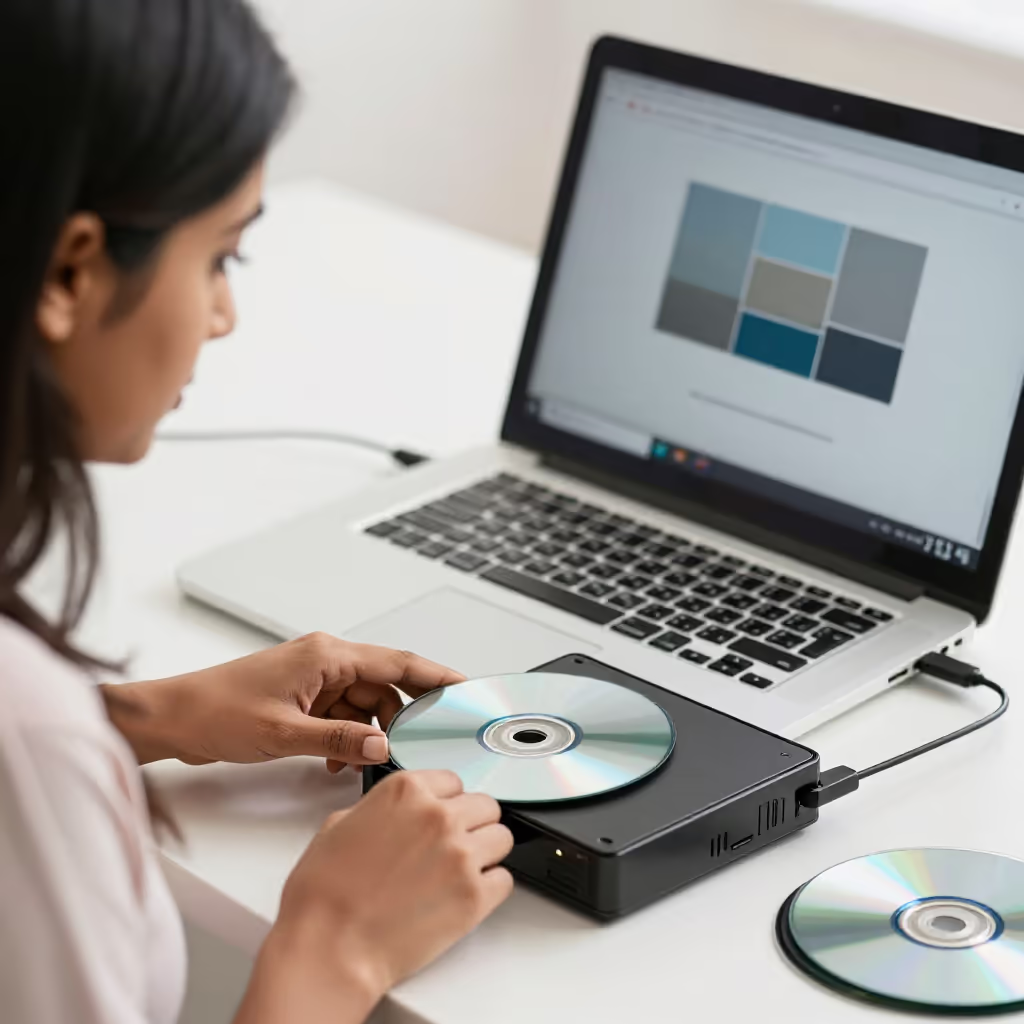
To copy data onto an optical storage medium such as a CD or DVD.
Kannst du mir die Urlaubsfotos auf eine CD brennen?
Can you burn the vacation photos onto a CD for me?
'Brennen' (to burn) can be used with or without an accusative object, which often determines the meaning. Without an object, it usually means that something is in flames or is shining. With an object, it means that someone is actively distilling something or copying data.
Die Kerze brennt. (intransitiv)
The candle is burning. (intransitive)
Although 'brennen' (to burn) in this meaning describes a kind of change of state, the perfect tense is always formed with 'haben' (to have), not with 'sein' (to be).
Das ganze Haus hat letzte Nacht gebrannt.
The whole house burned last night.
When 'brennen' (to burn) describes a feeling, a body part is often the subject of the sentence. The cause can also be the subject.
Meine Augen brennen vom vielen Lesen.
My eyes burn from reading so much.
The figurative meaning 'to be passionate' always requires the preposition 'für' followed by the accusative. You always 'burn for' a cause, an idea, or a person.
Der junge Forscher brennt für sein Projekt.
The young researcher burns for his project.
In this meaning, 'brennen' (to distill) is transitive and needs an accusative object, e.g. 'Schnaps' (schnapps). The source material is often given with the preposition 'aus' (+ dative).
In dieser Region brennt man Alkohol aus Kirschen.
In this region, people distill alcohol from cherries.
When copying data, 'brennen' (to burn) is transitive. The data is the accusative object, and the storage medium is named with the preposition 'auf' (+ accusative).
Ich muss die Präsentation noch auf eine DVD brennen.
I still have to burn the presentation onto a DVD.
to burn
Brennen and verbrennen can both express that something is destroyed by fire or is in flames. Brennen focuses more on the state or process, while verbrennen emphasizes the consumption or the result of the destruction. Brennen is usually the better choice for a visible flame, while verbrennen focuses on something being used up.
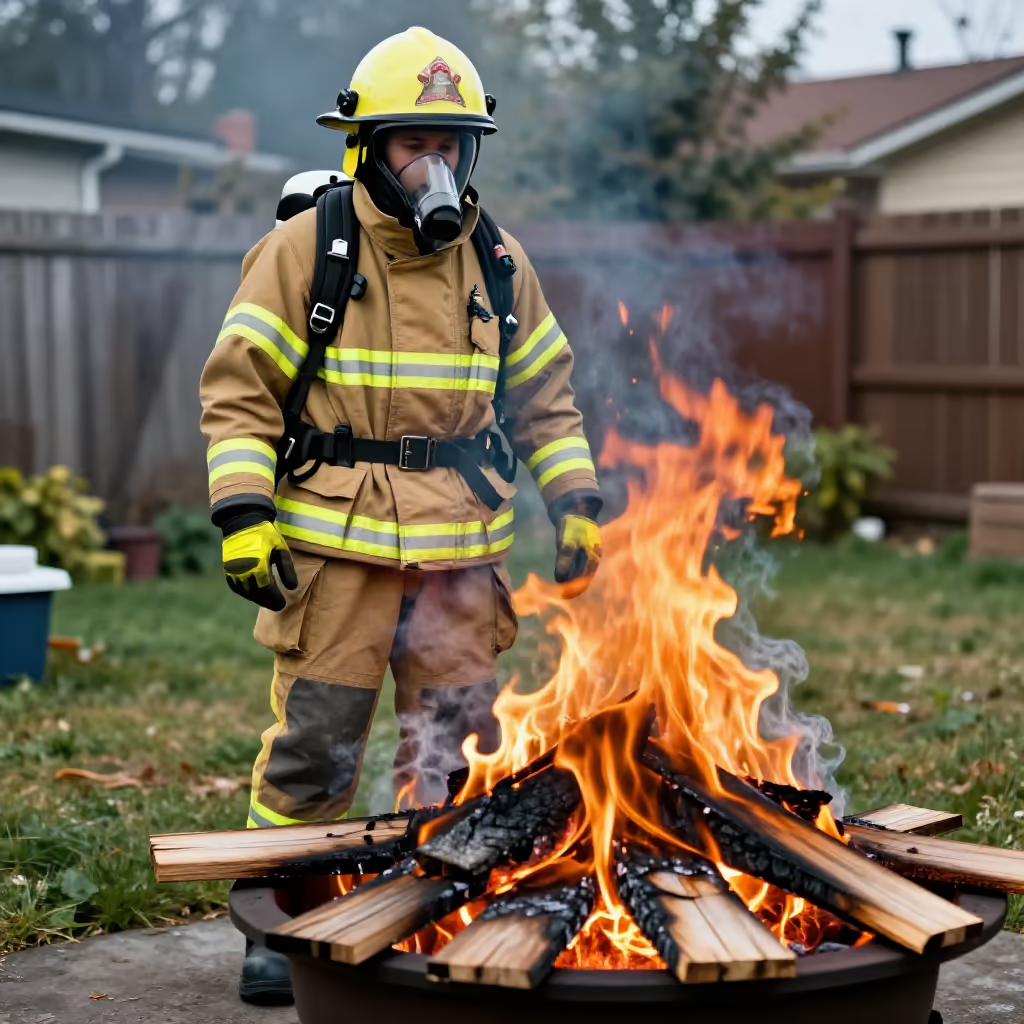
Das Holz brennt im Ofen und wärmt das Zimmer.
The wood is burning in the stove and warming the room.
Das Holz verbrennt im Ofen langsam zu Asche.
The wood is slowly burning to ash in the stove.