


die Gosse
gutter
An open channel at the edge of a road through which rainwater flows away.
EXAMPLE
Nach dem starken Regen führte die Gosse viel Wasser zum Kanal.
After the heavy rain, the gutter carried a lot of water to the drain.
gutter
die Gosse, die Gossen
Loading your saved state.
gutter
An open channel at the edge of a road through which rainwater flows away.
Nach dem starken Regen führte die Gosse viel Wasser zum Kanal.
After the heavy rain, the gutter carried a lot of water to the drain.
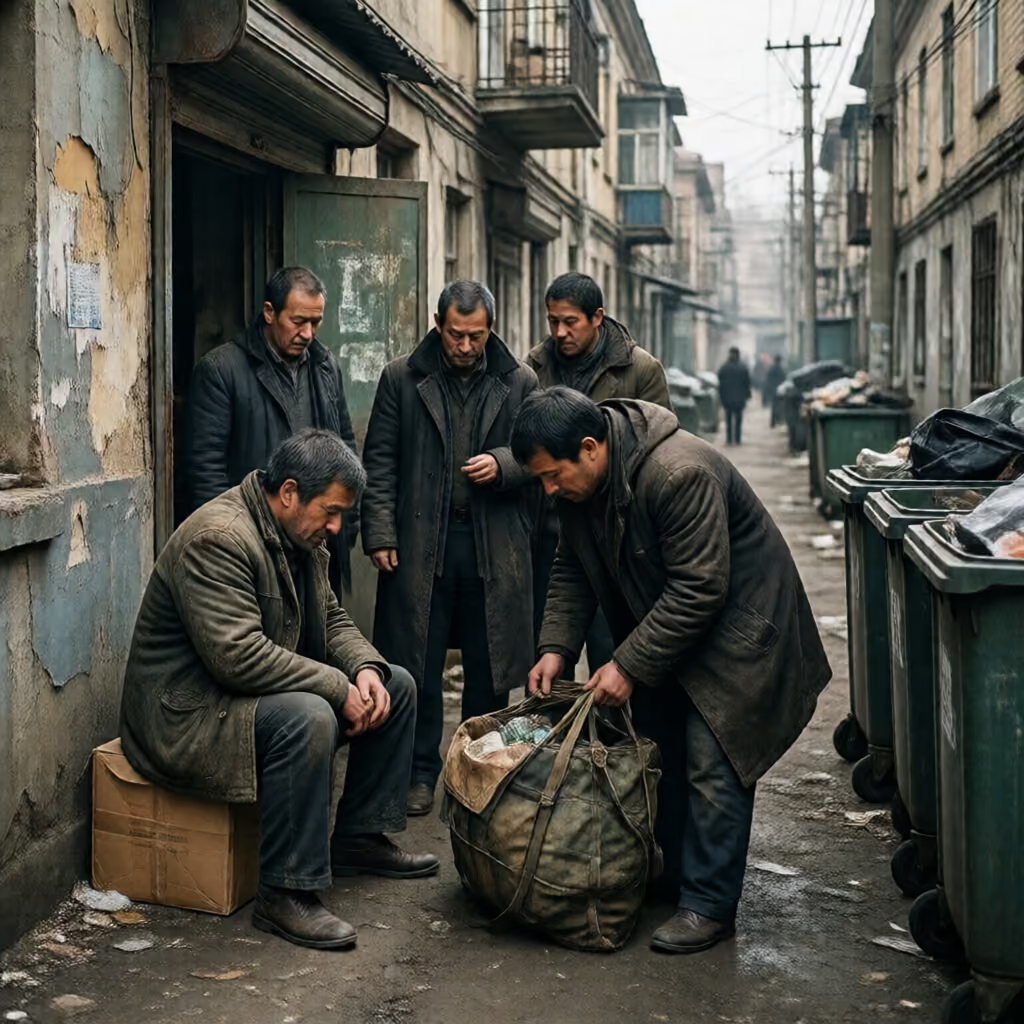
the gutter
A term for a very poor or socially disreputable milieu. The word is often used disparagingly.
Er wollte nie wieder in die Gosse zurückkehren.
He never wanted to return to the gutter.

to end up in the gutter
To fall into extreme poverty or a life completely excluded from society.
Ohne Hilfe hätte er nach dem Verlust seiner Arbeit in der Gosse landen können.
Without help, he could have ended up in the gutter after losing his job.
| gender | feminine die |
|---|---|
| plural | die Gossen |
| genitive | der Gosse |
| singular | plural | |
|---|---|---|
| nominative | die Gosse | die Gossen |
| accusative | die Gosse | die Gossen |
| dative | der Gosse | den Gossen |
| genitive | der Gosse | der Gossen |
The article changes with the case; it is shown in colour.
In its literal street-related meaning, 'Gosse' (gutter) often occurs with words such as 'Straßenrand' (roadside), 'Regenwasser' (rainwater), or 'offen' (open). The expression 'in die Gosse laufen' (to run into the gutter) also describes the path taken by the water.
Das Regenwasser lief durch die offene Gosse am Straßenrand.
The rainwater ran through the open gutter at the side of the road.
The figurative meaning of 'Gosse' (gutter) is clearly disparaging and expresses a very negative judgment of a social environment. It often appears in expressions such as 'aus der Gosse kommen' (to come from the gutter) or 'Menschen aus der Gosse' (people from the gutter).
Er sprach verächtlich von Menschen aus der Gosse.
He spoke contemptuously about people from the gutter.
In the expression 'in der Gosse landen' (to end up in the gutter), 'in' is used with the dative because 'in der Gosse' describes the state reached. The expression is often used together with words such as 'Armut' (poverty), 'Arbeitslosigkeit' (unemployment), or 'ohne Hilfe' (without help).
Nach dem Verlust seiner Wohnung drohte die Familie in der Gosse zu landen.
After losing their home, the family was at risk of ending up in the gutter.