

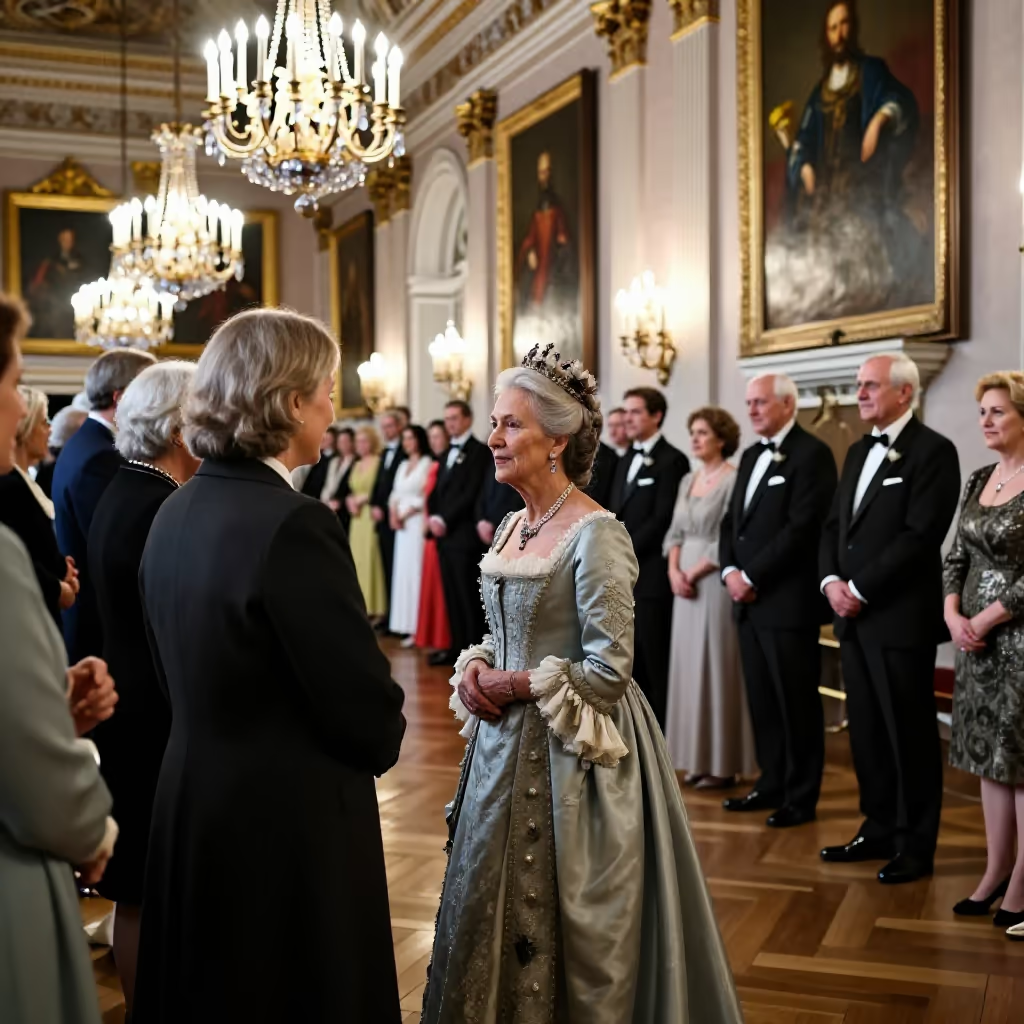
A noblewoman with the rank of countess; the wife or widow of a count, or a woman who holds this noble title herself.
example
Die Gräfin lud die gesamte Dorfgemeinschaft zu einem Fest auf ihrem Schloss ein.
The countess invited the entire village community to a celebration at her castle.
Usage tips
Feminine form of 'Graf'
'Die Gräfin' (the countess) is the feminine form of the noble title 'der Graf' (the count). The ending '-in' is often used in German to form the feminine form of terms for people.
EXAMPLE
Der Graf und die Gräfin empfingen ihre Gäste im Ballsaal.
The count and the countess received their guests in the ballroom.
Use as a title
When 'Gräfin' is used directly before a name as a title, it is usually not declined. For example, you say 'das Schloss von Gräfin Meier' (Countess Meier's castle) or 'ein Gespräch mit Gräfin Sophie' (a conversation with Countess Sophie).
EXAMPLE
Wir wurden von Gräfin von Thalberg zum Tee eingeladen.
We were invited to tea by Countess von Thalberg.
Context: nobility and history
The title 'Gräfin' (countess) belongs to vocabulary about the nobility. It is mainly used when talking about history, fairy tales, historical novels, or films.
EXAMPLE
In dem historischen Roman verliebt sich ein einfacher Soldat in eine Gräfin.
In the historical novel, a simple soldier falls in love with a countess.
Compare with
near_synonym · confusable
Gräfin vs Graf
count
'Graf' and 'Gräfin' both refer to people with the same noble rank. The most important difference is gender. A 'Graf' is a man with this title. A 'Gräfin' is a woman with this title, or she is the wife or widow of a count. The words can be confused because they refer to the same rank and sound very similar. So pay attention to the person: for a man, you say 'der Graf'; for a woman, 'die Gräfin'.
Gräfin
In der Führung erzählte Frau Becker viel über die Gräfin und ihren Garten.
During the guided tour, Ms. Becker talked a lot about the countess and her garden.
Graf
Der Graf begrüßte die Gäste am Eingang des Schlosses.
The count greeted the guests at the entrance to the castle.