

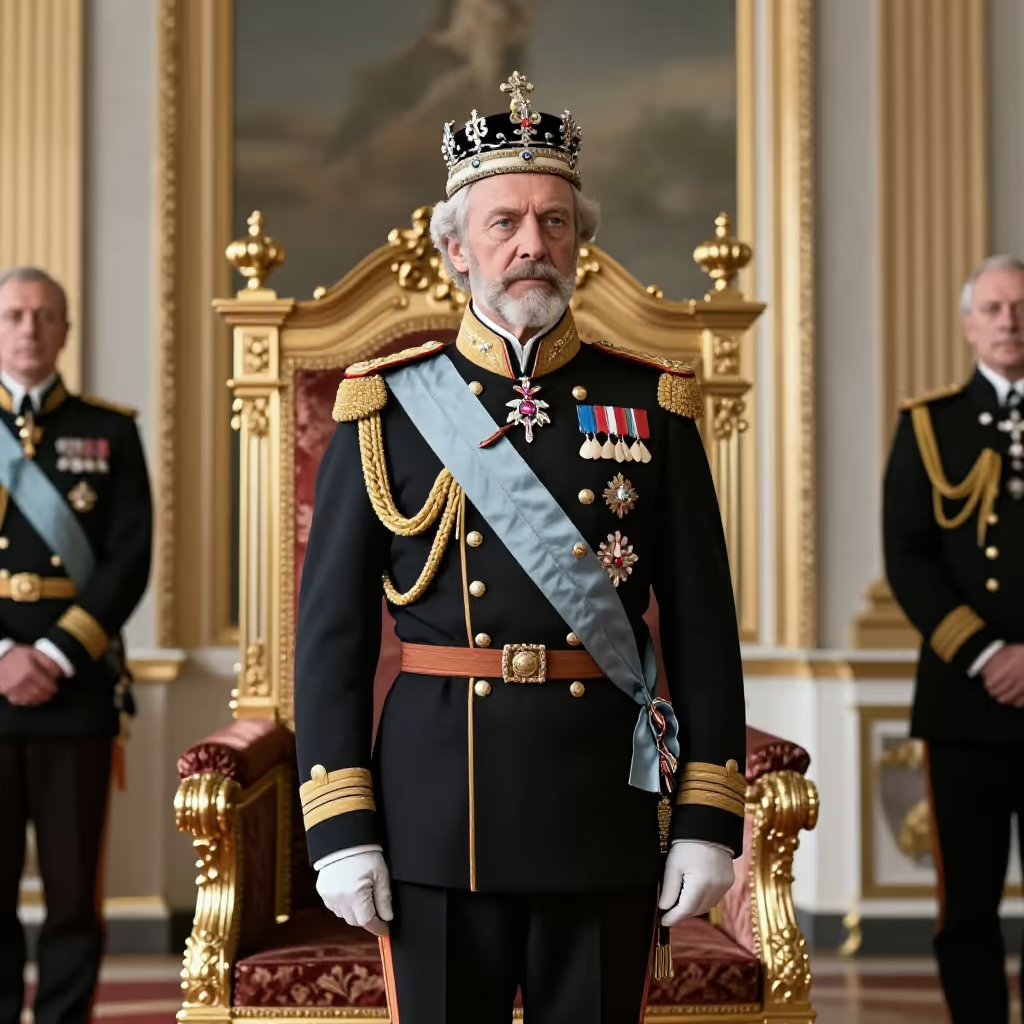
A noble title for a sovereign prince who ranks between a king and an ordinary duke. Also the person who holds this title.
example
Der Großherzog von Luxemburg ist das Staatsoberhaupt des Landes.
The Grand Duke of Luxembourg is the country's head of state.

Usage tips
Word composition
The word is built simply: it combines 'groß' (great) and 'Herzog' (duke). The prefix 'Groß-' indicates a higher rank here, similar to 'Großmeister' (grand master) or 'Großstadt' (large city).
EXAMPLE
Ein Herzog regiert über ein Herzogtum.
A duke rules over a duchy.
Use with 'von'
The title 'Großherzog' (grand duke) is almost always used with the preposition 'von' (of/from) and the name of the territory over which he rules.
EXAMPLE
Der aktuelle Großherzog von Luxemburg heißt Henri.
The current Grand Duke of Luxembourg is named Henri.
Context clue
Although it is a historical title, it is still relevant today. The best-known example is Luxembourg, the only remaining grand duchy in the world.
EXAMPLE
Die Familie des Großherzogs lebt im Palast.
The grand duke's family lives in the palace.
Compare with
near_synonym · confusable
Großherzog vs König
king
'der König' and 'der Großherzog' are both noble titles and can refer to a sovereign ruler. 'König' is the higher and more familiar title for a monarch. 'Großherzog' is more specific and ranks between a king and an ordinary duke. The words can be confused because both belong to monarchy and nobility. To be accurate, however, the title matters: if a country or territory is ruled by a grand duke, you do not automatically just say 'König'. 'König' fits for a kingdom, while 'Großherzog' fits for a grand duchy or for this specific rank.
Großherzog
Nach der Arbeit liest sie einen Artikel über die Familie des Großherzogs.
After work, she reads an article about the grand duke's family.
König
Im Urlaub besichtigten wir die Burg, in der früher ein König lebte.
On vacation, we visited the castle where a king once lived.