


gründen
to found
To bring something new into being, especially a company, an organization, a city, or a family.
EXAMPLE
Sie plant, nächstes Jahr ihr eigenes Unternehmen zu gründen.
She plans to found her own company next year.
to found / be based on
Loading your saved state.
to found
To bring something new into being, especially a company, an organization, a city, or a family.
Sie plant, nächstes Jahr ihr eigenes Unternehmen zu gründen.
She plans to found her own company next year.

to be based on
To be based or founded on a particular basis, idea, fact, or assumption.
Sein Verdacht gründet sich nur auf ein vages Gefühl.
His suspicion is based only on a vague feeling.
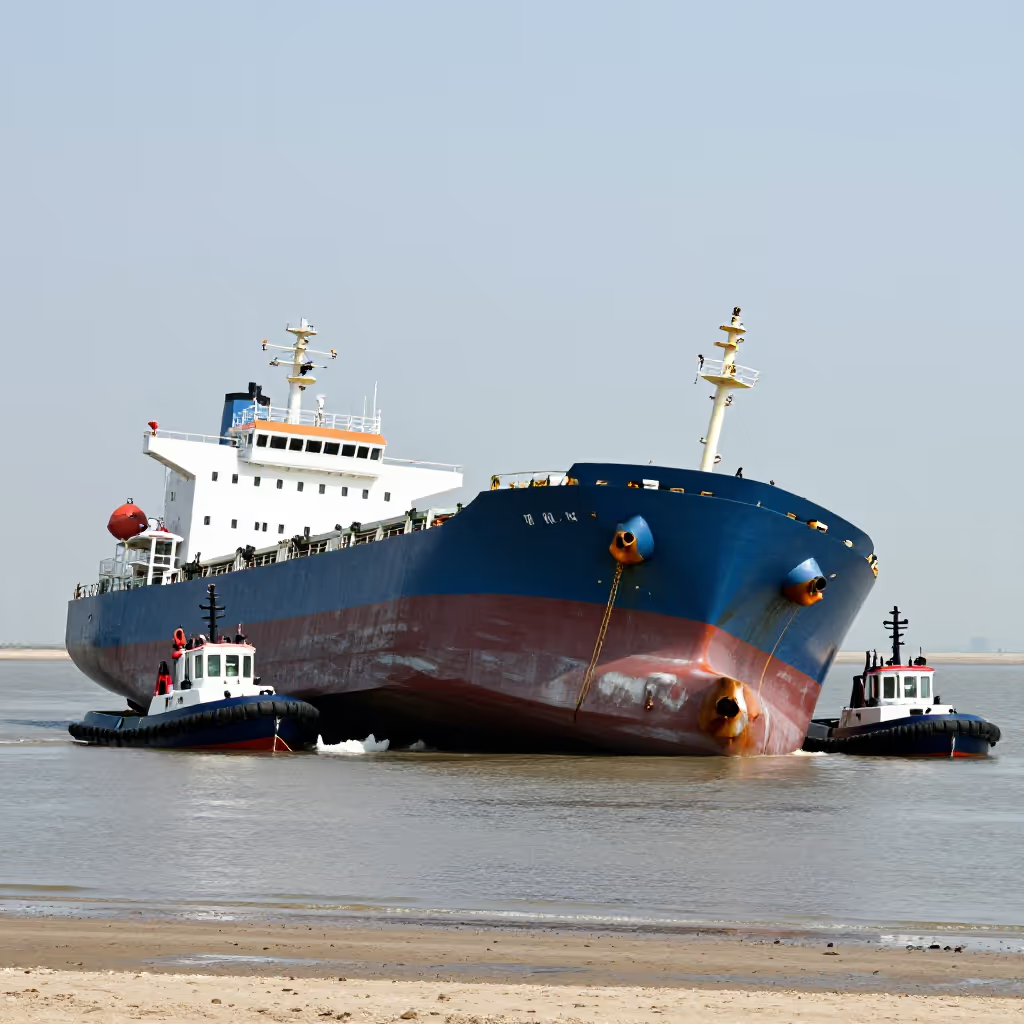
to run aground
In seafaring: for a ship to touch the bottom of a body of water and become stuck as a result.
Bei Ebbe ist das Schiff auf einer Sandbank gegründet.
At low tide, the ship ran aground on a sandbank.
The verb 'gründen' (to found / be based on) is closely related to the noun 'der Grund' (the reason; the ground). This connection helps explain the meanings: you lay the 'Grundstein' (foundation stone) for a company (gründen = to found), an opinion is based on a 'Grund' (reason) (sich gründen auf = to be based on), or a ship touches the 'Meeresgrund' (seabed) (gründen = to run aground).
Der Erfolg der Firma gründet auf einer einfachen, aber genialen Idee.
The company's success is based on a simple but brilliant idea.
In its most common meaning, 'gründen' is combined with things that one brings newly into being. Typical examples are: eine Firma gründen (to found a company), einen Verein gründen (to found an association/club), eine Familie gründen (to start a family), or eine Organisation gründen (to found an organization).
Nach dem Studium wollen sie eine Familie gründen.
After their studies, they want to start a family.
In the meaning 'basieren auf' (to be based on), the verb is always reflexive and is used with the preposition 'auf' and the accusative. The structure is: Etwas gründet sich auf etwas (something is based on something).
Ihre Anklage gründet sich auf Zeugenaussagen.
Her accusation is based on witness statements.
The meaning 'mit dem Schiff auf Grund laufen' (to run aground with a ship) is technical language from seafaring. You hear or read this word only in this specific context.
Der Kapitän musste melden, dass sein Schiff im flachen Wasser gegründet war.
The captain had to report that his ship had run aground in shallow water.
to form / educate
Gründen refers to bringing a new, usually long-lasting organization or institution into existence. Bilden, by contrast, emphasizes people or parts coming together to form a specific group or unit. Thus, one might gründet a club, while its members bilden a board.

Die Anwohner gründen einen Verein für den Schutz des alten Parks.
The local residents are founding a club to protect the old park.
Die Mitglieder des neuen Vereins bilden einen Vorstand für die weitere Arbeit.
The members of the new club are forming a board to carry out its work.