

aufbauen
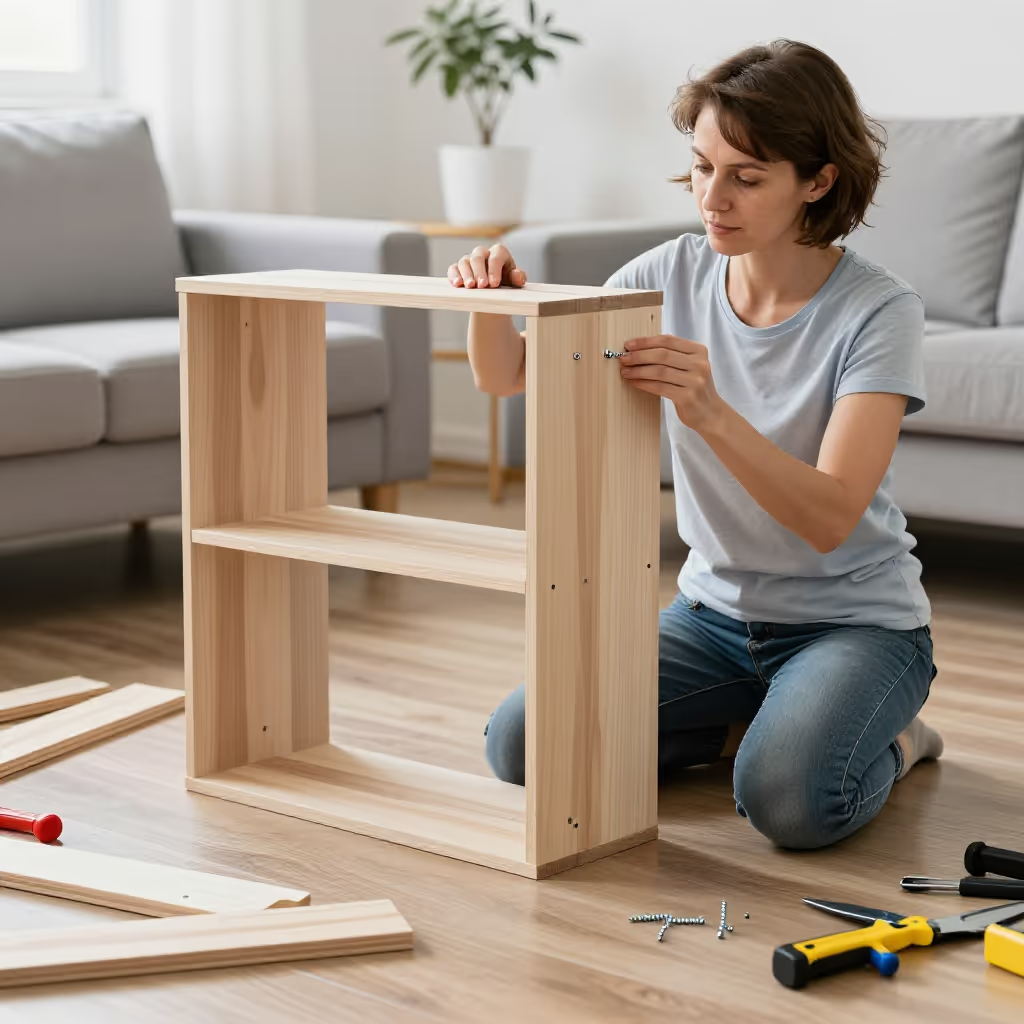
to assemble / set up
To physically erect something or put it together from individual parts.
EXAMPLE
Wir haben das Zelt in nur zehn Minuten aufgebaut.
We set up the tent in just ten minutes.
to build up
Loading your saved state.
to assemble / set up
To physically erect something or put it together from individual parts.
Wir haben das Zelt in nur zehn Minuten aufgebaut.
We set up the tent in just ten minutes.

to build up
To found and develop something abstract, such as an organization, a relationship, or a system.
Sie hat über Jahre ein erfolgreiches Unternehmen aufgebaut.
She built up a successful company over the years.

to encourage
To strengthen, comfort, or encourage someone emotionally or morally.
Nach der Niederlage musste der Trainer die Mannschaft wieder aufbauen.
After the defeat, the coach had to encourage the team again.

to build on
To develop further on an existing foundation or basis; to use as a starting point.
Der Fortgeschrittenenkurs baut auf dem Wissen des Anfängerkurses auf.
The advanced course builds on the knowledge from the beginner course.
to structure
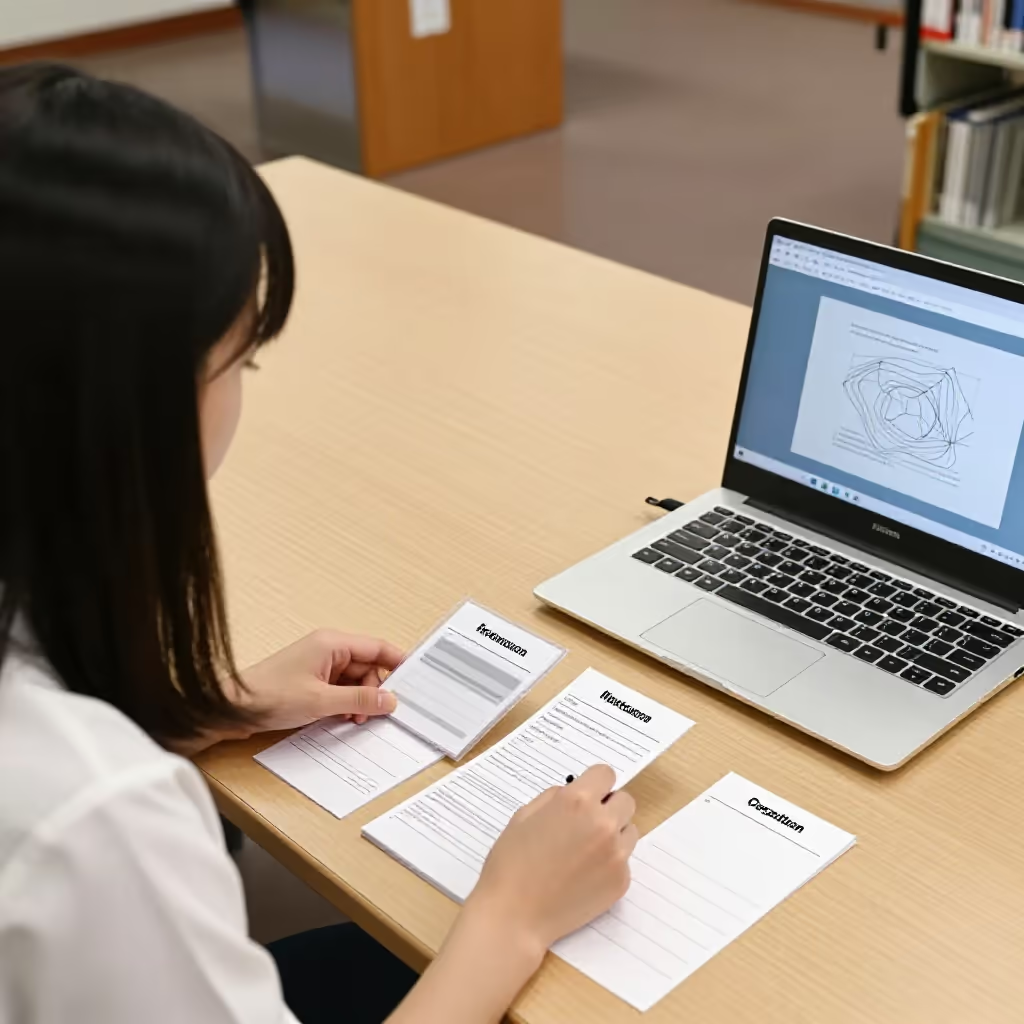
To structure or organize something logically, for example a text or a presentation.
Der Artikel ist sehr klar und verständlich aufgebaut.
The article is structured very clearly and understandably.

to rise up
To rise or tower up in front of someone or something, often in a threatening way.
Eine riesige Welle baute sich vor dem kleinen Boot auf.
A huge wave rose up in front of the small boat.
'Aufbauen' (to build up) is a separable verb. The prefix 'auf-' comes at the end of the sentence in main clauses, but remains attached to the verb in subordinate clauses. In the infinitive with 'zu', 'zu' comes between the prefix and the verb.
Mein Sohn baut gerade eine Burg aus Legosteinen auf.
My son is building a castle out of Lego bricks right now.
In the abstract meaning, 'aufbauen' (to build up) is often combined with concepts like trust, relationships, or structures. Typical phrases are 'Vertrauen aufbauen' (to build trust), 'ein Netzwerk aufbauen' (to build a network), or 'Druck aufbauen' (to build up pressure).
Es dauert lange, eine gute Freundschaft aufzubauen.
It takes a long time to build a good friendship.
When 'aufbauen' (to encourage) has a person as its object, it means to support or comfort that person emotionally. So the object is always a person or group that needs encouragement.
Nach dem verlorenen Spiel musste der Kapitän seine Mitspieler wieder aufbauen.
After the lost game, the captain had to encourage his teammates again.
In the meaning 'basieren auf' (to be based on), 'aufbauen' (to build on) is always used with the preposition 'auf' and the dative. The separable prefix 'auf-' comes at the end of the sentence.
Dieser Kurs baut auf den Grundlagen des letzten Semesters auf.
This course builds on the fundamentals from last semester.
To describe a structure or organization, 'aufbauen' (to structure) is very often used in the passive or as the past participle. The question for this is often: 'Wie ist etwas aufgebaut?' (How is something structured?)
Der Roman ist in drei Teile aufgebaut.
The novel is structured in three parts.
The reflexive form 'sich aufbauen' (to rise up) is often used for large, threatening natural phenomena or obstacles. It describes how something slowly becomes larger and more imposing.
Am Horizont bauten sich dunkle Gewitterwolken auf.
Dark thunderclouds rose up on the horizon.
to found / be based on
Gründen refers primarily to the act through which a company or organization comes into existence. Aufbauen also includes the subsequent, usually longer development of structures, contacts, and workflows. Thus, one can first gründet a company and then build it up step by step.

Danach baut Nora die Firma mit neuen Kunden und Mitarbeitern langsam auf.
After that, Nora is slowly building up the company with new customers and employees.
Nora gründet im Januar eine kleine Firma für Übersetzungen.
In January, Nora is founding a small translation company.