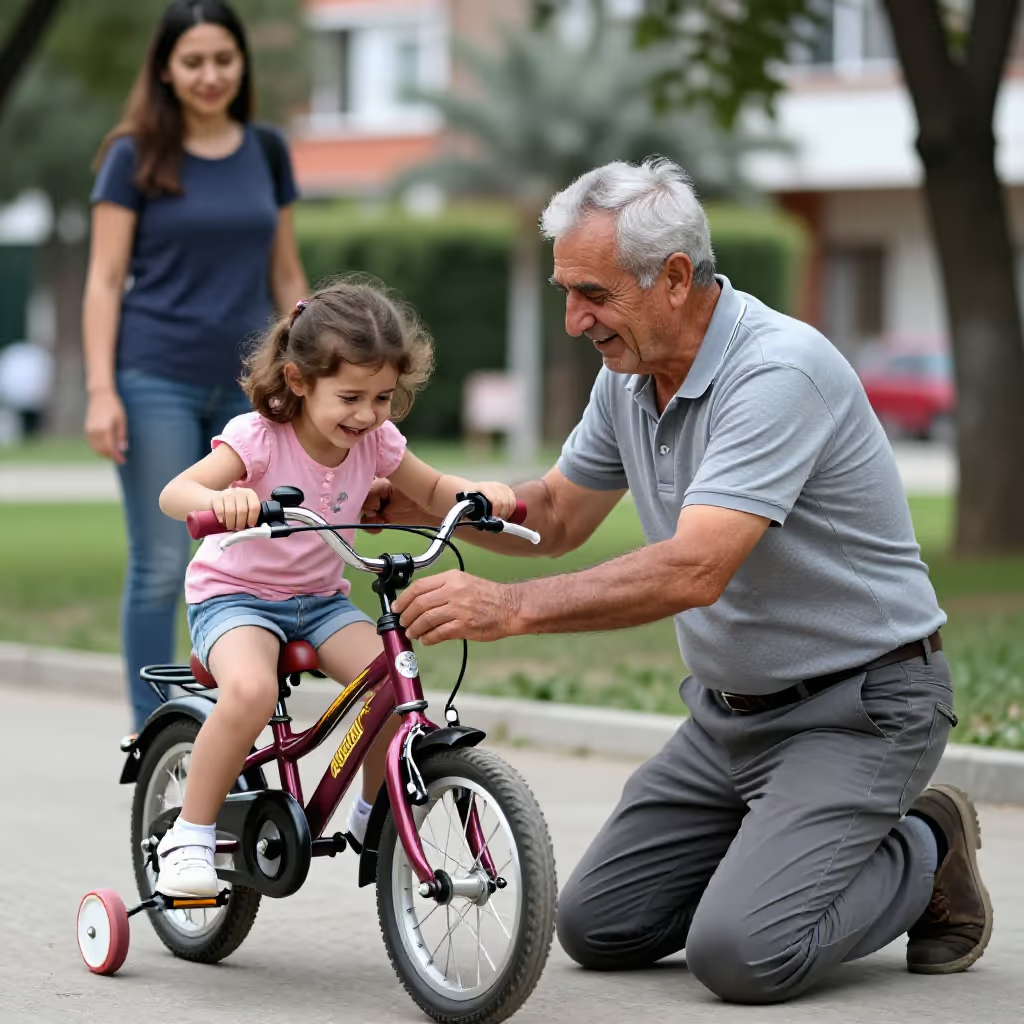
Kind, well-meaning, and forgiving toward other people. The word describes a heartfelt, patient, and understanding manner.
example
Die Großmutter sah ihre Enkel mit einem gütigen Lächeln an.
The grandmother looked at her grandchildren with a benevolent smile.

Usage tips
Word family
The adjective 'gütig' (benevolent) is derived from the noun 'die Güte' (goodness/kindness), which means 'kindness' or 'benevolence'. A 'gütige' person is therefore a person full of goodness.
EXAMPLE
Er war bekannt für seine Güte und seine gütige Art.
He was known for his goodness and his benevolent manner.
Typical collocations
'Gütig' (benevolent) often describes a person's expression or aura. Typical combinations are 'ein gütiges Lächeln' (a benevolent smile), 'gütige Augen' (kind eyes), or 'ein gütiger Blick' (a benevolent look).
EXAMPLE
Sie hatte gütige Augen, die viel Wärme ausstrahlten.
She had kind eyes that radiated a lot of warmth.
Register: elevated
'Gütig' (benevolent) is a rather elevated word. It describes a deep, heartfelt kindness and patience that goes beyond a simple 'nett' (nice) or 'freundlich' (friendly).
EXAMPLE
Der alte Professor war ein sehr gütiger Mensch, der seinen Studenten immer half.
The old professor was a very benevolent person who always helped his students.
Context clue: abstract forces
In its second meaning, 'gütig' (kindly/favorable) is used almost exclusively for abstract forces such as 'das Schicksal' (fate), 'die Natur' (nature), or 'Gott' (God). This use is usually literary.
EXAMPLE
Das Schicksal meinte es gütig mit ihm und er überlebte den Unfall unverletzt.
Fate was kind to him, and he survived the accident unharmed.
Compare with
near_synonym
gütig vs lieb
nice / dear
'lieb' and 'gütig' both describe a friendly, good manner toward other people. 'lieb' is a very everyday word and fits people, gestures, or behavior that are nice and warm-hearted. 'gütig' sounds stronger and somewhat more elevated. It means a deep, patient, and forgiving kindness, often in a person who forgives others or calmly helps them. In everyday life, people say 'lieb' more often. 'gütig' fits better when you want to emphasize a particularly warm-hearted and understanding attitude.
gütig
Der alte Lehrer war gütig und wurde nie laut, wenn jemand einen Fehler machte.
The old teacher was benevolent and never raised his voice when someone made a mistake.
lieb
Die Nachbarin ist lieb und bringt manchmal Suppe vorbei.
The neighbor is kind and sometimes brings over soup.