

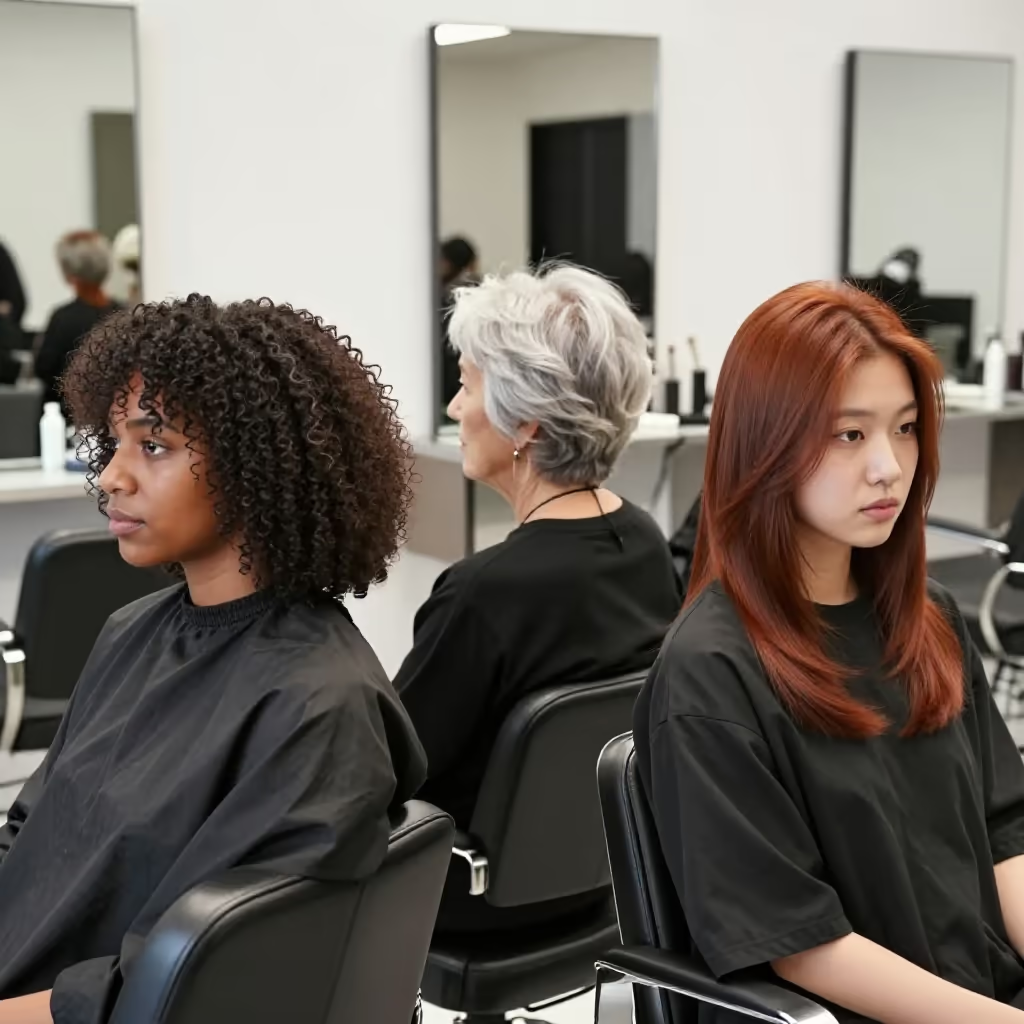
die Haarfarbe
hair color
The natural color of a person’s or animal’s hair, or the color changed by dyeing.
EXAMPLE
Sie hat eine sehr seltene natürliche Haarfarbe.
She has a very rare natural hair color.
hair color
Loading your saved state.
hair color
The natural color of a person’s or animal’s hair, or the color changed by dyeing.
Sie hat eine sehr seltene natürliche Haarfarbe.
She has a very rare natural hair color.
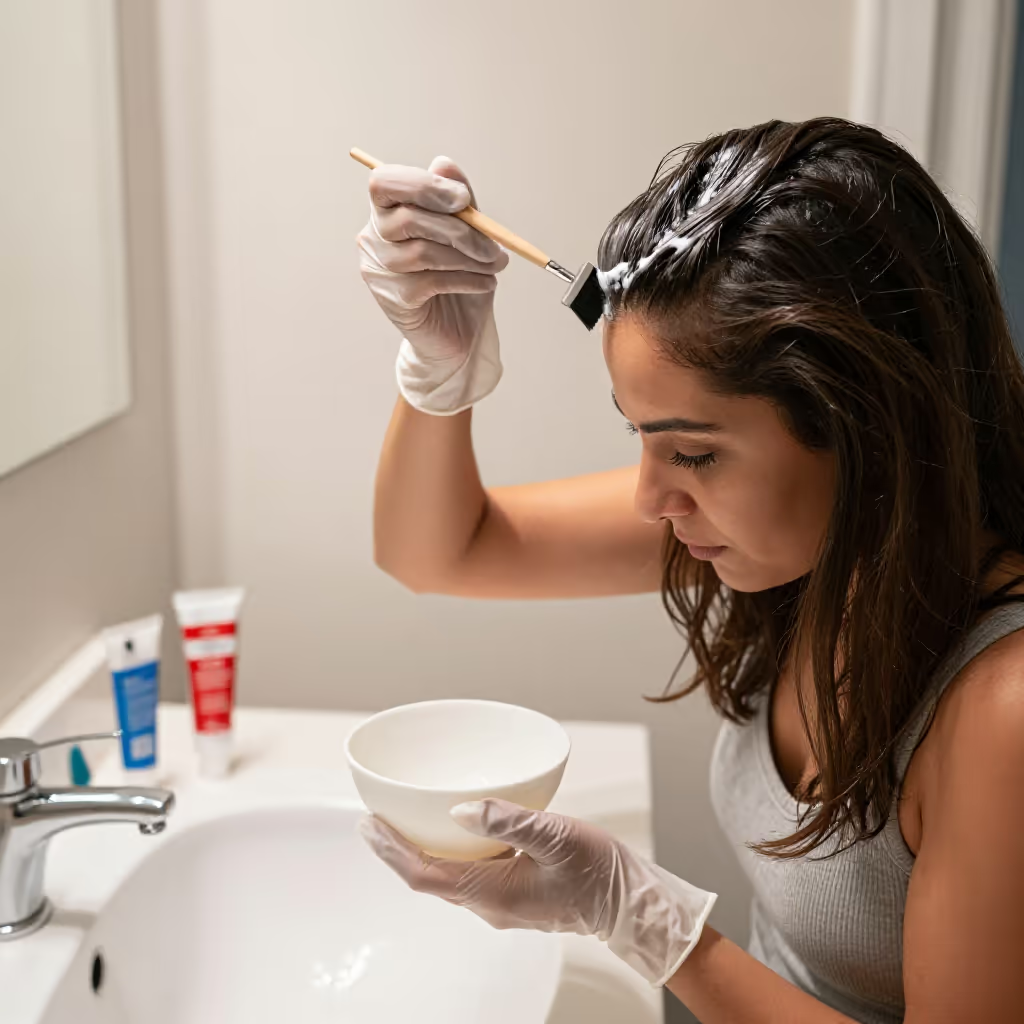
hair dye
A chemical product or substance used to dye hair.
Ich muss im Supermarkt noch eine neue Haarfarbe kaufen.
I still need to buy a new hair dye at the supermarket.
The word is very transparently made up of 'das Haar' (hair) and 'die Farbe' (color). It can refer both to the color of the hair and to the product used to dye the hair.
Ihre neue Haarfarbe steht ihr wirklich gut.
Her new hair color really suits her.
When talking about the color on someone’s head, people often speak of a 'natürliche' (natural), 'helle' (light), or 'dunkle' (dark) hair color. You can also say 'seine Haarfarbe ändern' (to change one's hair color) or 'eine neue Haarfarbe haben' (to have a new hair color).
Er hat von Natur aus eine sehr dunkle Haarfarbe.
He naturally has a very dark hair color.
The verb usually tells you whether the color on the head or the product is meant. If someone 'hat' eine Haarfarbe (has a hair color), it is the color of the hair. If someone 'kauft' (buys), 'benutzt' (uses), or 'aufträgt' (applies) eine Haarfarbe, the product is meant.
Ich habe rote Haare.
I have red hair.
coloration / coloring
When talking about hair, Färbung and Haarfarbe can be mentioned in the same context. Färbung refers to the process of applying color to the hair, while Haarfarbe refers to the product used for this purpose. Use Färbung for the treatment and Haarfarbe for the product.
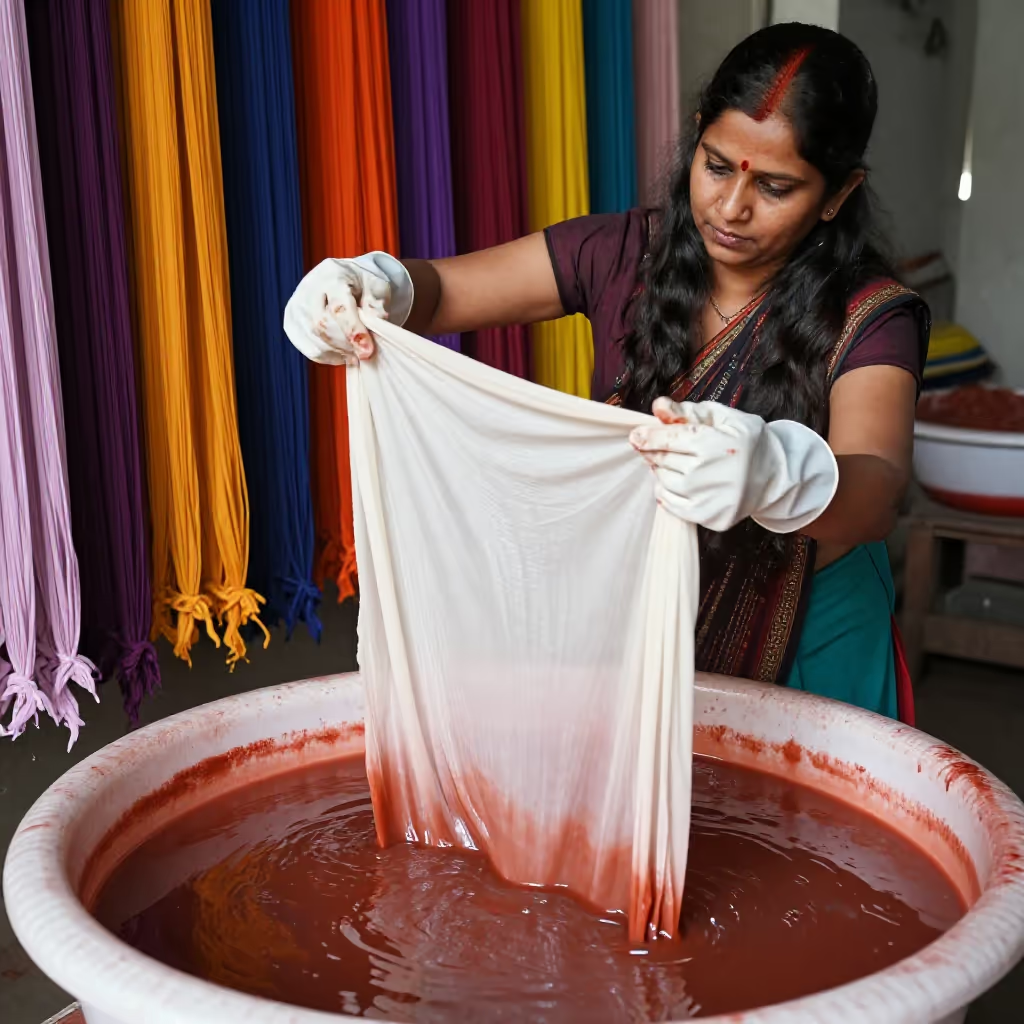
Für die Färbung kaufte sie eine neue Haarfarbe in der Drogerie.
She bought a new hair dye at the drugstore for the dyeing process.
Die Färbung der Haare dauerte im Salon fast zwei Stunden.
The hair-dyeing process took almost two hours at the salon.