

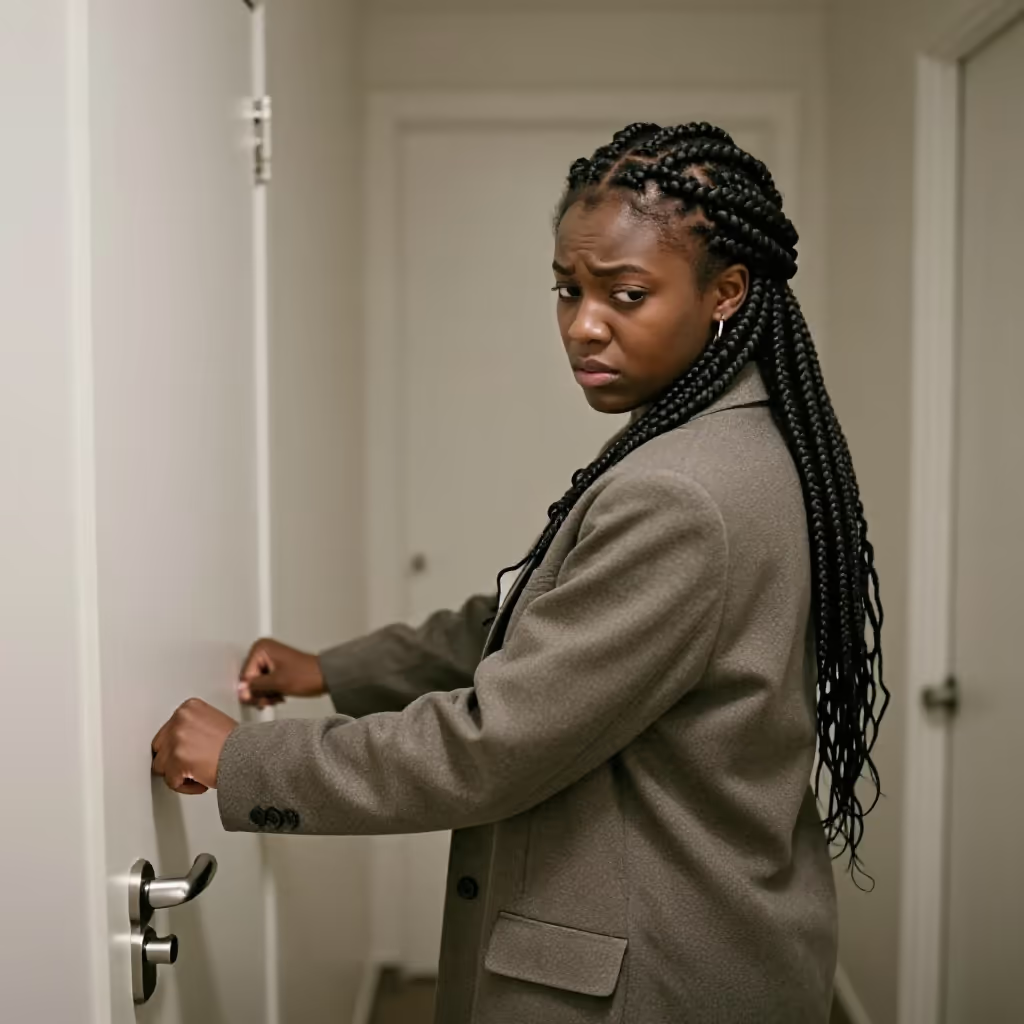
hängenbleiben
to get caught
To get a body part or item of clothing snagged on something and not be able to get free immediately.
EXAMPLE
Ich bin mit meinem Ärmel am Nagel in der Wand hängengeblieben.
I got my sleeve caught on the nail in the wall.
to get caught / stick
Loading your saved state.
to get caught
To get a body part or item of clothing snagged on something and not be able to get free immediately.
Ich bin mit meinem Ärmel am Nagel in der Wand hängengeblieben.
I got my sleeve caught on the nail in the wall.

to stick
To remain in one's memory; to be remembered.
Von dem ganzen Film ist mir vor allem die letzte Szene hängengeblieben.
From the whole film, it was mainly the final scene that stuck with me.

to repeat a grade
Colloquial term for not passing a school grade, which leads to repeating the school year.
Wegen seiner schlechten Noten in Mathe ist er letztes Jahr hängengeblieben.
Because of his poor grades in math, he had to repeat a grade last year.

to end up staying
Colloquial term for lingering at a place, often unexpectedly and longer than intended, for example after an event.
Nach der Party sind wir noch bei Freunden hängengeblieben und haben bis zum Morgen geredet.
After the party, we ended up staying at some friends' place and talked until morning.
'Hängenbleiben' is a separable verb. In a main clause, 'hängen' comes at the end. In a subordinate clause, the verb stays together, and in the infinitive, 'zu' comes between the two parts.
Beim Klettern blieb er an einem Ast hängen.
While climbing, he got caught on a branch.
The perfect tense of 'hängenbleiben' is always formed with the auxiliary verb 'sein' (to be). This applies to all meanings of the verb.
Mir ist von dem Gespräch nur ein Satz hängengeblieben.
Only one sentence from the conversation has stuck with me.
The meanings 'to repeat a school year' and 'to linger at a place' are almost exclusively part of colloquial language. They are rarely used in formal or written contexts.
Nach dem Konzert sind wir noch in einer Bar hängengeblieben.
After the concert, we ended up staying in a bar.
In the physical meaning, the preposition 'an' with the dative is almost always used to describe what someone got caught on.
Sie ist mit ihrem Schal am Fahrradlenker hängengeblieben.
She got her scarf caught on the bicycle handlebar.
When something remains in memory, the person who remembers is the dative object. The thing that is remembered is the subject of the sentence.
Diese Melodie ist mir den ganzen Tag hängengeblieben.
This melody stuck with me all day.
to stay / remain
Bleiben and hängenbleiben can both describe staying in a place for a longer period. Bleiben is neutral and can be planned. Hängenbleiben is colloquial and usually indicates that someone stays longer than planned or has difficulty pulling themselves away from the place.

Nach dem Konzert bleiben wir ungeplant noch eine Stunde in der Bar hängen.
After the concert, we unexpectedly end up lingering at the bar for another hour.
Nach dem Konzert bleiben wir wie geplant noch eine Stunde in der Bar.
After the concert, we stay at the bar for another hour as planned.