

der Haferbrei
oatmeal
A porridge made from oats or oat flour, usually cooked with water or milk.
EXAMPLE
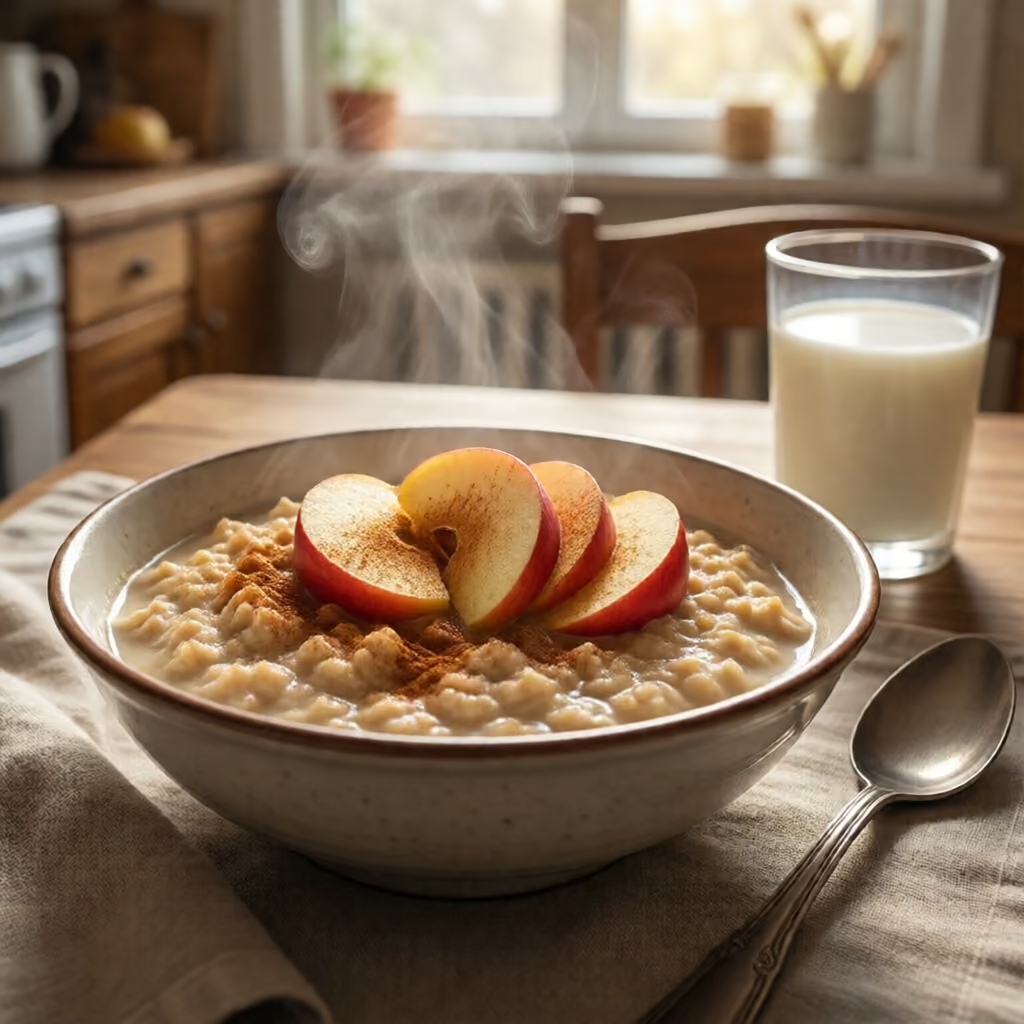
Zum Frühstück esse ich gern warmen Haferbrei mit Äpfeln und Zimt.
For breakfast, I like eating warm oatmeal with apples and cinnamon.
oatmeal / porridge
der Haferbrei, die Haferbreie
Loading your saved state.
oatmeal
A porridge made from oats or oat flour, usually cooked with water or milk.
Zum Frühstück esse ich gern warmen Haferbrei mit Äpfeln und Zimt.
For breakfast, I like eating warm oatmeal with apples and cinnamon.
| gender | masculine der |
|---|---|
| plural | die Haferbreie |
| genitive | des Haferbreies |
| singular | plural | |
|---|---|---|
| nominative | der Haferbrei | die Haferbreie |
| accusative | den Haferbrei | die Haferbreie |
| dative | dem Haferbrei | den Haferbreien |
| genitive | des Haferbreies des Haferbreis | der Haferbreie |
The article changes with the case; it is shown in colour.
'Haferbrei' is made up of 'Hafer' (oats) and 'Brei' (porridge). The base word 'Brei' describes the porridge-like dish, while 'Hafer' names the main ingredient.
Für die Kinder koche ich morgens Haferbrei.
I cook oatmeal for the children in the morning.
'Haferbrei' is often used with verbs such as 'kochen' (to cook), 'essen' (to eat), and 'zubereiten' (to prepare). Typical phrases include 'eine Schüssel Haferbrei' (a bowl of oatmeal) and 'Haferbrei mit Obst' (oatmeal with fruit).
Nach dem Training habe ich eine große Schüssel Haferbrei gegessen.
After training, I ate a large bowl of oatmeal.
When additional ingredients are mentioned, 'mit' (with) is often used after 'Haferbrei' with the dative. This describes fruit, nuts, or cinnamon as accompaniments, for example.
Die Kinder essen ihren Haferbrei am liebsten mit Honig.
The children like eating their oatmeal with honey best.