


die Haftung
liability
The legal obligation to be responsible for damage that has occurred or for debts, and to provide financial compensation; responsibility.
EXAMPLE
Eltern haften für ihre Kinder.
Parents are liable for their children.
liability / traction
Loading your saved state.
liability
The legal obligation to be responsible for damage that has occurred or for debts, and to provide financial compensation; responsibility.
Eltern haften für ihre Kinder.
Parents are liable for their children.
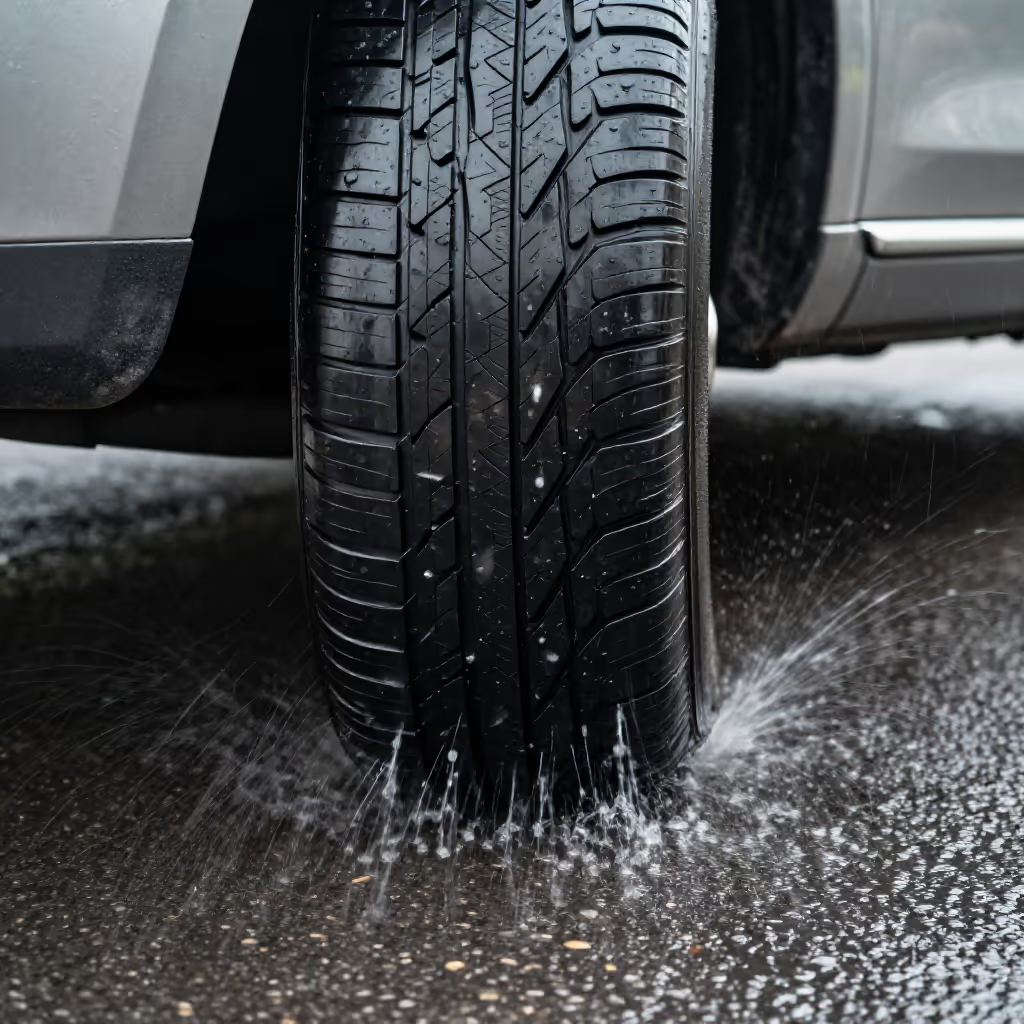
traction / grip
The physical property of something sticking to a surface or finding grip; road grip or traction.
Die neuen Winterreifen bieten eine exzellente Haftung auf eisiger Fahrbahn.
The new winter tires offer excellent traction on icy roads.
'Haftung' comes from the verb 'haften'. This verb has two meanings that are reflected in the noun: 'für etwas haften' (to be liable for something) leads to legal liability, and 'an etwas haften' (to stick to something, to hold) leads to physical traction or adhesion.
Der Hersteller haftet für Produktfehler.
The manufacturer is liable for product defects.
The context makes the meaning clear. If it is about law, contracts, money, or damage, legal responsibility is meant. If it is about tires, roads, glue, or surfaces, physical grip is meant.
Die Firma übernimmt die volle Haftung für den Transportschaden.
The company accepts full liability for the transport damage.
In a legal context, typical expressions are 'die Haftung übernehmen' (to accept liability), 'die Haftung ausschließen' (to exclude liability), or 'jemanden in Haftung nehmen' (to hold someone liable).
Bei grober Fahrlässigkeit kann man die Haftung nicht ausschließen.
In cases of gross negligence, liability cannot be excluded.
In a physical context, people often say that something 'gute Haftung hat' (has good traction), 'schlechte Haftung hat' (has poor traction), or 'die Haftung verliert' (loses traction). This is especially common for car tires.
Auf der vereisten Straße verlor das Auto die Haftung.
On the icy road, the car lost traction.
responsibility
Verantwortung can exist even before a possible mistake and can also apply outside the law. Haftung, on the other hand, refers to the legal obligation to be responsible for damage that has occurred or for debts. Use Verantwortung for being in charge, and Haftung when referring to a legal obligation to cover the consequences.

Nach dem Schaden muss die Firma möglicherweise die Haftung für die Reparaturkosten übernehmen.
After the damage, the company may have to assume liability for the repair costs.
Der Hausmeister trägt die Verantwortung dafür, dass der Spielplatz sicher bleibt.
The caretaker is responsible for keeping the playground safe.