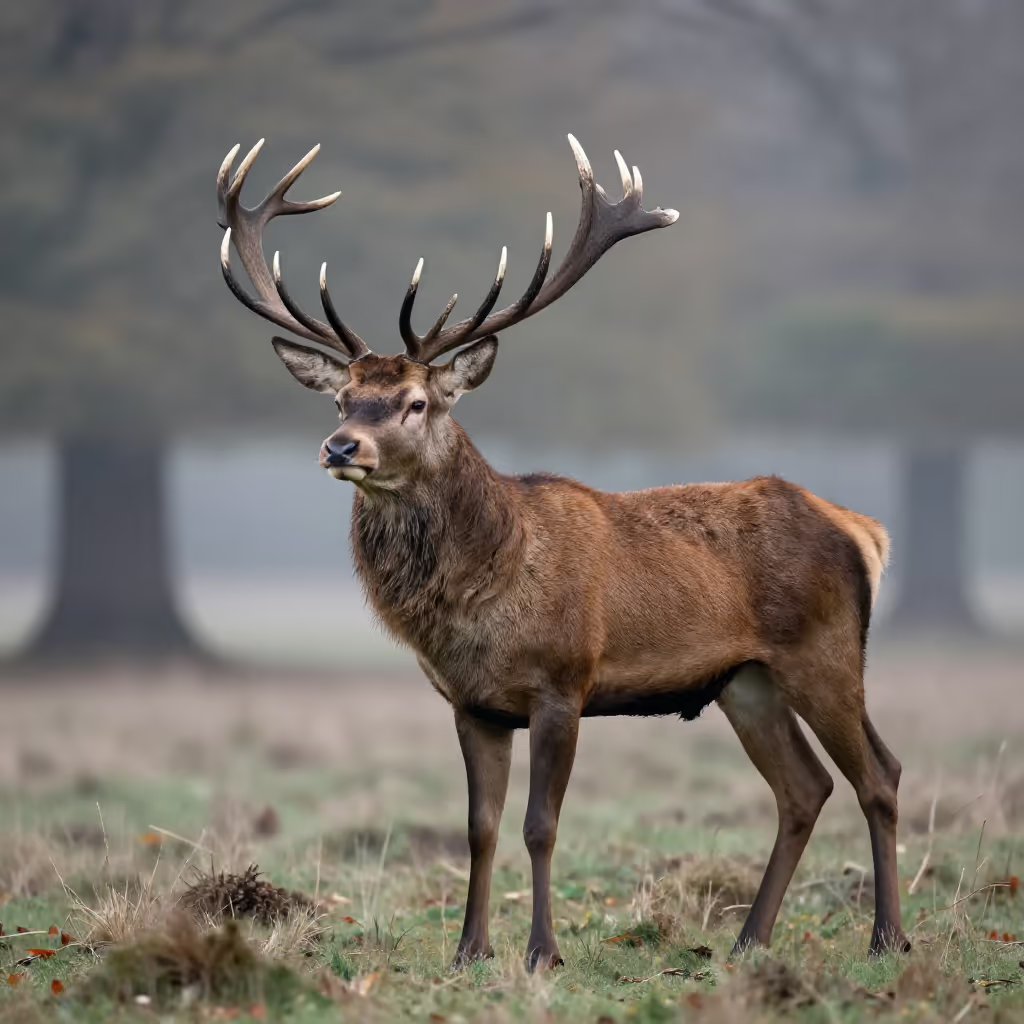
A large male mammal from the deer family that typically has large antlers. In the narrower sense, the male red deer.
example
Bei unserer Wanderung im Nationalpark haben wir einen prächtigen Hirsch gesehen.
On our hike in the national park, we saw a magnificent stag.

Usage tips
Context clue
Whether the animal or an insult is meant depends on the context. In sentences about nature, the forest, or hunting, the animal is meant. In an argument or as a direct exclamation, it is an insult.
EXAMPLE
Im Herbst kann man im Wald die Hirsche röhren hören.
In autumn, you can hear the stags roaring in the forest.
Register and style
The use of 'Hirsch' (idiot) as an insult is very colloquial and derogatory. It is perceived as an insult for a man whom one considers stupid or clumsy.
EXAMPLE
Er hat mich einen Hirsch genannt, nur weil ich den falschen Weg gefahren bin.
He called me an idiot just because I drove the wrong way.
Use as a form of address
As an insult, 'Hirsch' (idiot) is often used as a direct form of address, frequently in the combination 'Du Hirsch' (you idiot).
EXAMPLE
Du Hirsch, jetzt ist mir das Glas heruntergefallen!
You idiot, now I dropped the glass!
Compare with
near_synonym
Hirsch vs Idiot
idiot
'der Idiot' and 'der Hirsch' can both be used derogatorily for a stupid or clumsy man. 'der Idiot' is more general and clearly stronger. It can be used for men and women when you think someone is very stupid or unreasonable. 'der Hirsch' in this meaning is colloquial and normally refers to a man. It often sounds somewhat regional or joking, but it remains derogatory. If gender does not matter or the insult is meant to be very direct, 'Idiot' is more typical.
Hirsch
Dieser Hirsch hat den Schlüssel im Auto liegen lassen.
That idiot left the key in the car.
Idiot
Nach dem Unterricht sagt sie: „Ich war ein Idiot, weil ich nicht gelernt habe.“
After class she says, “I was an idiot because I didn't study.”