

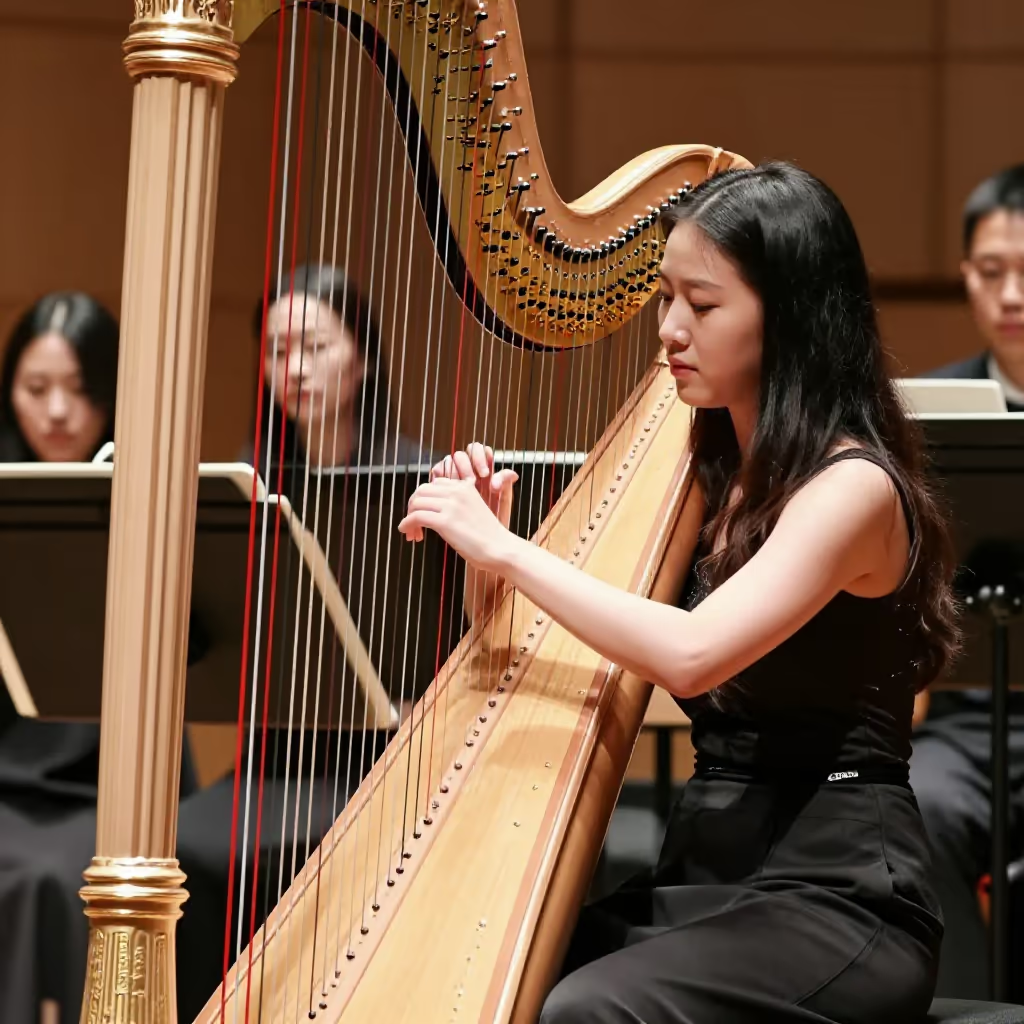
die Harfe
harp
A large plucked instrument with many vertically stretched strings, usually played in an orchestra or as a solo instrument.
Die sanften Klänge der Harfe erfüllten den Konzertsaal.
The gentle sounds of the harp filled the concert hall.
harp
die Harfe, die Harfen
Loading your saved state.

harp
A large plucked instrument with many vertically stretched strings, usually played in an orchestra or as a solo instrument.
Die sanften Klänge der Harfe erfüllten den Konzertsaal.
The gentle sounds of the harp filled the concert hall.
| gender | feminine die |
|---|---|
| plural | die Harfen |
| genitive | der Harfe |
| singular | plural | |
|---|---|---|
| nominative | die Harfe | die Harfen |
| accusative | die Harfe | die Harfen |
| dative | der Harfe | den Harfen |
| genitive | der Harfe | der Harfen |
The article changes with the case; it is shown in colour.
The most important verb used with this instrument is 'spielen' (to play). You can also say that you 'zupft' (pluck) the strings of the harp.
In ihrer Freizeit lernt sie, Harfe zu spielen.
In her free time, she is learning to play the harp.
Der Musiker zupfte sanft die Saiten seiner Harfe.
The musician gently plucked the strings of his harp.
The person who plays a harp is called 'der Harfenist' (male harpist) or 'die Harfenistin' (female harpist). If you know the word 'Harfe' (harp), you can also easily recognize the word for the person.
Die Harfenistin im Orchester spielte ein wunderschönes Solo.
The harpist in the orchestra played a beautiful solo.
The sound of a harp is often described with certain adjectives. You often hear of 'sanften' (gentle), 'zarten' (delicate), or 'himmlischen' (heavenly) harp sounds.
Wir lauschten den zarten Klängen der Harfe.
We listened to the delicate sounds of the harp.